Archive
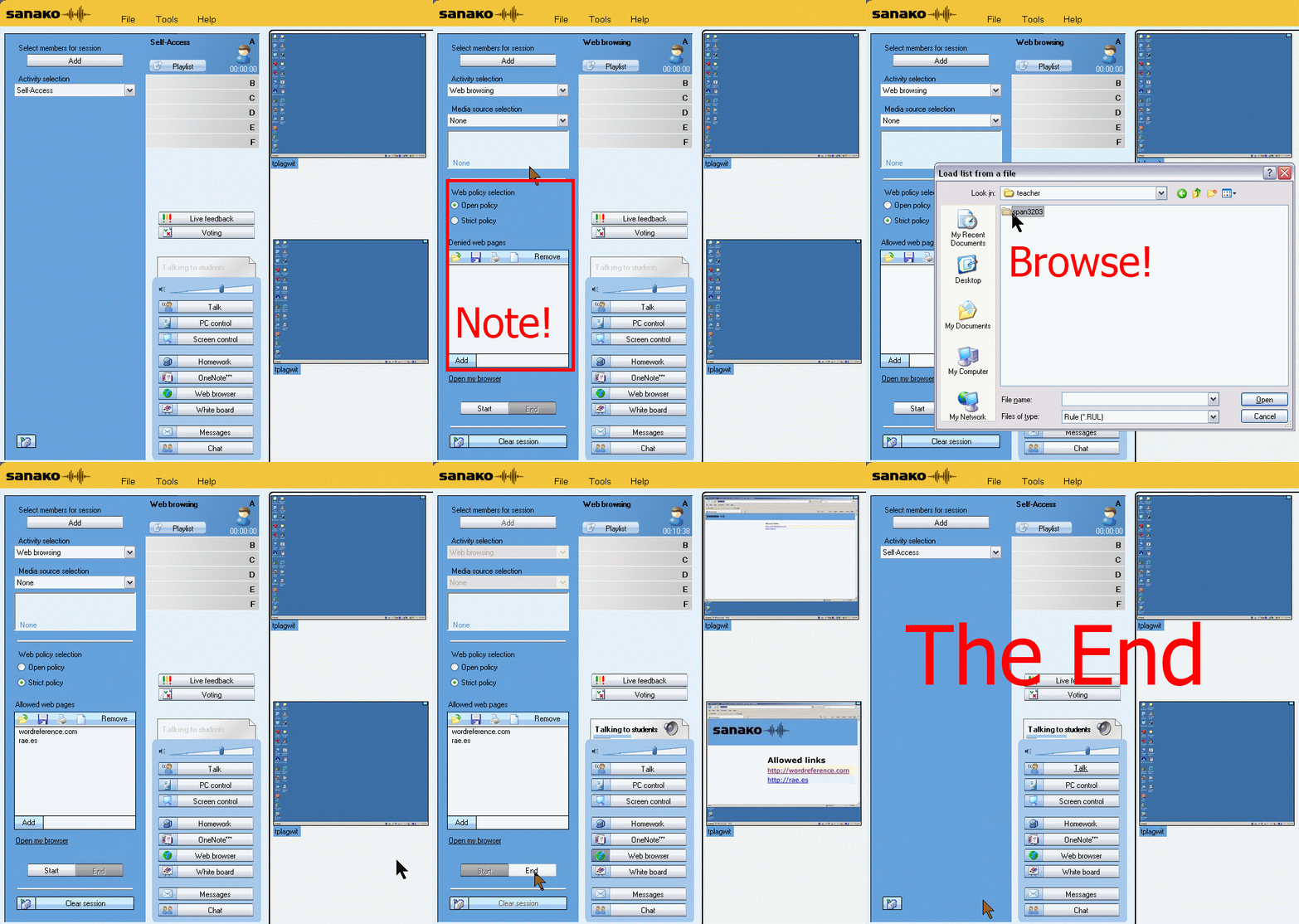
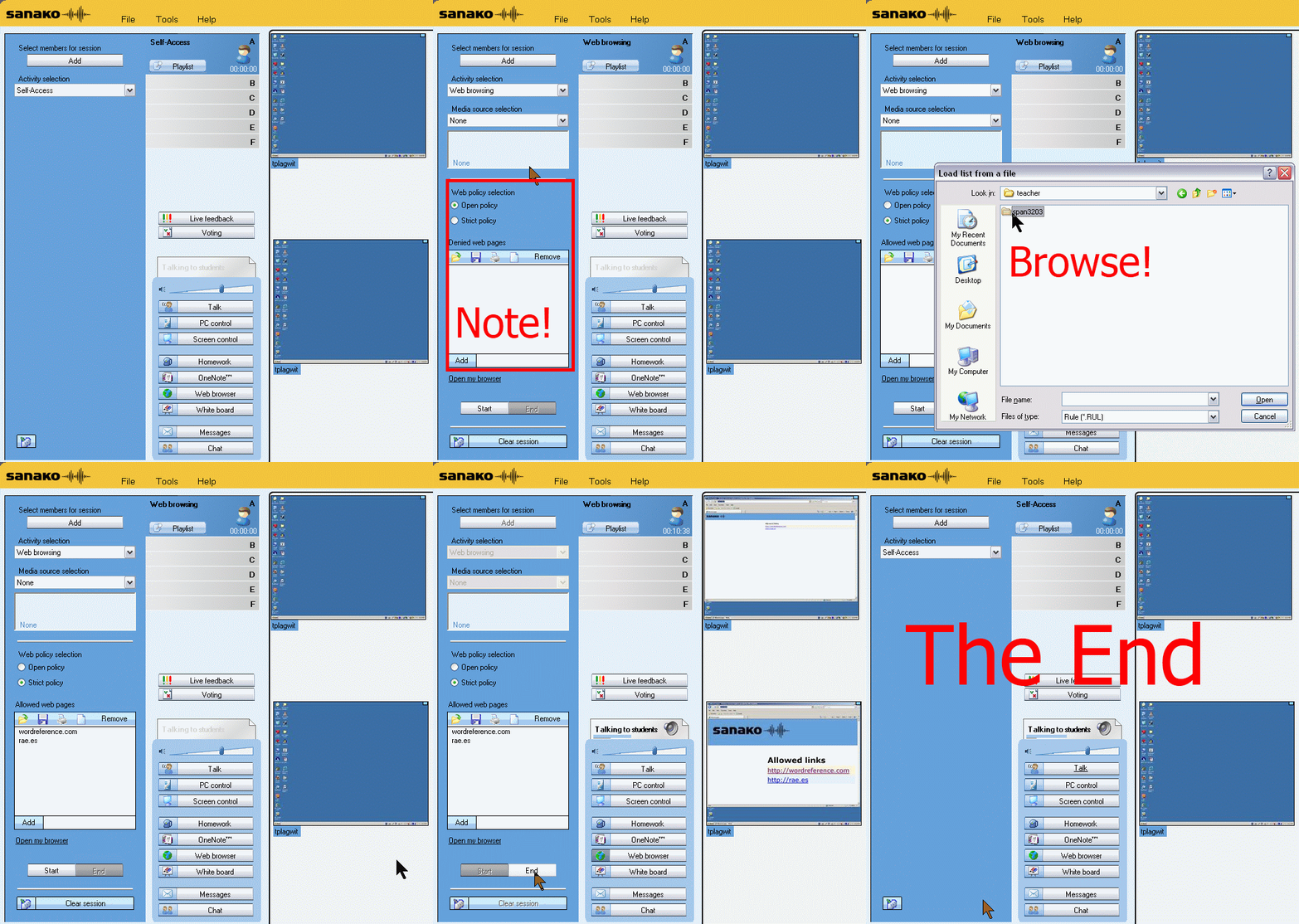
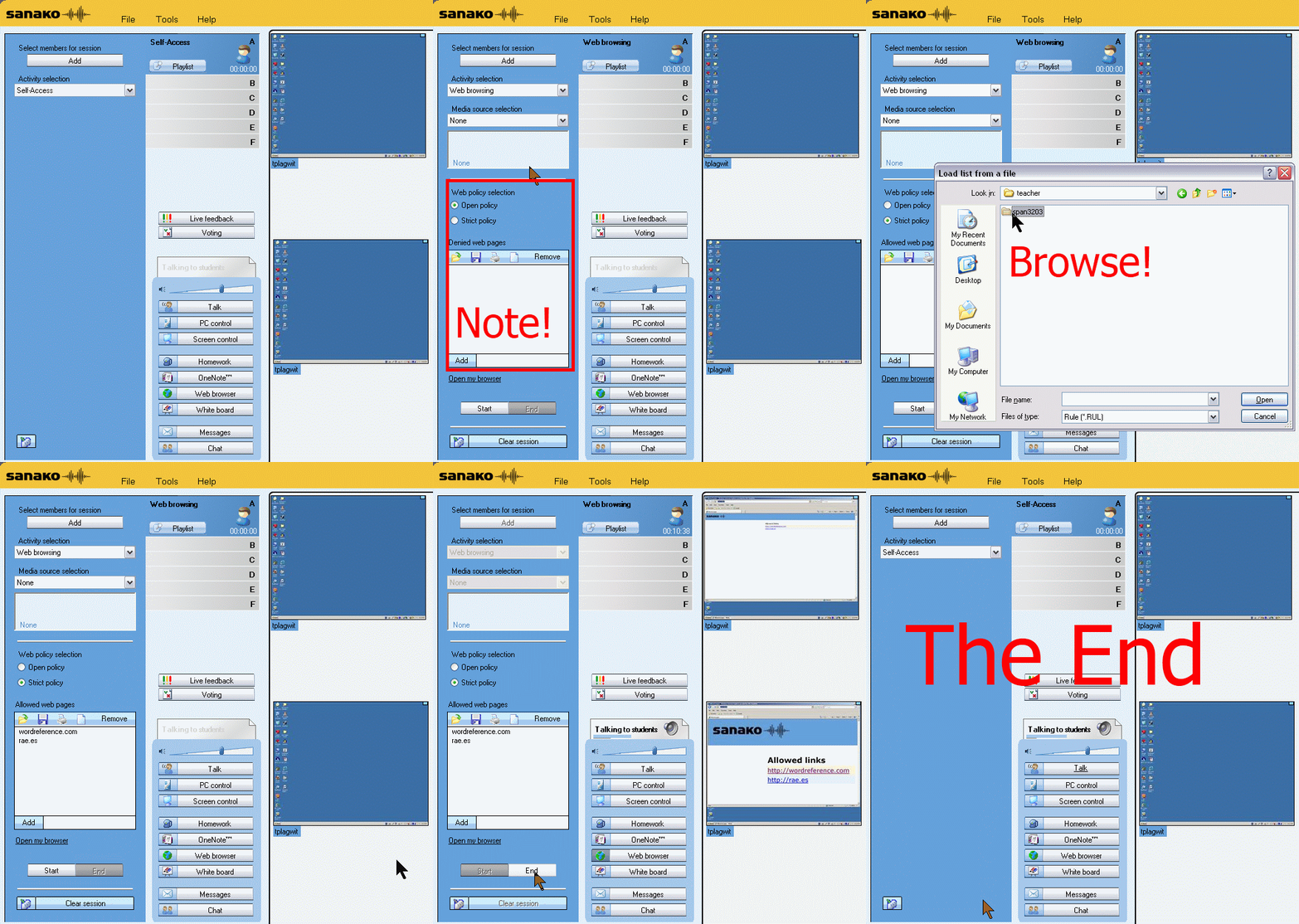
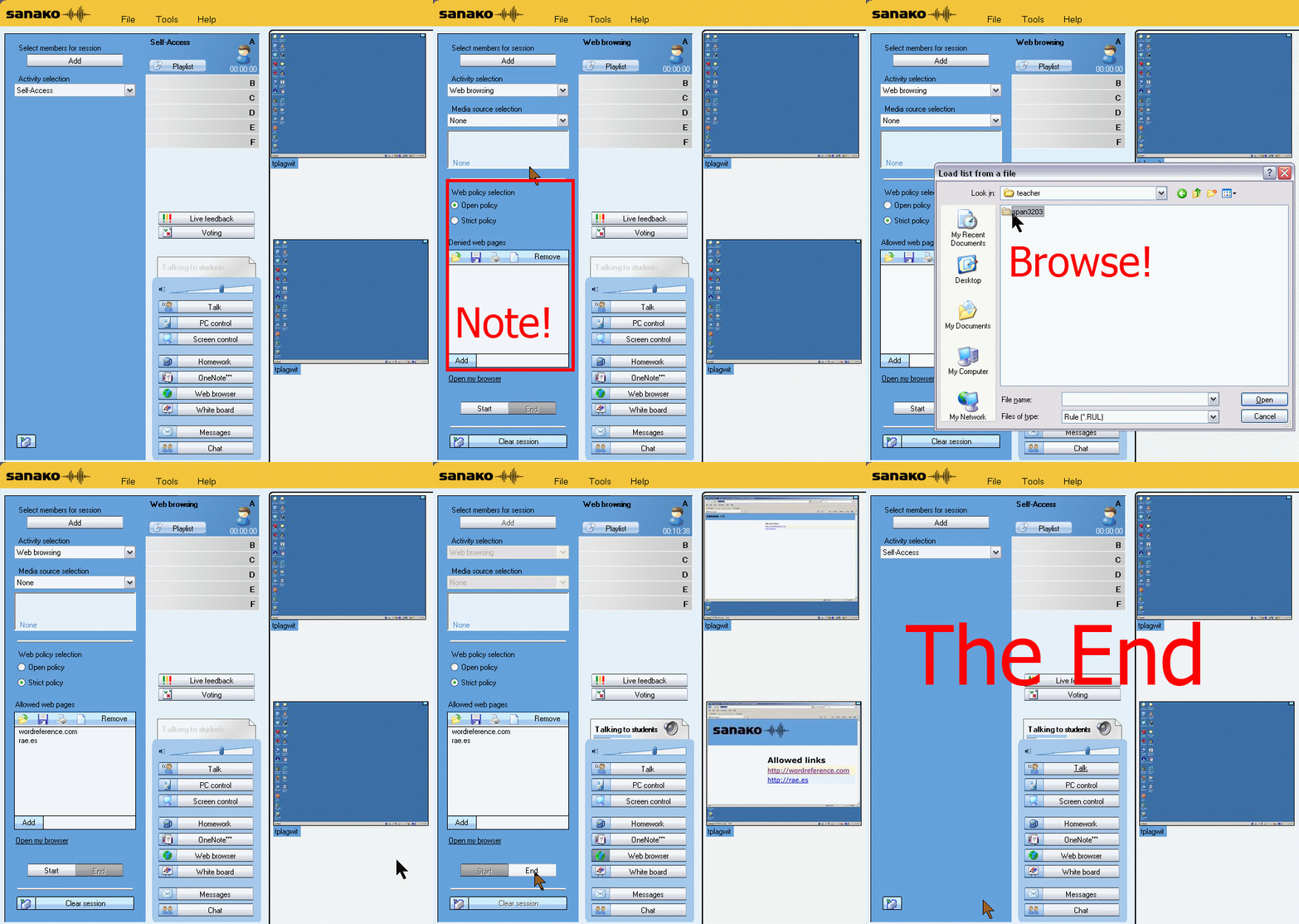
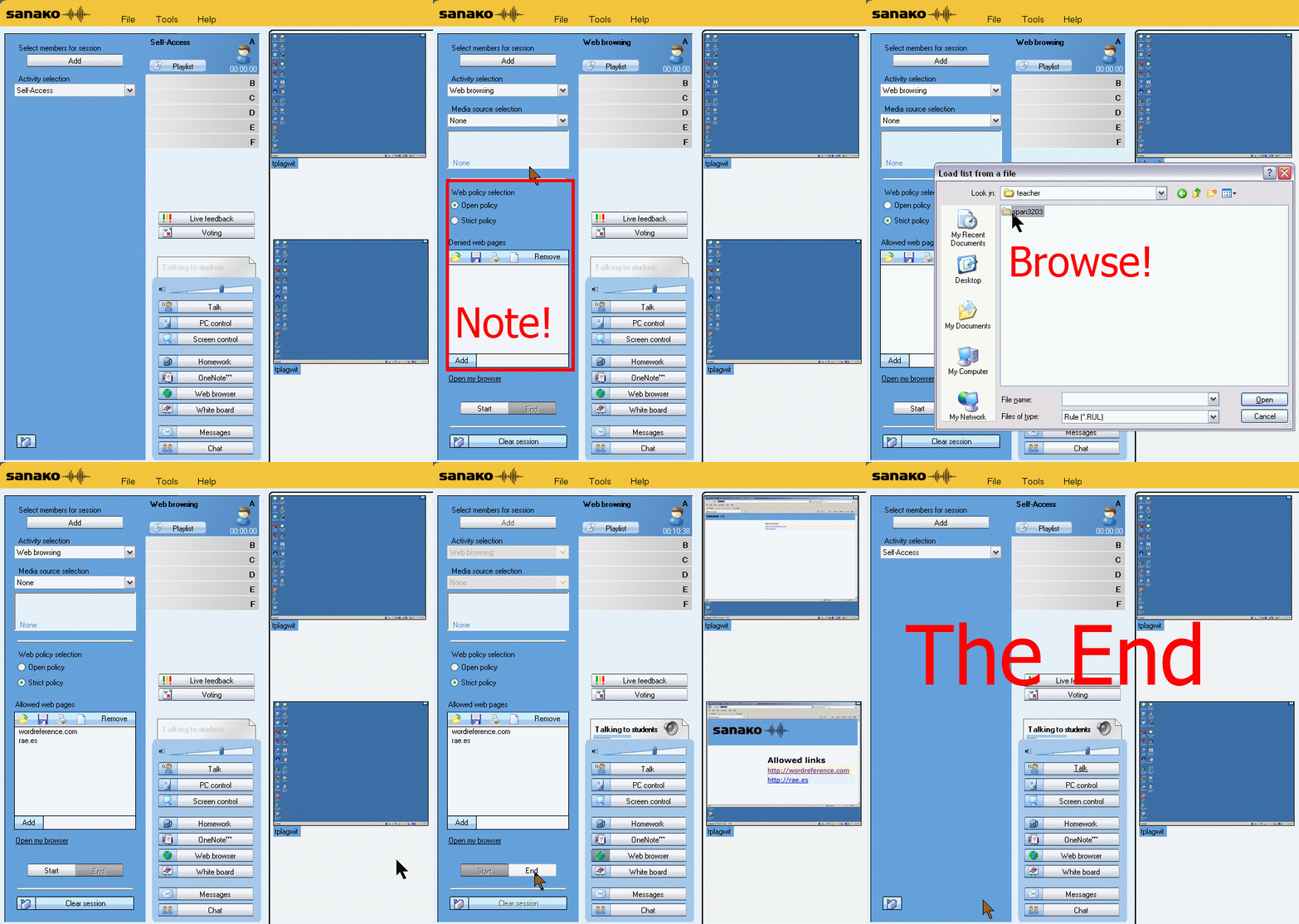
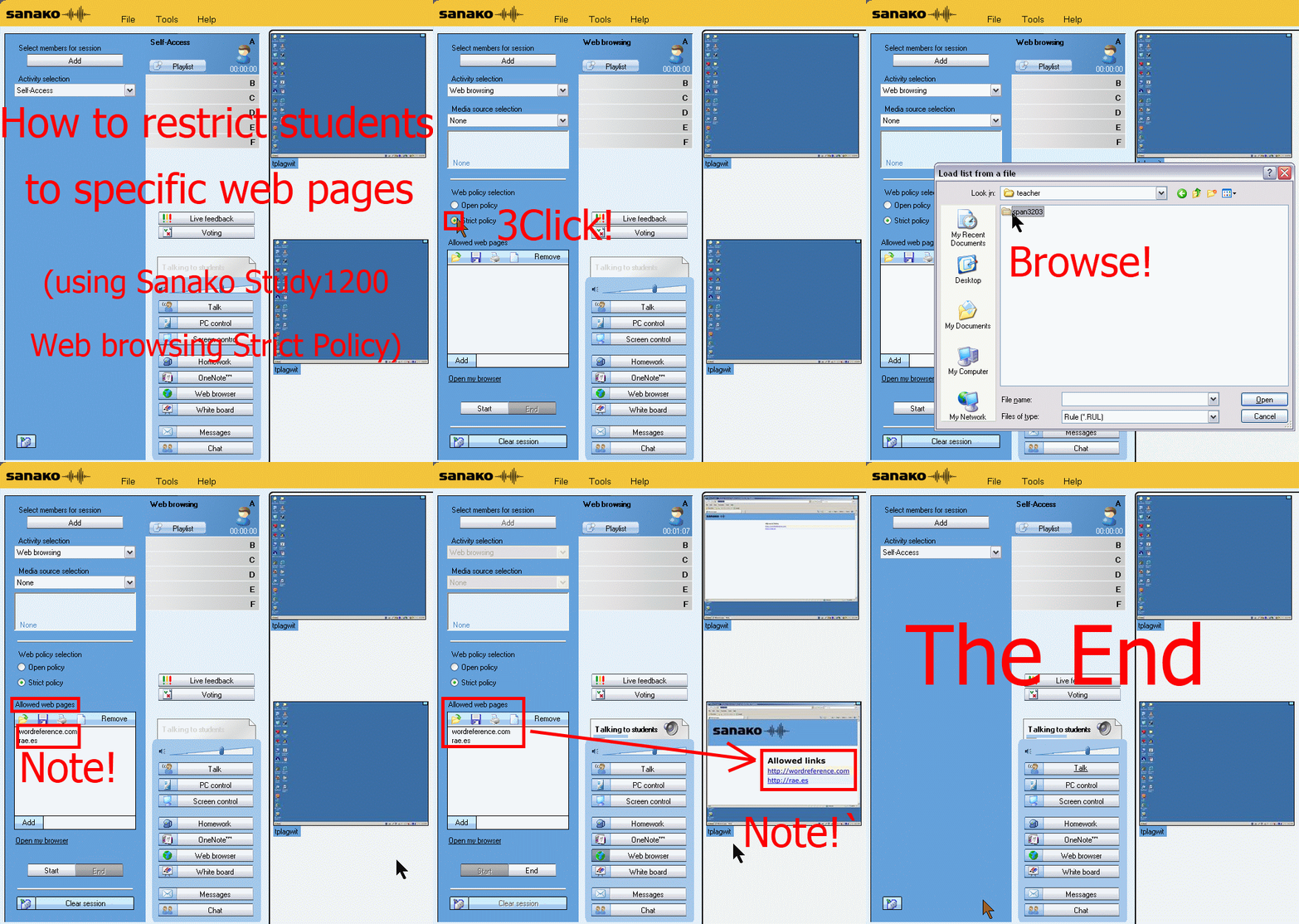
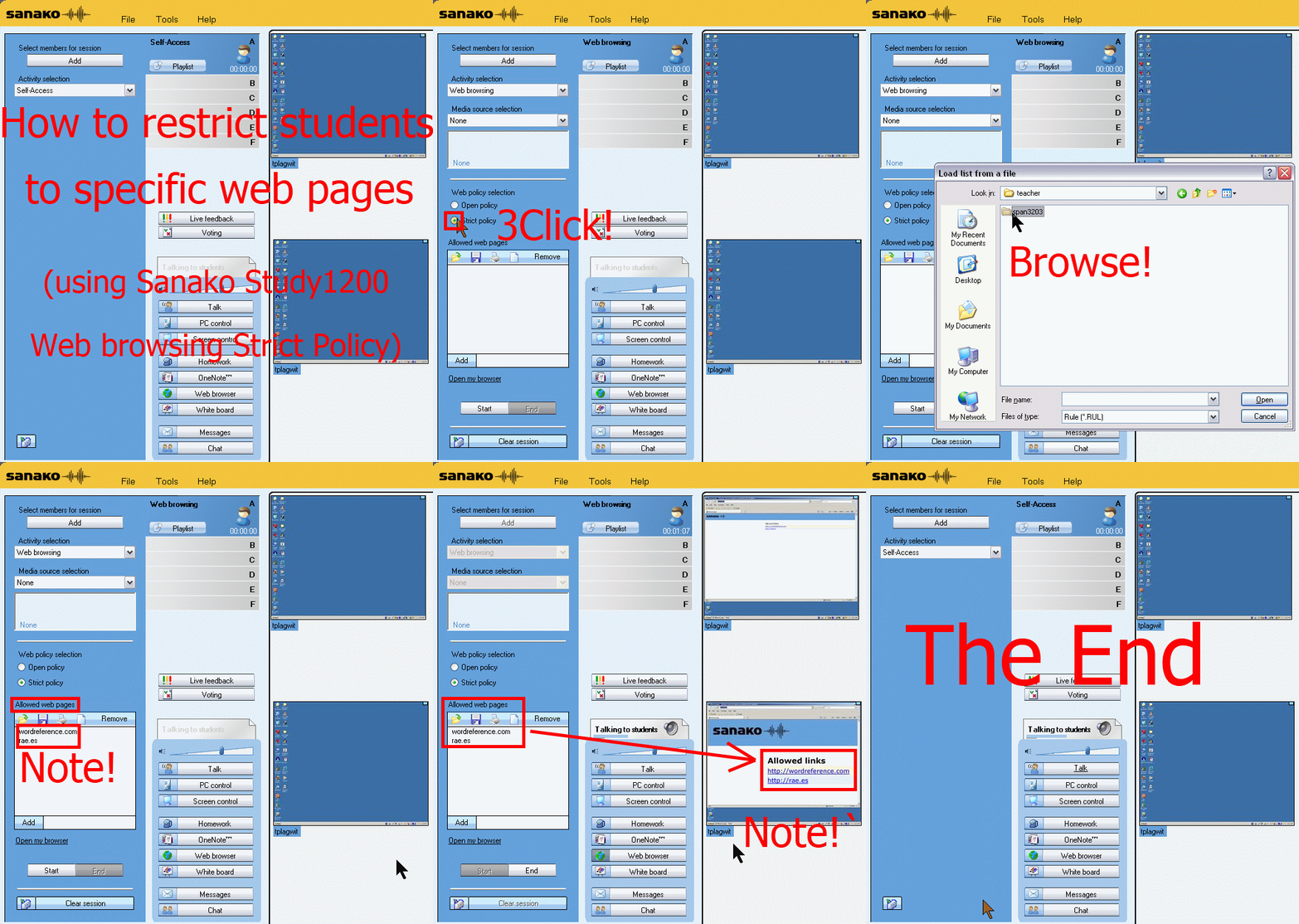
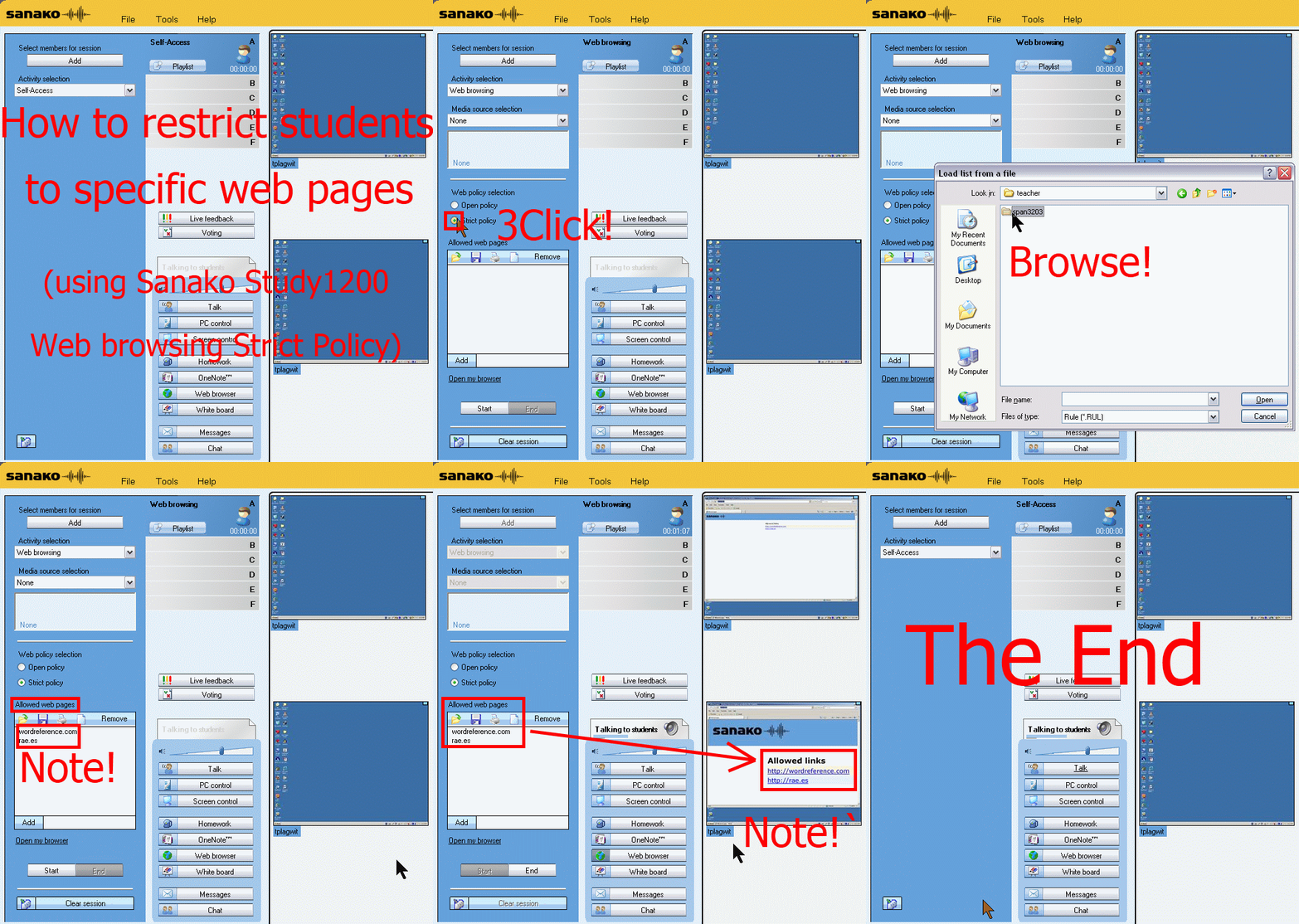
How teachers restrict students to allowed web pages with Sanako Study 1200 web browsing (strict) activity–the ultimate training summary
…using animated GIFs. Load the speed of your choosing (or several, use CTRL-Click to open links in a new tab) into the left screen of the teacher station before administering an oral exam, with the window active, press F5 in your web browser to restart the animation from the beginning:0.50sec,0.75sec,1sec,2sec,3sec,4sec,5sec,6sec,7sec,8sec,9sec,10sec
 .
.
Condensed (instructions only) for recap: 100cs, 200cs, 300cs, 400cs, 500cs, 600cs, 700cs, 800cs, 900cs, 1000cs. And if you need to pause:


LRC teacher screen new and improved

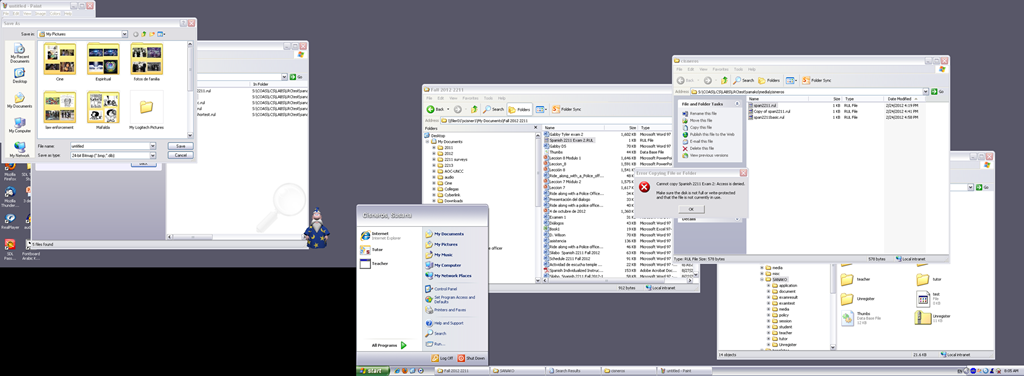
The above screenshot (taken from a screencast) does not do the new screen justice: Teachers can actually read all the ongoing student work, and, with two clicks, intervene surgically, where necessary.
On the right screen of the teacher PC in the main LRC classroom, we went from WXGA to HD1080, gaining almost 60% more screen real estate (=(1920*1080)/(1280*1024)), a crucial improvement for displaying all the information the Sanako Study 1200 provides the teacher with.
Or in more graphical terms (thanks to Wikipedia), we went from 2nd lower left to 3rd upper right:
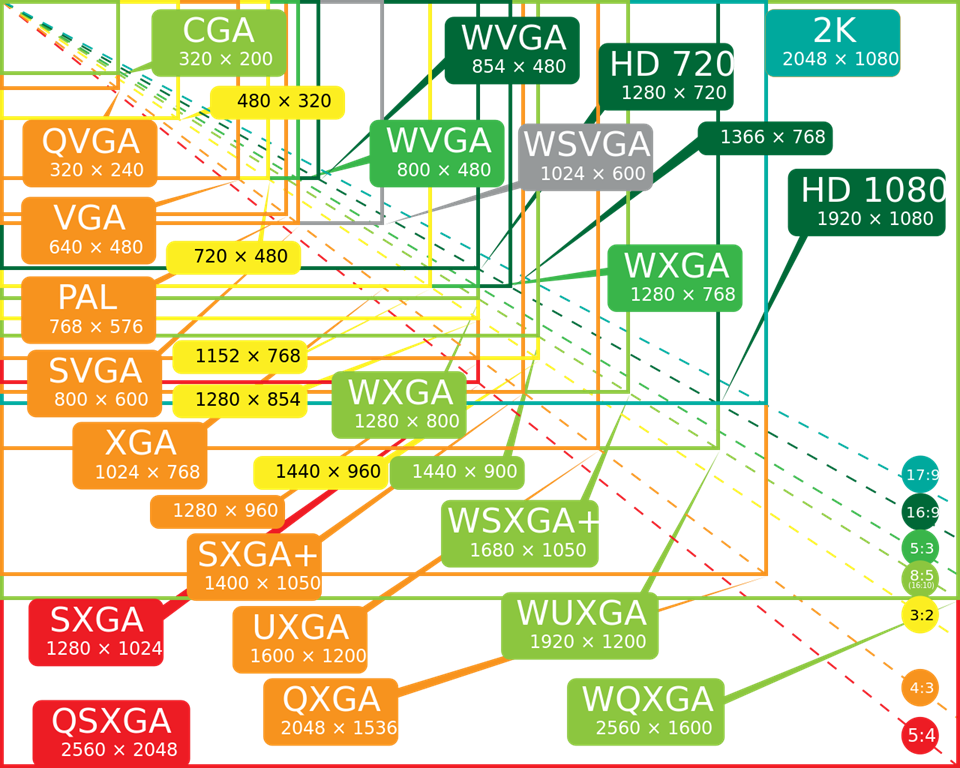
To fit the actual classroom layout into the display, we would however need the bottom lower right resolution (WQXGA). We still have to split the classroom you see into 2 halves and tilt those by 90 degrees clockwise to fit them onto the right teacher screen.
Since our left screen is still the original 1024*768 (and will be until not only the screen, but the switch and projector get upgraded), you have to work (= move your mouse pointer) around the “wall” formed by the black block in the lower right of this screenshot.
How to conduct a Sanako Study 1200 functionality test before oral exams
- Why? Before high-stakes oral assessments, it is best practice to test the functionality of all computers in the digital audio lab.
- How?
- Log into 2 computers with your own account (these will serve as a backup computers. Should you need backup computers later, there will be no delay waiting for them to start up and become operational).
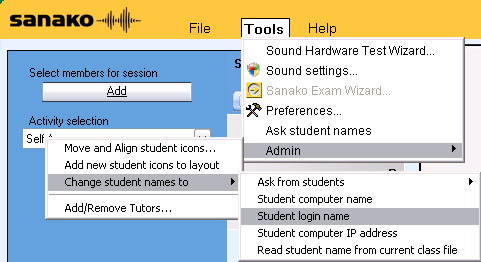
- Change Sanako classroom layout names to computer or position name (whatever makes it easier for you to identify any non-functioning machines).
- If you are doing this for a first time with a class, load your test exam audio into Audacity and display the voice graph to students on a projector. This way you make sure that students understand from the voice graph that they are supposed to
- hear an instruction over the headphones and
- respond to the instruction by saying their names into their microphones.
- Perform a name-test recording using Sanako activity:”Model imitation”and examine the results:
- Make sure the Sanako collection folder opens – meaning all student recordings could be collected. If not, identify the offending positions from the Sanako collection dialogue and open the folder with the remaining collected recordings manually from the Sanako collection dialogue
- Drag the recorded files into an empty Audacity window and examine the collected recordings visually, plus, where in doubt, aurally, by clicking “solo” and play on the track in question.
- React accordingly:
- If some positions show problems, move students to one of the backup machines that you logged into earlier.
- move backup machines not needed to a different session by right-clicking on their classroom layout icon.
- if more than one backup machine is indeed needed, Sanako – since it is you who are logged in on both – will ask you later for permission to number collected files for duplicate students sequentially. Allow that and rename the files manually.
- Don’t forget to change Sanako classroom layout names back to student login name.
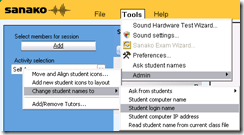 . Or else here is how you can later recover student recordings by student login names.
Use SharePointDesigner here to quickly and cleanly edit legacy static web pages
- Confronted with the need to have faculty classify my variable speed animated GIF collection of Mandarin characters linked from static HTML pages, I find:
- SharePointDesigner is a FrontPage derivative, but still beats dealing with the special markup MS-Office tends to smuggle into your legacy web pages.
- And you can download it for free from MS here, install and open a file by right-clicking it and “Open with”, like so:
 .
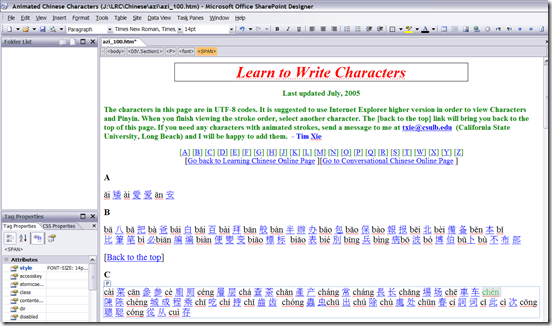
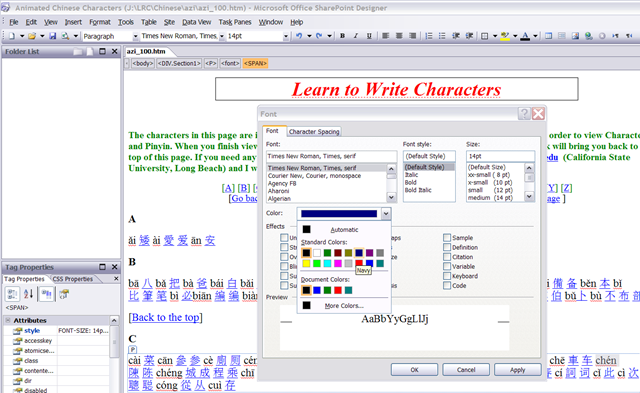
. - User then can e.g. select a pinyin word, right-click it, access the font-dialogue, like so:
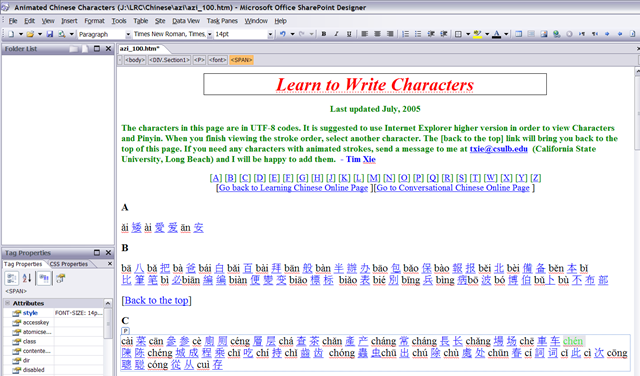
 , and, to align this alphabetic pinyin list to the progression in the syllabus if the Chinese language program, assign a heat-scale like so:
  . E.g this would denote an easy character for Chinese 101:
  .
. - Note 1: Do not use SharePointDesigner 2010,, this doe not allow easy editing of single web pages anymore:
 .
. - Note 2: The CSS style markup that SharePointDesigner puts in smartly for the font color change is ignored by Internet Explorer 8 (Huh?!), so we will have to TBA:ask students to use Firefox instead.
- Note3: Why not just use MS-Word as HTML-Editor. Even if you save as and choose “Web-page filtered, like so:
 , to avoid MS-Office specific markup, MS-word puts spurious markup in that makes it not only slow down the road to open the file, but also difficult to post-process them with regular expression (I have a few hundred copies to make for different animation speeds). Compare the file sizes here:



How to switch the input language in Respondus Lockdown browser, e.g. to Arabic
- Short answer:
- Right-click the Language bar on the taskbar and choose “Restore the Language bar”, like so:

- This makes the language bar a floating toolbar on top of the screen, like here:
 . This floating toolbar you can still access when in Lockdown browser.
 - The language bar can be temperamental, you may need to bring it up again, try switching back and forth between input fields.
- Long Answer:
- Respondus Lockdown browser blocks many functionalities, including the shortcut combination to change input languages (usually LEFT ALT + SHIFT) and access to the Language bar on the task bar.
- This is not an issue when your quiz is in a western language and you have US- international keyboard layout configured as your default (which lets you type most Western diacritics without need for keys blocked by Respondus Lockdown browser )
- It is an issue with e.g. Arabic. You cannot even temporarily set Arabic to your default input language before starting lockdown browser, since then you cannot log in (with MS Maren IME, you can override the Arabic default to enter your username in western characters, but not the password. Respondus Lockdown Browser is built on Internet Explorer, but it does not share the cookies, so being logged into your LMS in Internet Explorer does not carry over to your Lockdown Browser session).
- Workaround: See above.


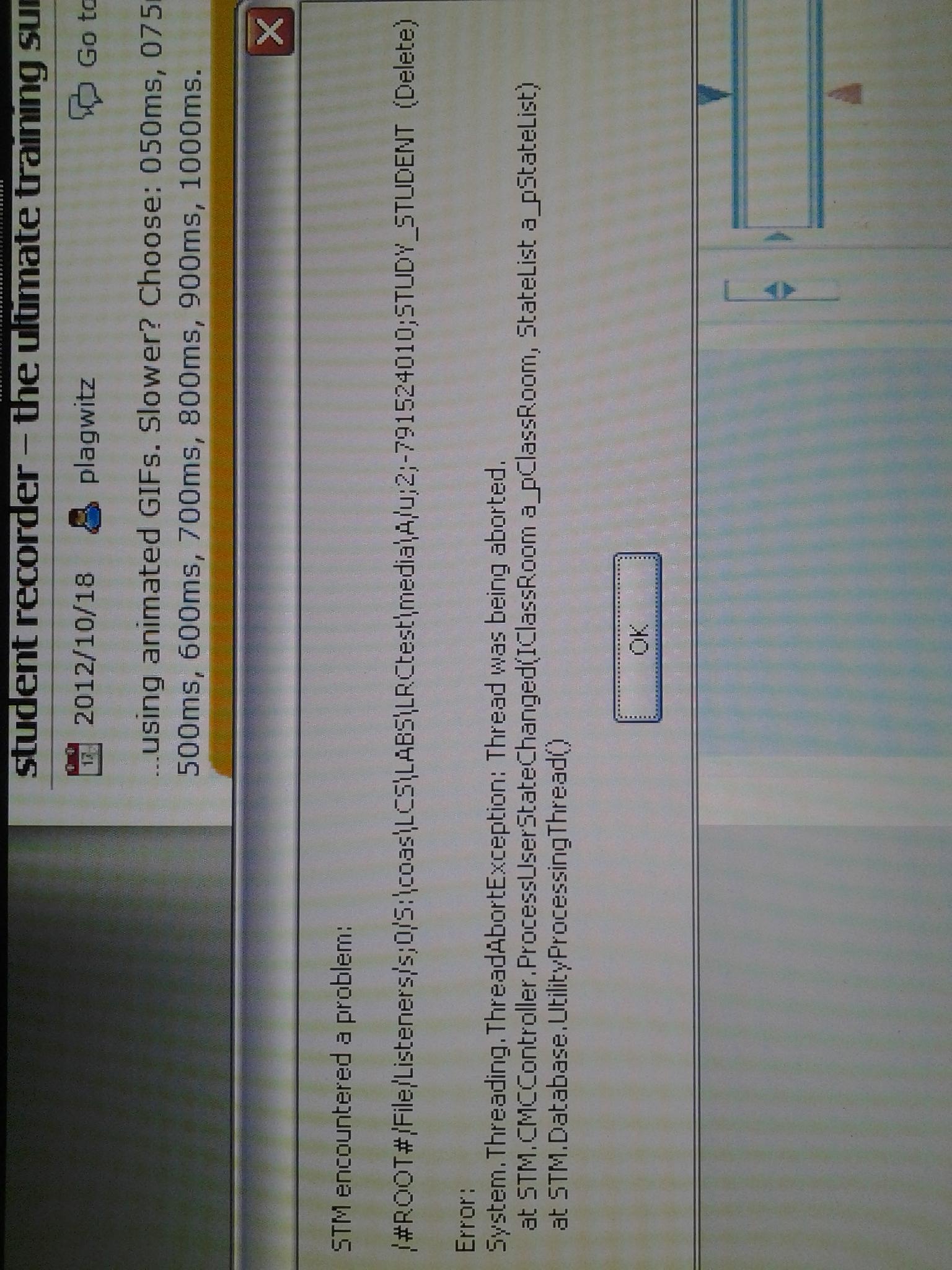
STM Crash
Oops? Haven’t seen that one before, and the Sanako Study 1200 has been stable. Networking issues again? (availability of file share S-drive?) See similar crash of licensing service recently.
Replacing the Sanako Authoring Tool
- Problem: Oral exams with visual cues have been popular, but the Sanako Authoring Tool we used to create them has been faded out. How can we quickl replace it?
- Workaround:
- collect your files in my Word template (left part of screenshot) like before (question/cue, repetitions, response pause time), including your images
- Save your MS-Word files as html.
- This will create a subfolder with media (right-side of screenshot). All your images are numbered sequentially in the order they appear in your template. Some are duplicated: select the first ones (the duplicate is a size reduction), plus the unique ones, and copy them to a new folder, e.g. “pictures”, on the Sanako teacher share, somewhere underneath your course folder where also your audio exam files resides.
- During the exam , you can display the pictures while playing the audio portion of your oral exam, from this folder sorted by name (= numbered sequentially) with the default teacher computer image viewer. No need even to fling out PowerPoint….

Mylanguagelab.com “Authentication failed” glitch in audio recorder
Common error in IE8 when students review their test before submitting. No worries, the student recording is not lost. Still, what is the solution?



Questions? Read the About. Or just ask me a quick Our Databases: Resources with calendars -- Language learning material Moodle Sites, multimedia files -- films


FAQs for LRC student staff or for students or for teachers. To search our FAQs, in the browser addressbar, add after "https://plagwitz.wordpress.com/feed/?tag=faqs+/" "+TAG1" (from tag cloud below) OR "https://plagwitz.wordpress.com/feed/tag=faqs
&category_name=" "CAT1" (from category hierarchy below). OR search both categories and tags, and multiple TAGs/CATs (connect with "," for OR-search, with "+" for AND-search), like so: https://plagwitz.wordpress.com/feed/?tag=TAG1+TAG2+...TAGn&category_name=CAT1
+CAT2+...CATn"
Other ways to find help
If you cannot find it here, look there: 5,500 Language-Learning Links and Programs for learning or teaching 150 languages
Shortcuts:Our Lists, Our Maps, LRC Staff Moodle Site,LRC Project Moodle Site, 49erexpress, UNCC Moodle, Student Recordings: s:claslcslrcsanakostudent
Learning usage samples: Sanako oral exam, Kaltura webcam presentation, Dictation with speech recognition, Sanako written exam, Chinese and Japanese interactive stroke-order practice
Test the Sanako Installer, Webbrowser Popup Konfigurator for XP, or Windows7, faster LRC TeacherPC Log-in Let MS facilitate diacritics writing by installing for you US-International keyboard layout
This is my personal blog (Google+). The views expressed on these pages are mine alone and not those of my employer. The information in this weblog is provided “AS IS” with no warranties, and confers no rights.
 Thomas' Work Space