MS-SkyDrive-related blog posts
LRC Spring 2013 announcements
Over the break SANAKO permissions for students and teachers were set up according to vendor specifications.
Benefits on LRC computers, office PCs (and MACs, except for Sanako standalone recorder; try also home computers if you use university network shares from home):
1. Teachers in LCS and ELTI can save their learning material files directly from their office PCs to the SANAKO folders for distribution within the LRC.
2. Teachers don’t anymore have to request permission for SANAKO before first visit of the LRC with students enrolled in ARBC, CHNS, ELT, FLED, FREN, GERM, GREK, ITLN , JAPN, LACS, LATN , LTAM, PORT, RUSS, SPAN, TRAN, they automatically have access to use the SANAKO in the LRC.
3. Teachers can from their office PCs grade their students’
- writing with written feedback
- and recordings with oral feedback using Sanako voice-insert
- and have the feedback automatically distributed to students (requires finalization of my langlabemailer extension for the SANAKO).
While I have no tools to test the permissions, I am optimistic that this will work much better than the unfinished configuration we had to make do with during the first 21 months of the SANAKO. In the unlikely event that you run into errors, let us know like so: https://thomasplagwitz.com/2011/10/18/how-to-make-a-screenshot-of-your-computer-screen/).
Unfortunately, the SANAKO root folder had to be changed also due to new ITS requirements. This breaks the folder shortcuts (not the standalone recorder) that I have manually added to some teacher’s computers. I am investigating whether a new computer management tool ITS is introducing (TEM) can do this update of shortcut, as well install of shortcuts and Sanako standalone recorder. In the meantime, I updated goo.gl/yqR18 (password:uncclrct), your entry point to SANAKO folders (explanation and clickable link) , whether you work on the LRC teacher computer on your office PC or MAC. I also have a simple step-by-step how to install the standalone student recorder if you need it sooner: goo.gl/LzuDE.
Workshops: Teachers have requested earlier SANAKO workshops this term, at the same time finding common time for LRC workshop scheduling has proven to be difficult. So I would like to test 2 new things:
1. expanding the self-access training materials collection introduce during the last workshop: goo.gl/r5Izg (work in progress, your companion at the teacher station with step-by-step videos for common Sanako activities.
2. offering a bi-weekly drop-in clinic (from week 3) for preparing activities based on these training materials.
a. Where: All clinics will be in the LRC main classroom, in the hope of using the SANAKO hands-on the creation and delivery of learning materials/activities, helping multiple teachers simultaneously.
When: So that everybody can find a time that fits into their schedule, the time-slot of the clinic will be rolling through-out the term (starting on Tuesday at an even hour and on Thursday at an odd hour), and continuing 2hrs later each consecutive week (barring your prior booking of the LRC for classes and exams which take priority – please book as soon as you finalize your syllabus so that I can finalize the clinic schedule). Just look for "Sanako Clinic" in the LRC calendar (http://mail.uncc.edu/owa/calendar/LRCRoomCOED434@uncc.edu/Calendar/calendar.html, or to be able to search, add it to your NINERMAIL like so: https://thomasplagwitz.com/2011/11/21/how-to-subscribe-to-an-lrc-calendar/) and drop-in to create plans and materials for SANAKO activities like in the companion. If, however, you need a different time slot, send a meeting request to LRCroomcoed434@uncc.edu and me and I will reschedule for this week (please "signal" early so as to avoid "bumping " other clinic attendants.
Imran’s Phonetic Keyboard for Arabic

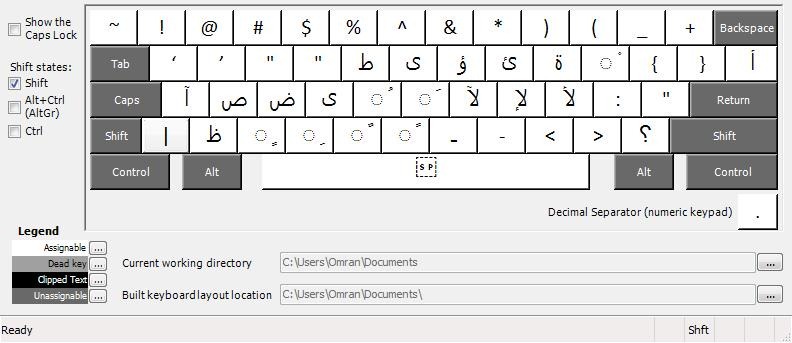

Learners of Arabic who type in Arabic on a Western Keyboard prefer a keyboard layout closer to the phonetic of the US keyboard than the Arabic keyboard layouts that MS provides (but try also phonetically transcribing IME like Google Arabic Input or Microsoft Maren – provided the pedagogy of your writing assignment permits that! Also note the LRC has 1 hardware keyboard with overlay keys for Arabic). Here is what your keyboard installation looks like in intl.cpl: 
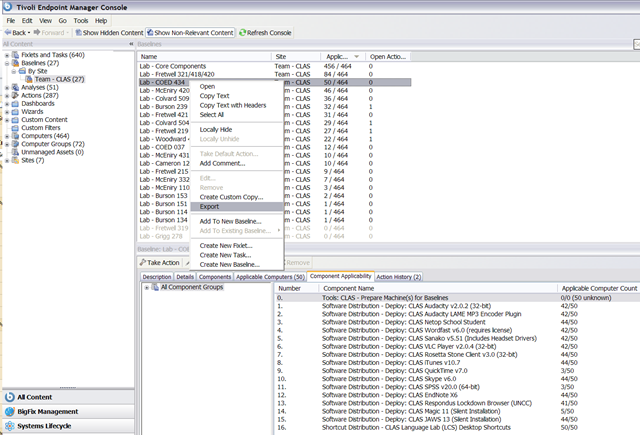
Export options in Tivoli Endpoint Manager
- You can batch export Baseline task sets by right-clicking the baseline and chooosing export from the context menu:

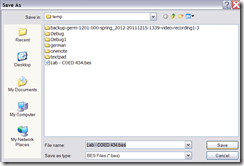
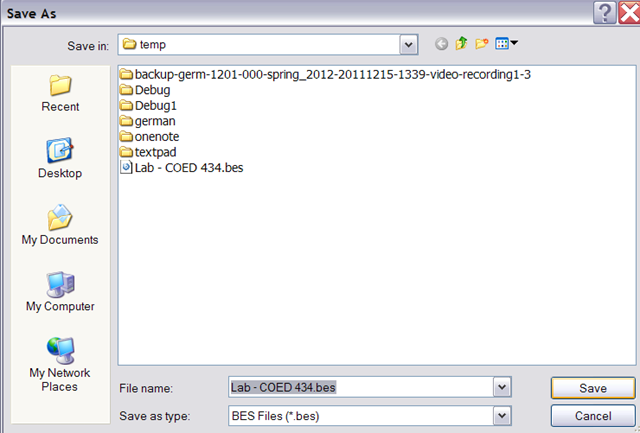
- Choose a download location:
- Open the BES file (which is an XML file) with MS-Excel for better human readability:

- Especially interesting information (highlighted in red here) for your documentation (tracking, potentially troubleshooting…) includes the task “name3” and the underlying Actionscript.

How you can share MS-Office files via MS-OneNote instead of directly through MS-SkyDrive
- Simple steps:
- Drag and drop your MS-Office File to your MS-OneNote page.
- When prompted, choose to “insert a copy” (rather than merely linking the original file).

- This puts a copy of the file in the MS-OneNote folder on your local drive,
- which (file and folder) gets synched with your online (MS-SkyDrive) version,
- which, if you shared it, gets synched with the MS-OneNote folder on the local drive of the PC of the person you are sharing with,
- who, by double-clicking, can open and edit his synched local version of MS-Office file in the corresponding MS-Office application.
- Stepping back:
- Benefit: If you have a working MS-OneNote-based workflow, embedding MS-Office file can quickly extend this workflow.
- Risk: If you do not share the MS-OneNote with other editors, you should have no problem. Be aware, though, that concurrency is limited. Unlike accessing the MS-Office file in MS-Office through Office Web apps from MS-SkyDrive directly, editing the MS-Office file from MS-OneNote does not block updating the MS-Office file on remote computers – so expect synching conflicts later if you do not manage concurrency (e.g. by limiting editing sessions).

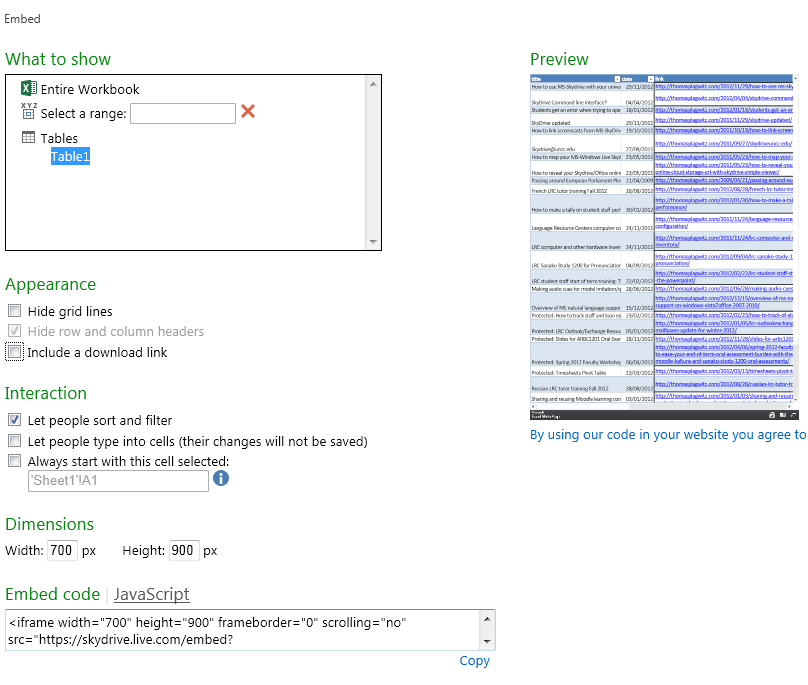
SkyDrive Embedding
Excel: tab:File/ 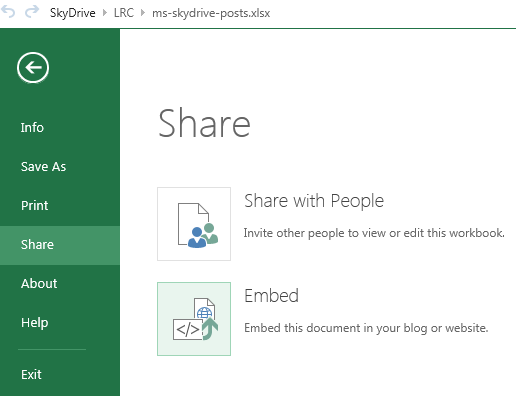
How teachers prepare files for oral exam with Sanako Study 1200
- For an oral exam with visual cues (example), make a PowerPoint slideshow by
- finding images, e.g. online
- (e.g using Google image search,
- and optionally advanced search,
- and optionally filtering by clip art.
- and optionally advanced search,
- (e.g using Google image search,
- saving found images to a local folder (e.g. “my documents”),
- using them with PowerPoint’s PhotoAlbum feature
- saving the result as [your username]_[your class####]_oral-exam##.pptx.
- finding images, e.g. online
- For an oral exam with aural cues,
- if you do not have the Sanako student recorder installed on your PC yet,
- Follow the instructions here to install it for use in your office (or even at home – make sure you have access to the network share with the recordings if you want give aural feedback with insert recording)
- or come to the LRC to record where the Sanako is set up be default;
- fill out our oral exam MS-Word template (sample question included) from here (use the lower right menu download button).
-
Start the Sanako student recorder (in the LRC or on your own computer – if in need, you can borrow one of headsets in this this list),
- press the red record-button in the center right, as shown here and
- read out the MS-word template, row by row, that you just filled out.
- Once done, press the blue stop button.
- Go to Menu: file / save as/ [your username]_[your class####]_oral-exam##.mp3.
- if you do not have the Sanako student recorder installed on your PC yet,
- Normally (it is still being worked on),
- you could save all files in a special Sanako folder visible on the desktop of your office PC,
- from which I, as soon as you let me know about the files, can pick them up in my office to finalize them for delivery in the LRC and
- from which you can pick up the final version in the classroom to when administering the exam in the Sanako lab.
- Questions remain? Come to the LRC reception desk during regular business hours with this blog post to be walked through this step-by-step.
How to create a visual cue exam file using Insert Photo album in PowerPoint
Once you have found (e.g. with a Google advanced image search) your desired images and saved them in a folder, open PowerPoint (e.g. by clicking “start”/ “run”/ typing “powerpnt”, click “OK”) and do this: 

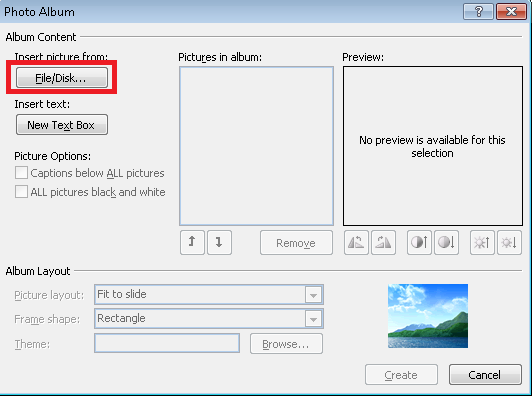

Result: an easy displayable list of images (you may want to drag&drop the slide thumbnails on the left in to a different sequence if you did not get the sequence right in the above “PhotoAlbum” dialogue: 


Questions? Read the About. Or just ask me a quick Our Databases: Resources with calendars -- Language learning material Moodle Sites, multimedia files -- films


FAQs for LRC student staff or for students or for teachers. To search our FAQs, in the browser addressbar, add after "https://plagwitz.wordpress.com/feed/?tag=faqs+/" "+TAG1" (from tag cloud below) OR "https://plagwitz.wordpress.com/feed/tag=faqs
&category_name=" "CAT1" (from category hierarchy below). OR search both categories and tags, and multiple TAGs/CATs (connect with "," for OR-search, with "+" for AND-search), like so: https://plagwitz.wordpress.com/feed/?tag=TAG1+TAG2+...TAGn&category_name=CAT1
+CAT2+...CATn"
Other ways to find help
If you cannot find it here, look there: 5,500 Language-Learning Links and Programs for learning or teaching 150 languages
Shortcuts:Our Lists, Our Maps, LRC Staff Moodle Site,LRC Project Moodle Site, 49erexpress, UNCC Moodle, Student Recordings: s:claslcslrcsanakostudent
Learning usage samples: Sanako oral exam, Kaltura webcam presentation, Dictation with speech recognition, Sanako written exam, Chinese and Japanese interactive stroke-order practice
Test the Sanako Installer, Webbrowser Popup Konfigurator for XP, or Windows7, faster LRC TeacherPC Log-in Let MS facilitate diacritics writing by installing for you US-International keyboard layout
This is my personal blog (Google+). The views expressed on these pages are mine alone and not those of my employer. The information in this weblog is provided “AS IS” with no warranties, and confers no rights.
 Thomas' Work Space