LRC Assistant Start of Year Training: The PowerPoint
Links Dual-Monitor
How LRC assistants log into the reception desk computers
- Let the computer finish its startup tasks:
- Browsers: both internet Explorer and Firefox will open on relevant pages, since you and your client will have to work in different browsers, ensuring that both your and your client can be logged into different NINERNET accounts.
- Excel will load a checkin.xlsm. In Excel, under the ribbon, press button:"Enable content". Use this to generate codes that you can paste into users"’ meeting requests when they check in and out LRC equipment. The spreadsheet will not save the codes since your computer is frozen.
- A program called bginfo will analyze the computer settings and display the results on the desktop
- ZoomIt: press “ok” on the startup dialogue. You can now press CTRL-2 (thanks Ashley) and drag the left mouse button (ESC to stop) to paint on screen to communicate with client across mirrored screens, and vice versa.
- Do you have a client at the counter?
- yes: press CTRL-ALT-F10 to clone/mirror (= show the same screen on) both monitors. You can now collaborate with the client using a computer (e.g. in OWA or in a database)
- no client: press CTRL-ALT-F11 to extend the desktop. You can now display an informational window on the LRC-facing monitor, while working on your own monitor in privacy.
- The reception computers use Deepfreeze. You cannot save information on reception desk computers between reboots.
- All personal information you want to save needs to go to your H: drive.
- All information you want to share with LRC staff needs to go into LRC Moodle site, UNCC-LRC website or NINERMAIL.
Reception area PCs: Remaining issues with the software image
- That’s a new one:
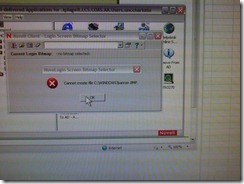 . likely fixed by logging in with an admin account first before freezing.
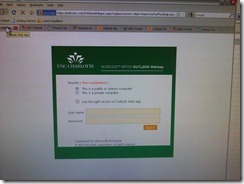
 - IE8 windows in kiosk mode where clients need to log in (and out, using the built in links not by closing the browser)
- 49erexpress , the rest is linked there and opens in a new window which can also be closed, as long as the login dialogue stays up
- mail.uncc.edu
- Moodle
- Safari
- default dialogues need to be changed
- no “not default browser”:
- close w/o saving settings/tabs
- no “not default browser”:
- should start and load the UNCC-LRRC calendar (could be home page)
- default dialogues need to be changed
- Chrome
- business chrome install, but interferes with zoomit shortcuts
- Firefox
- is missing tab 49erexpress: use this also for lrc assistants
- LRC Moodle
- LRC lists
- loads its required tabs twice – probably related to “save and quit” feature which needs to be set to “quit” and “never ask again”.
- Spreadsheet opens read-only.
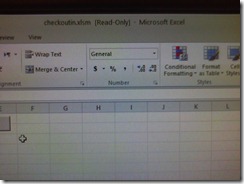
- Trying to set the file attribute to read/write fails

- Trying to set the file attribute to read/write fails
- not needed, store in outlook, also we do not output code to spreadsheet anymore anyway to discourage manual copy: Writable spreadsheet is not useful anyway on a frozen PC
- w/o thawspace: implement one in Deepfreeze (which requires alteration of the DFWks.exe installer) (and during creation of the image, fake the drive letter from which the spreadsheet autoloads, with a removable drive).
- Better would be Faronics Igloo which would with install of deepfreeze redirect spreadsheet folder to thawed virtual partition, but is not available
- Deepfreeze did install and could be frozen, but does not accept its password for thawing locally and needs to be thawed from the Deepfreeze Console. Password has been updated.
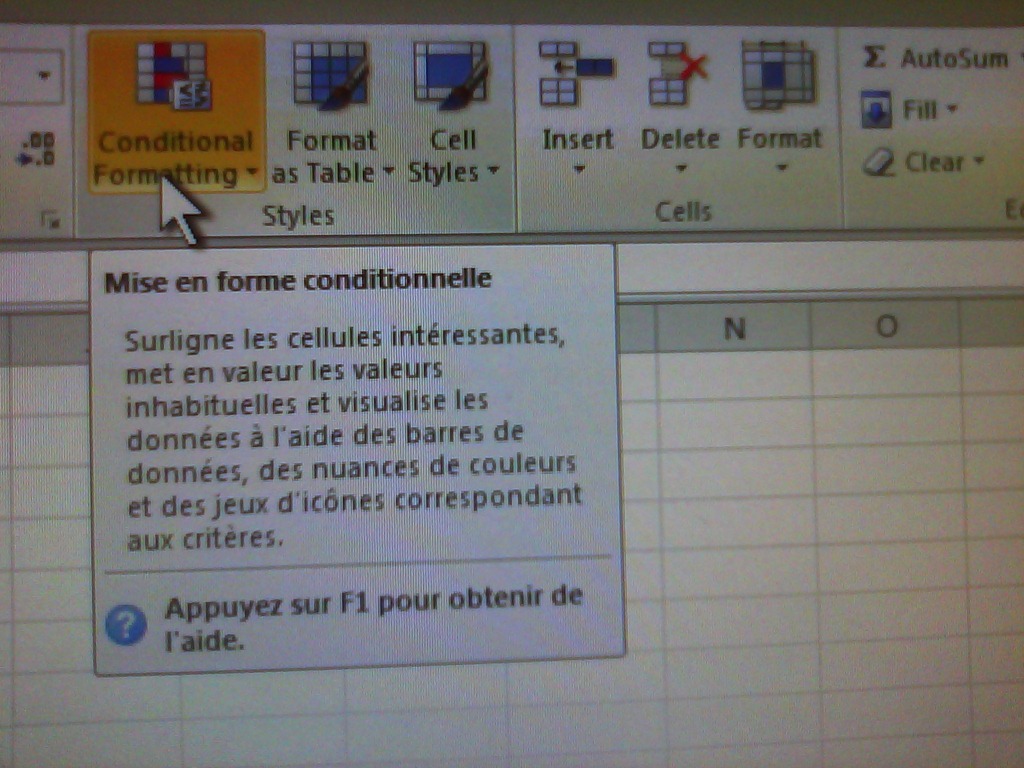
- The MS-Office tooltips are set to French – this is for testing:

- Internet Explorer managed to sneak in Bing as the default search provider;

- When starting MS-word, there is a DOCUMENT Recovery pane.
- in explorer, protected operating files are not shown, but hidden files
- label screens on lrc assistant side.
- LRC assistants use Firefox, clients use Internet explorer (full-screen – use ALT+TAB to switch windows)
- show on 2nd screen:
- SAFARI with UNCC-LRC calendar
- Moodle Spanish announcement (?)
- Printers
- department: optional
- Ricoh: default



Adapting a Symantec Ghost 11 Dell Optiplex 760 imaging setup to 780 hardware using Boot Wizard Win-PE editor
-
I have set up locally, and documented, a default installation of Symantec Ghost 11 (Ghost console version 11.5.1.2266) that can image a computer lab of dell OptiPlex 760 (not sure how I ended up with doing even this part).
-
Trying to set to implement use of our new live@edu communications infrastructure in this environment, I need to image a Dell OptiPlex 780 lab with this setup results in an error: “To Virtual Partition Drivers could not be found in the PreOS for the following devices:Manufacturer: "Intel", Description: "Intel(R) ICH10D/DO SATA AHCI Controller", PCI Vendor: 0x8086, PCI Device: 0x3a02, PCI Subsystem: 0x4201028”
-
The institution has not produced any documentation on this adaptation, so here goes: You can get a complete set of MS-Vista 32 drivers (which is the OS version that Ghost 11 Win-PE uses ) for Dell Optiplex 780 from Dell’s Driver CABs Homepage, including a table of contents.
-
You can expand this in Windows Explorer and look for the x86 storage driver, and you will find only one suitable: R222843, Matrix Storage Manager (OS Pre-Install Driver Only), A17, 8.8.0.1009
-
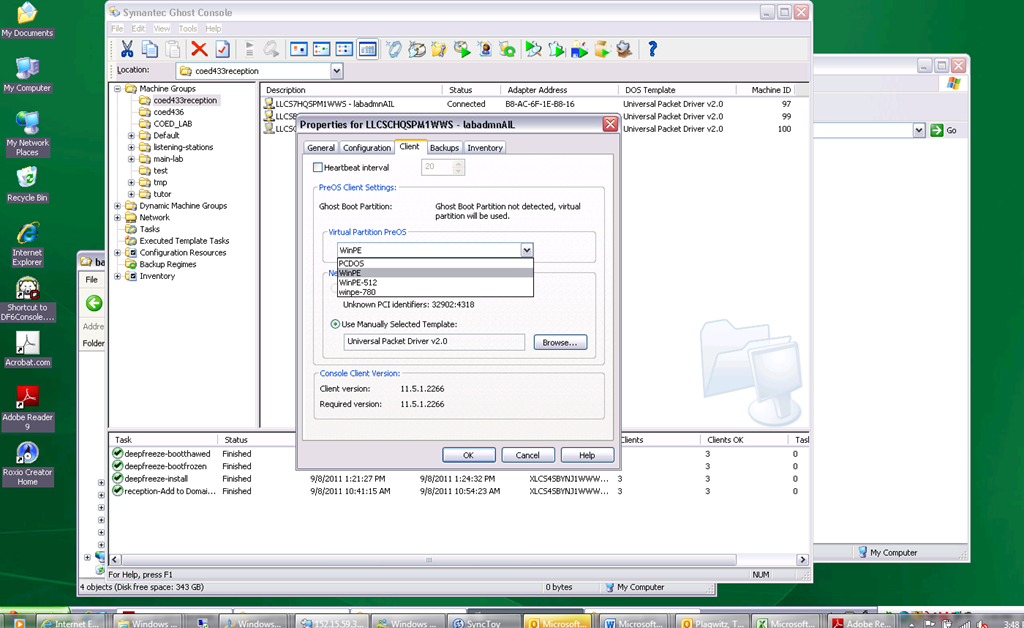
In Ghost console / tools / boot wizard, You can add this driver (entire dir, as long as it has a friendly name for ghost – could you have done this with the entire dell driver cab of 300mb?) to the win-pe-780 (I made a copy of the default win pee environment which I still need to use for a different set of hardware) (which then compiles the win-pe image), and
-
You also have to check the driver , to have it included (which compiles the win-pe image again – why? ).
-
You have to set in Ghost console menu; tools / options / the win-pe as the default remote boot os (this will have to be changed for 760 imaging back to win-pe).
-
Now, did this really “take”?

-
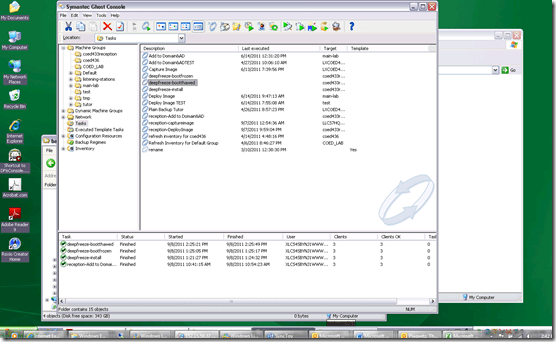
This allows the reception-captureimage task to complete.
-
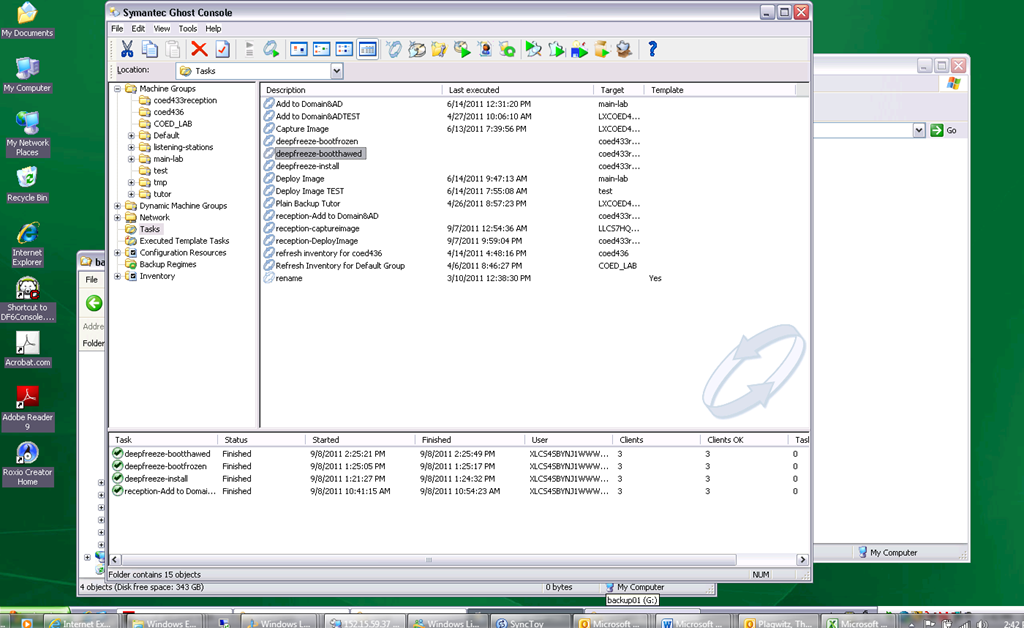
Additional tasks reception-DeployImage and reception-Add to Domain&AD can be derived from the default installation.
-
We can also deploy and manage Deepfreeze now from the Ghost Console, bypassing Deepfreeze Console.
-
-
I hope this was my last trip down the “general computing” infrastructure Geisterbahn for a while. I was actually trying to apply productivity software infrastructure to a local business process, and merely to free up some time for elearning pedagogy…
How to transfer calls on the Cisco IP Phone 7912

If you mistype, don’t leave the caller hanging, but rather follow these steps (kindly provided by Alesha) to recover: Likely you left the caller on hold.
- Press the hold key (illuminated red button that is shaped like a stop sign)
- Press transfer
- Dial appropriate extension
- Press transfer again!
- Because the telephone is already in the cradle, students do not need to hang up or press the EndCall key.
Sanako Study-1200 Oral Exams: More result examples
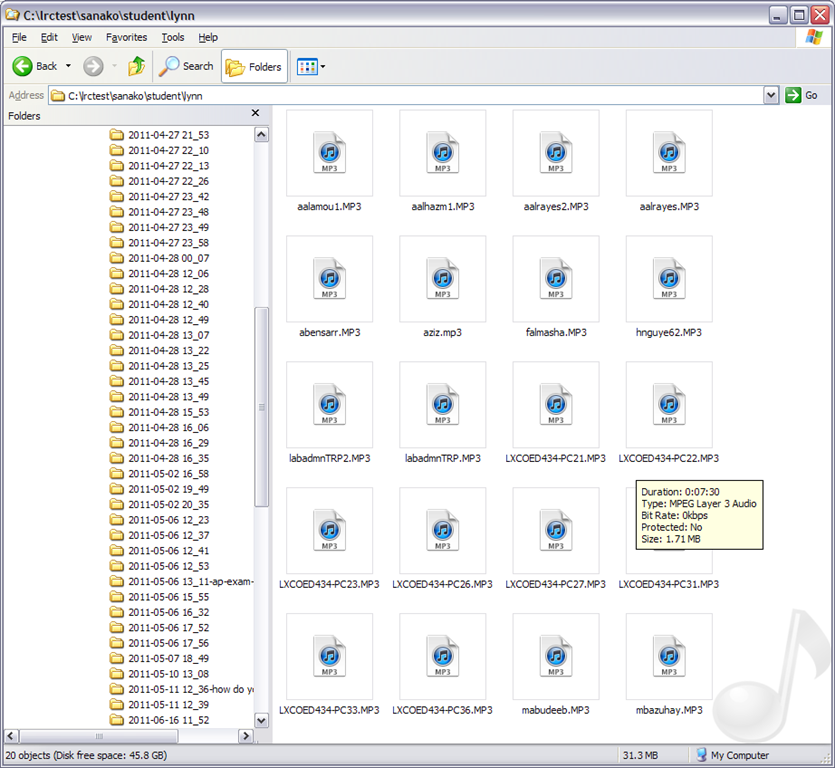
- Study 1200 will automatically save the exam recordings of each of your students under a distinct name (you can choose student email name or seat number) in a location which you can access from your office desktop:

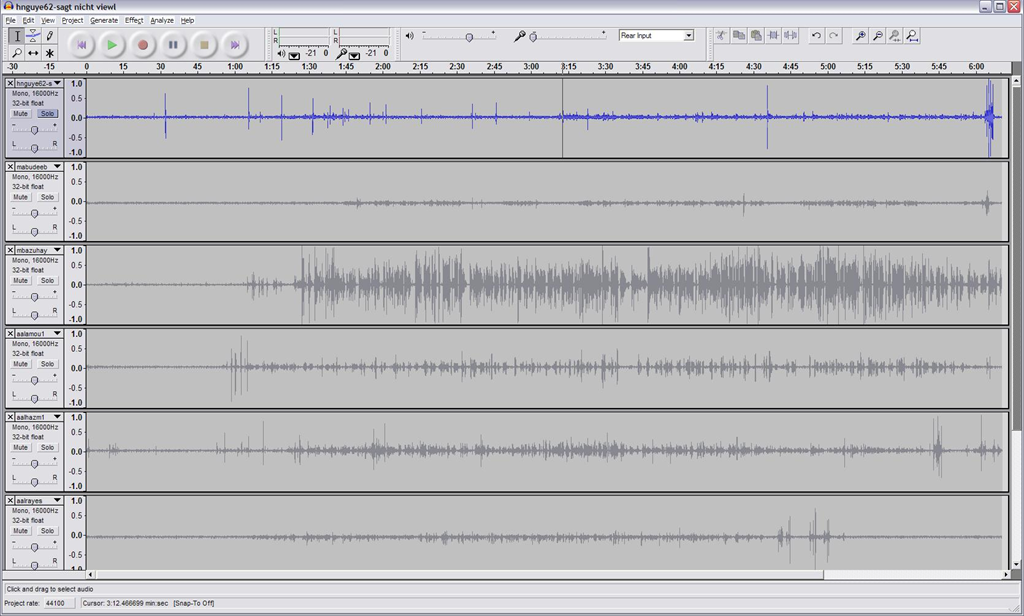
- You can load this recordings in Audacity to grade them, including skipping past the questions and increasing the play speed, but not the pitch, and easy comparison of students like in the picture below:
-


How to do Sanako Oral Exams with large classes, but few licenses: A workaround using partial classroom layouts
When you open the Study1200 tutor, a dialogue comes up which lets you select you the “classroom layout’. What this actually means – since the physical classroom (LRC layout) is obviously immutable –, is: which computers do you want the Study1200 to connect.
The “template classroom” (this happens to be just the default name within Sanako) tries to connect all students logged in on computer in COED434 to the teacher from the “corridor” (= where Study1200 leaves all computers that it knows of, but that you do “into” want to let into the classroom; the corridor has link in the bottom center of the Study1200 teacher window, and it flashes if there is a change “in “ the corridor Stuy1200 wants to make you aware of) that the Study1200.
However, beyond the 20th client (first come, first serve), this will fail because of licensing restrictions, and a grey exclamation mark will appear in the classroom layout in the Study1200 window for these student icons.
The “left-half”and “right-half” layouts that I created load only the computers in either the left or right half of the COED434 classroom (each without the wall/window-facing computers at the very edges) into the classroom layout (other logged-in students will remain in the “corridor”, linked in the bottom center of the tutor interface, if you want to add select students – note that the student icon will not appear on screen in their approximate physical position in the classroom.
You can also bring up the dialogue from which you can choose classroom layout after the initial startup of the tutor: Go to top menu: file / classroom layout. A 45-second screencast of this switching our classroom layouts in Sanako Study 1200 is available for download (requires Windows Media player).
In the screencast, you can see how the visual layout on screen reflects the physical layout in the classroom (the number labels on top of our computer monitors appear (optionally) in seat numbers): rotate by 90% clock- or counterclockwise (I wish we would have not only more licenses, but also a higher screen resolution. Stay tuned).
This technique of splitting the classroom, unloading and loading half of it at a time, you can exploit for administering oral exams consecutively with class sizes (current maximum is 25/30, depending on level) that exceed the number of licenses we have (currently 20 + teacher).
This technique of excluding computers from connecting to the teacher we could also use to merge the listening station computers, even though they have a different audio hardware configuration (analog headsets only, no Sanako headsets with built-in sound card and disabled on board sound) into the main software image without consuming valuable licenses – not without other problems.


Questions? Read the About. Or just ask me a quick Our Databases: Resources with calendars -- Language learning material Moodle Sites, multimedia files -- films


FAQs for LRC student staff or for students or for teachers. To search our FAQs, in the browser addressbar, add after "https://plagwitz.wordpress.com/feed/?tag=faqs+/" "+TAG1" (from tag cloud below) OR "https://plagwitz.wordpress.com/feed/tag=faqs
&category_name=" "CAT1" (from category hierarchy below). OR search both categories and tags, and multiple TAGs/CATs (connect with "," for OR-search, with "+" for AND-search), like so: https://plagwitz.wordpress.com/feed/?tag=TAG1+TAG2+...TAGn&category_name=CAT1
+CAT2+...CATn"
Other ways to find help
If you cannot find it here, look there: 5,500 Language-Learning Links and Programs for learning or teaching 150 languages
Shortcuts:Our Lists, Our Maps, LRC Staff Moodle Site,LRC Project Moodle Site, 49erexpress, UNCC Moodle, Student Recordings: s:claslcslrcsanakostudent
Learning usage samples: Sanako oral exam, Kaltura webcam presentation, Dictation with speech recognition, Sanako written exam, Chinese and Japanese interactive stroke-order practice
Test the Sanako Installer, Webbrowser Popup Konfigurator for XP, or Windows7, faster LRC TeacherPC Log-in Let MS facilitate diacritics writing by installing for you US-International keyboard layout
This is my personal blog (Google+). The views expressed on these pages are mine alone and not those of my employer. The information in this weblog is provided “AS IS” with no warranties, and confers no rights.
 Thomas' Work Space