Installing support for non-western languages in Windows XP
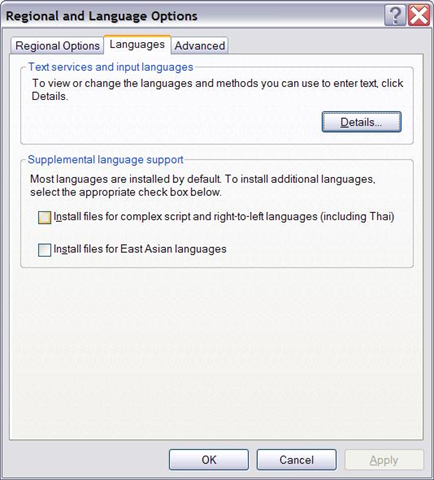
- You do not have them if your control panel / regional and language options looks unchecked like this:

- you need your Windows XP install disk
- The installer is not smart enough to find the i386 folder, nor to find all files around it.
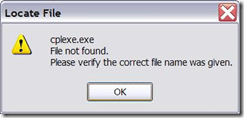
- Just point the installer to the directory manually where you located the file in question.

- The initial directory it is lookiong for is /i386/lang. The 2nd directory it is looking for is /i386.
- Additional complication: files in the install source are compressed, and their filename is altered (e.g. “.ex_” instead of “.exe”). So it is “Go figure”.
- Hm, I could have sworn this was the first thing I did here. Are downgrades being slipstreamed? I hope I did this now for the last time. Update: No, I did not…


Basic software to troubleshoot end-user videos
- Having problems with (source – target) end-user video compatibility issues? If you just need to “git r done”, the following software has helped us for years nip those in the bud and overcome the limited built-in support for video display and troubleshooting on the MS-Windows and Mac OS X platform:
- VideoLan, an open-source project that amounts to much more than a player which out of the box understands most codecs, going strongly into version 2 recently. Download for Windows or Mac OS X.
- Still won’t play? Diagnose codec and other information from video files, so that you do not need to set your hopes into the download of dubious codec packs.
Links explaining Copyright
- Code of Best Practices in Fair Use for Academic and Research Libraries. A librarian’s write-up that can also be very useful for Learning Centers that handle learning material media (but would it be possible to run this through MS-Word to “down-design” and add a table of contents instead?).
- Notable:
- “It is fair use to make digital copies of collection items that are likely to deteriorate, or that exist only in difficult-to-access formats, for purposes of preservation, and to make those copies available as surrogates for fragile or otherwise inaccessible materials. LIMITATIONS: Preservation copies should not be made when a fully equivalent digital copy is commercially available at a reasonable cost. Libraries should not provide access to or circulate original and preservation copies simultaneously”.
Linguee dictionary lookup based on parallel corpora
- Support for more languages is planned (Chinese, Japanese):
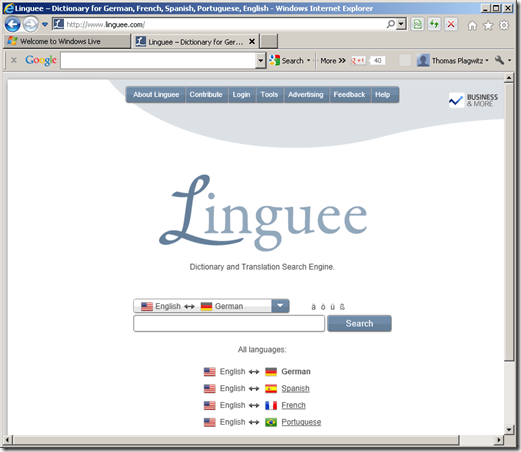

- The interesting approach based on parallel corpora provides a wealth of empirical data, albeit a bit raw and of varying quality, e.g.:



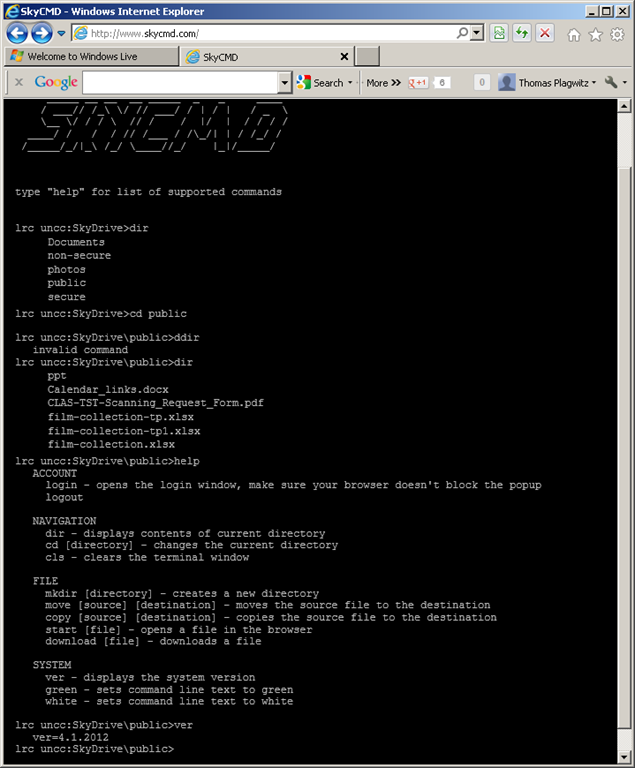
SkyDrive Command line interface?
Update: SkyDrive batching very near now…
Good one, but I am not getting the joke: We do need batching…?  Here’s hoping for Windows 8 SkyDrive integration.
Find open access research on teaching modern foreign languages with Yazik Open
An inititative of an expert from the UK LLAS, Yazik Open has the potential to become a welcome addition to our SLA research search options, especially if you do not want to run into a pay wall after finding an interesting abstract.
The currently sole contributor seems to be admin – same problem I had when I started a language learning resource links database in 1998, when will this change?
The keyword list looks somewhat rudimentary – when I worked with LLAS on a language learning resource metadata schema, complexity led to a grinding halt.
So the need to bring some of the advances in technologically fostered collaboration and information exchange to domain-specific fields like SLA certainly remains to be felt here.
Independent study with free language learning materials from the FSI?
The Foreign Service Institute language learning materials – consisting of scanned documents and digitized audio of multiple courses per language – were still a heavily-advertised resource when I visited the Defense Language Institute in Monterey in 2006.
It is nice to see these resources be made available for free. It is also nice to see the progress that has been made not only in technological adaptation of textbook learning materials since these materials were made available (post WW II?).
This, however, comes at a cost. If you shun it, and do not take a course that works which requires (and entitles you to the use of) a textbook, here are easily accessibleviewable learning materials for a large set of languages, including many LCTL: Amharic, Arabic, Bulgarian, Cambodian, Cantonese, Chinese, Chinyanja, Czech, Finnish, French, Fula, German, Greek, Hausa, Hebrew, Hindi, Hungarian, Igbo, Italian, Japanese, Kirundi, Kituba, Korean, Lao, Lingala, Luganda, Moré, Polish, Portuguese, Romanian, Russian, Serbo-Croatian, Shona, Sinhala, Spanish, Swahili, Swedish, Tagalog, Thai, Turkish, Twi, Vietnamese, Yoruba.
The Forums , however seem to indicate that not too many still use these options. The transformation into a (technologically superficially) more modern format here is limited to very few languages and courses (and crashed my web browser).


Questions? Read the About. Or just ask me a quick Our Databases: Resources with calendars -- Language learning material Moodle Sites, multimedia files -- films


FAQs for LRC student staff or for students or for teachers. To search our FAQs, in the browser addressbar, add after "https://plagwitz.wordpress.com/feed/?tag=faqs+/" "+TAG1" (from tag cloud below) OR "https://plagwitz.wordpress.com/feed/tag=faqs
&category_name=" "CAT1" (from category hierarchy below). OR search both categories and tags, and multiple TAGs/CATs (connect with "," for OR-search, with "+" for AND-search), like so: https://plagwitz.wordpress.com/feed/?tag=TAG1+TAG2+...TAGn&category_name=CAT1
+CAT2+...CATn"
Other ways to find help
If you cannot find it here, look there: 5,500 Language-Learning Links and Programs for learning or teaching 150 languages
Shortcuts:Our Lists, Our Maps, LRC Staff Moodle Site,LRC Project Moodle Site, 49erexpress, UNCC Moodle, Student Recordings: s:claslcslrcsanakostudent
Learning usage samples: Sanako oral exam, Kaltura webcam presentation, Dictation with speech recognition, Sanako written exam, Chinese and Japanese interactive stroke-order practice
Test the Sanako Installer, Webbrowser Popup Konfigurator for XP, or Windows7, faster LRC TeacherPC Log-in Let MS facilitate diacritics writing by installing for you US-International keyboard layout
This is my personal blog (Google+). The views expressed on these pages are mine alone and not those of my employer. The information in this weblog is provided “AS IS” with no warranties, and confers no rights.

