Archive
Mapping of Language Student Locations using Bing Maps
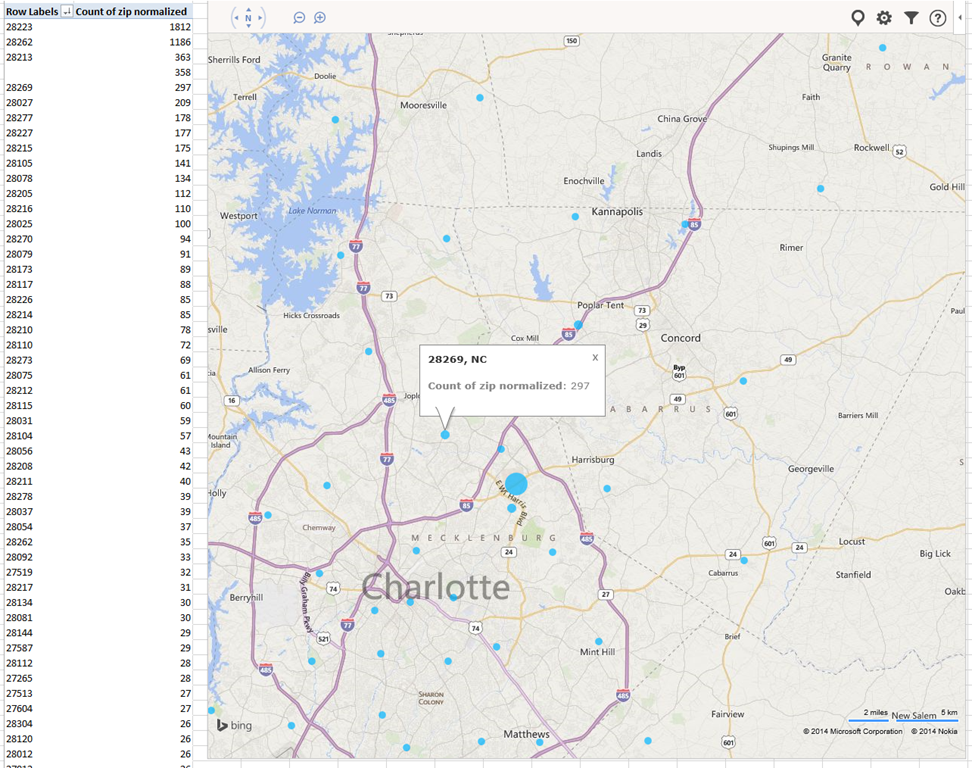
- What do our language students call home? Based on a pivot-table that counts zip codes, let Bing Maps tell you, a default add-in easily accessible in the insert section of the ribbon:
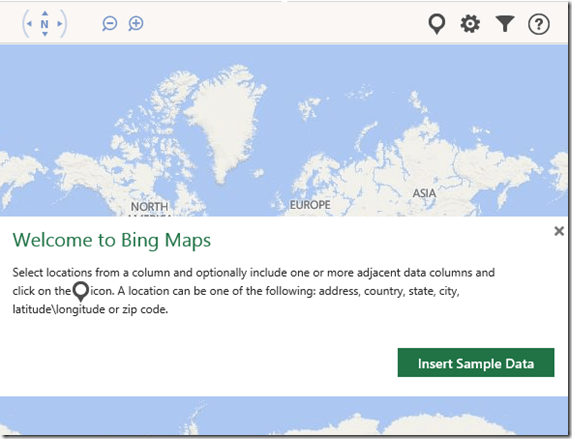
- Note a Limitation: Bing Maps max 100 data points.

- So we limited to zip codes with at least 15 students (which returns just below 100 zip codes).
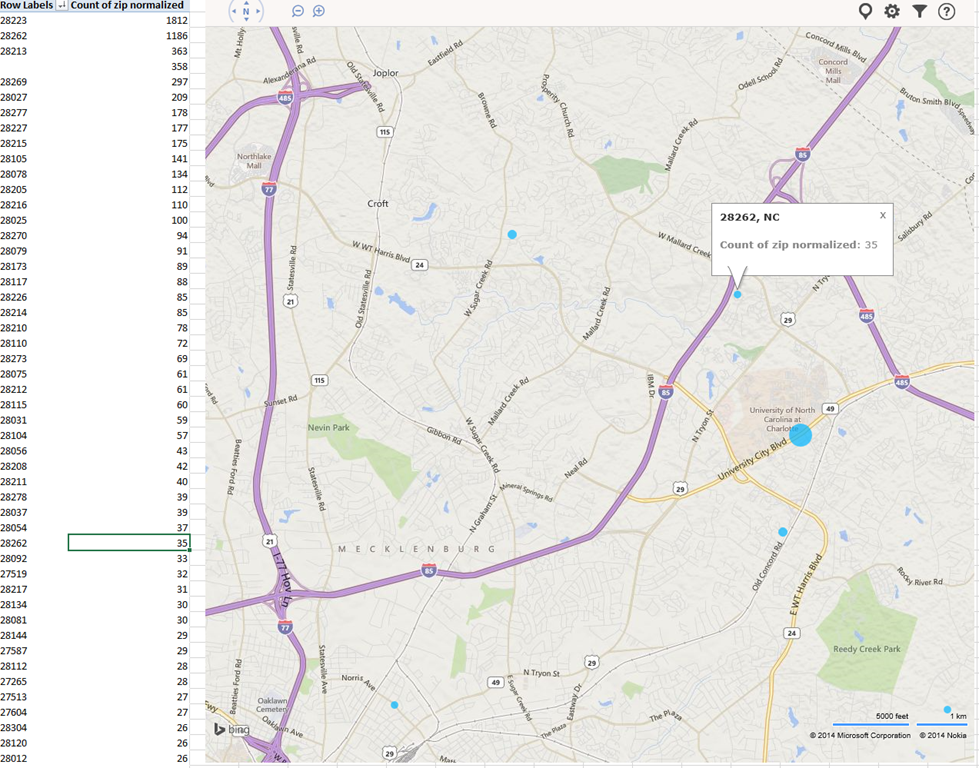
- Also note, the Bing maps app cannot be increased beyond a certain size (below is the maximum).

- Finally, note that the visualization does have a weight indicator, but it seems imperfect:
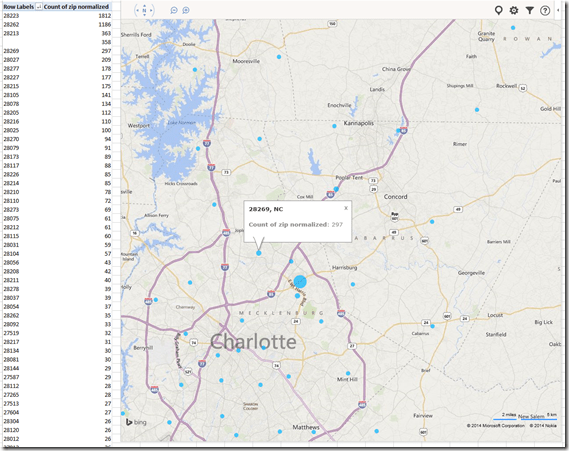

- Here is how data (type) input errors get handled (duplicates override the original):
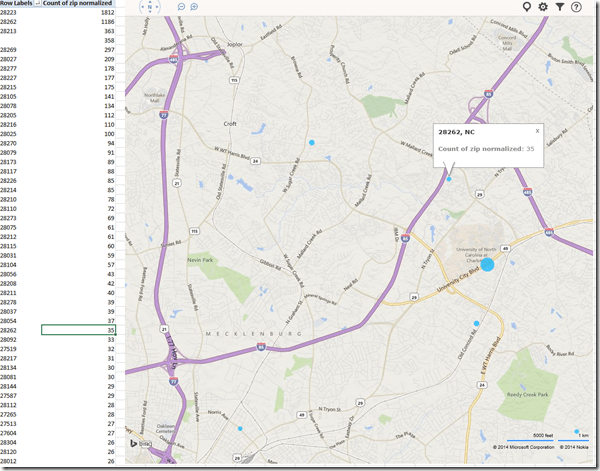
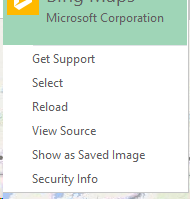
- Fix your data, the reload from the upper right unfoldable menu:

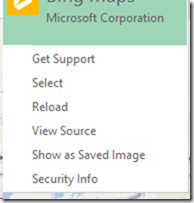
- Voilà:






Example 5: Watch how you can dictate to Windows speech-recognition (e.g. in English) and correct results in MS-Word

- Important: Listen carefully: I am not a native speaker, but have a reasonably low amount of errors, because it enunciate, speak clearly and slowly, and separate the words.
- Consider it part of the exercise that you will have to re-read and re-type some your output – use track changes in MS-Word:
- Make it a game: How good can you get?
- If you get really good at it, make a screencast like this one and include it in your Mahara ePortfolio as authentic evidence of your foreign language proficiency.
- Overall, it’s like how I refer to cycling: Beats walking. Anytime.

What a delegate in MS-Outlook/MS-Exchange is and does
- Definitions:
- I would say: S/he can act on your behalf, while you keep in the loop and others see who s/he is acting on behalf of which disintermediates (e.g. saves tags like “This message is sent on behalf of [you]”: The message will appear to originate from you, as it ought to – imagine e.g. that users want to search their email for “from:[you]”).
- Looking for guidance, I find Cornell.edu has generally good instructions for their similar Outlook/Exchange environment, so I also quote them:
- “Just as an assistant can help you manage your paper mail, your assistant can use Outlook to act on your behalf”.
- “If your manager has granted you delegate access, you have the ability to act "on behalf of" him or her. Depending on exactly how much access they’ve given you, you may be able to respond to meeting requests, send out meeting invitations, and handle their email messages.”
- Find more information on delegates here for the source.
- Sounds interesting? Next steps:
- How you can set up a delegate
- what does the delegate see/do
Notes on how to act as a delegate in MS-Outlook on Exchange
- In Manage another person’s mail and calendar items, you can learn form the source, how to:
- Cornell.edu has generally good instructions for their similar Outlook/Exchange environment, so I just quote them :
Create meeting requests on behalf of your manager: You must be viewing your manager’s calendar in order for the meeting request to appear to come from them rather than you. (How do I view my manager’s calendar?)
If you have more than one calendar open (many people leave both their own calendar and their manager’s calendar open), click anywhere in your manager’s calendar before creating the meeting request.
Notice that in the Scheduling Assistant, your name will not appear. Instead, your manager’s name is included. Which is what you want. So that’s good. Respond to meeting requests on behalf of your manager: [with delegate access,] You can respond to these messages in exactly the same way you would respond to an invitation sent to you.
Step-by-step how to set up a delegate for your mail account in MS-Outlook 2010 on MS-Exchange 2010

We are just using the default options here – explore more on your own, as you wish (e.g. Let someone else mind your busyness). You need to use MS-Outlook – I don’t see an option in OWA to set up delegate access. But your delegate will carry over to OWA if you prefer to use the webmail client.
Next question: what does the delegate see/do?
How to merge PowerPoint 2010 slide shows
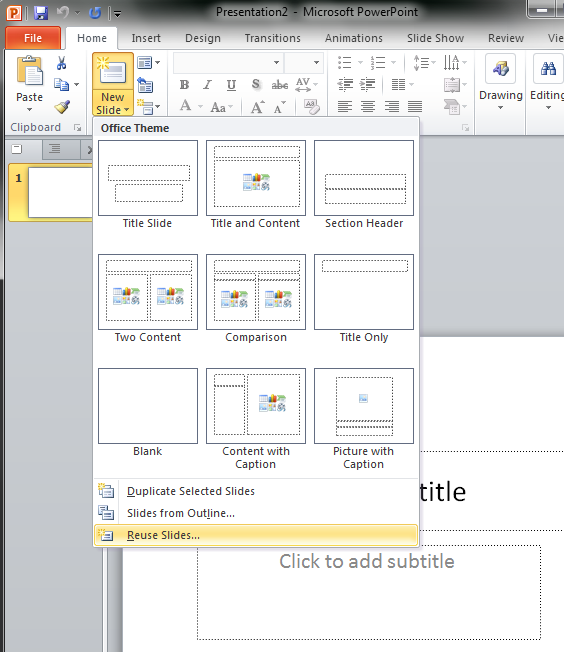
- If for example you work with class-size sets of PowerPoint slideshows – which may be unpractical -: The command for merging them is a bit hidden:
-

-
And the process a bit clumsy (does not allow for simultaneous selection of multiple slideshows).
-

-
Plus you have to double click the thumbnails of the slides of the show that you want to insert).
-

-
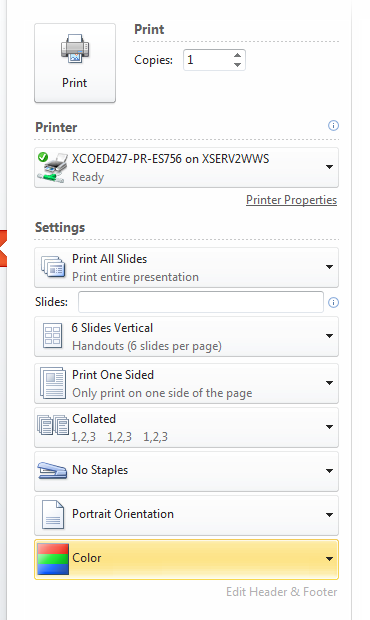
But it works: Now you can e.g. print in one sitting, including multiple slides
-





Questions? Read the About. Or just ask me a quick Our Databases: Resources with calendars -- Language learning material Moodle Sites, multimedia files -- films


FAQs for LRC student staff or for students or for teachers. To search our FAQs, in the browser addressbar, add after "https://plagwitz.wordpress.com/feed/?tag=faqs+/" "+TAG1" (from tag cloud below) OR "https://plagwitz.wordpress.com/feed/tag=faqs
&category_name=" "CAT1" (from category hierarchy below). OR search both categories and tags, and multiple TAGs/CATs (connect with "," for OR-search, with "+" for AND-search), like so: https://plagwitz.wordpress.com/feed/?tag=TAG1+TAG2+...TAGn&category_name=CAT1
+CAT2+...CATn"
Other ways to find help
If you cannot find it here, look there: 5,500 Language-Learning Links and Programs for learning or teaching 150 languages
Shortcuts:Our Lists, Our Maps, LRC Staff Moodle Site,LRC Project Moodle Site, 49erexpress, UNCC Moodle, Student Recordings: s:claslcslrcsanakostudent
Learning usage samples: Sanako oral exam, Kaltura webcam presentation, Dictation with speech recognition, Sanako written exam, Chinese and Japanese interactive stroke-order practice
Test the Sanako Installer, Webbrowser Popup Konfigurator for XP, or Windows7, faster LRC TeacherPC Log-in Let MS facilitate diacritics writing by installing for you US-International keyboard layout
This is my personal blog (Google+). The views expressed on these pages are mine alone and not those of my employer. The information in this weblog is provided “AS IS” with no warranties, and confers no rights.
 Thomas' Work Space