Archive
Archive for the ‘audience-is-students’ Category
How you can report and get help with non-LRC-related computer issues
2013/10/02
Leave a comment
- First try to talk to temporary and permanent staff in the LRC. However, Computer issues that cannot be resolved within the LRC need to be reported to ITS – unless they are already known issues.
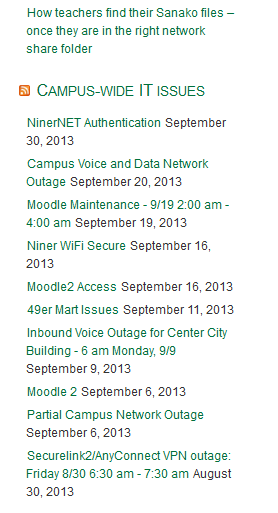
- To make it easy for you to check for known campus-wide issues, I added the ITS alerts to the bottom right of the LRC homepage (
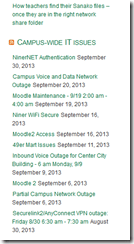 ). Depending on when this feed was last updated (simply refreshing the LRC homepage may NOT update it), you may also have to click on the title of this section, “Campus-wide IT issues”, to view the most recent updates.
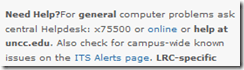
 - If you find out this way that need to report an issue to ITS, you can find ways to contact them in the upper right corner of my blog:

Courseworld.org offers foreign language learning video clips
2013/10/01
Leave a comment
- Over a 100 videos currently available:
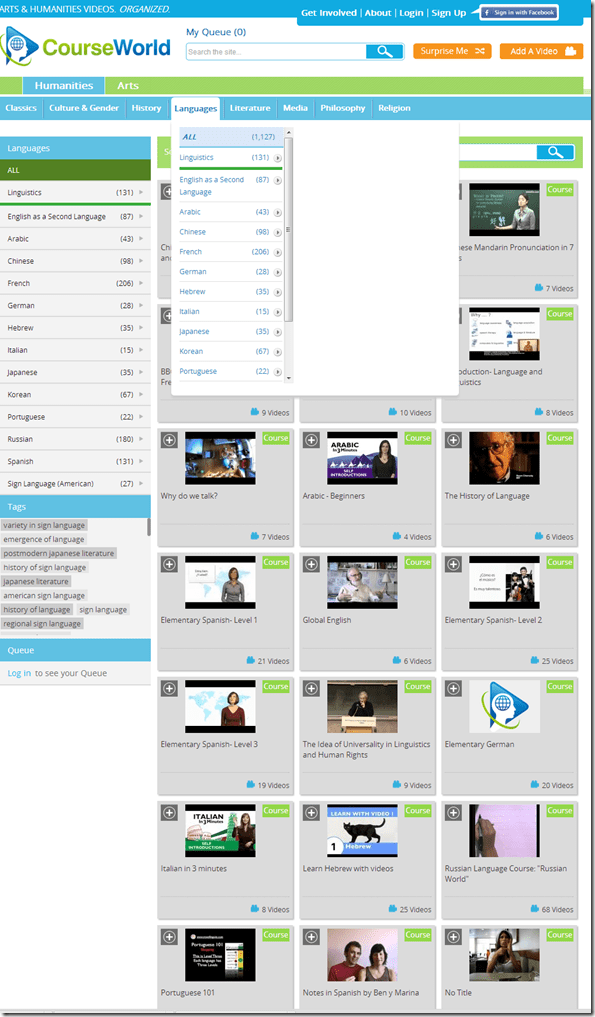
- Summaries show when you hover over a video tile:

- Can it beat YouTube.com for scope? Can it beat textbook-integrated videos for applicability? Likely not, but you may find an add-on for your course, and even more for self-study.


Categories: Arabic, audience-is-students, audience-is-teachers, e-languages, French, German, Hebrew, Italian, Japanese, Korean, Mandarin, Portuguese, Russian, Spanish, Videos, websites
self-study
How to move an invisible window back onto the screen in Windows
2013/10/01
Leave a comment
- Normally you would drag the window by its title bar into its position with the mouse – but if the window is off the screen, the mouse cannot access it.
- Here is how to use the keyboard arrow-keys to do the same, after right-clicking the window’s task bar icon:

- This example is with our Sanako student (a bug or misconfiguration we are investigating), but works with most windows on most versions of MS-Windows.

Categories: audience-is-students, Glitches&Errors, os
FAQs, sanako-study-1200, windows
Japanese Language Tools (Proofing, dictionary, furigana) in the LRC MS-Office 2010 installation
2013/09/30
Leave a comment
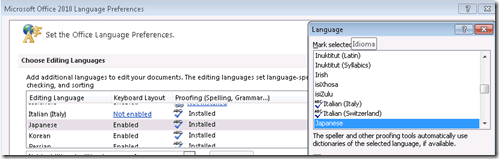
- Even if not showing in MS-Word’s Language selector),
-
-

-
Even though there is no Japanese Thesaurus:

-
There are these tools:
-
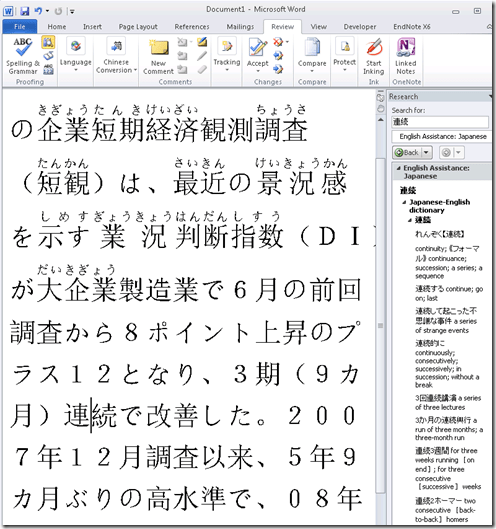
In the Research pane, "English Assistance: Japanese" (in the ribbon / "Review" tab, Proofing section, press the
 , then ALT-Click a character to start a lookup:
 -
-
a Japanese Consistency Checker:

-
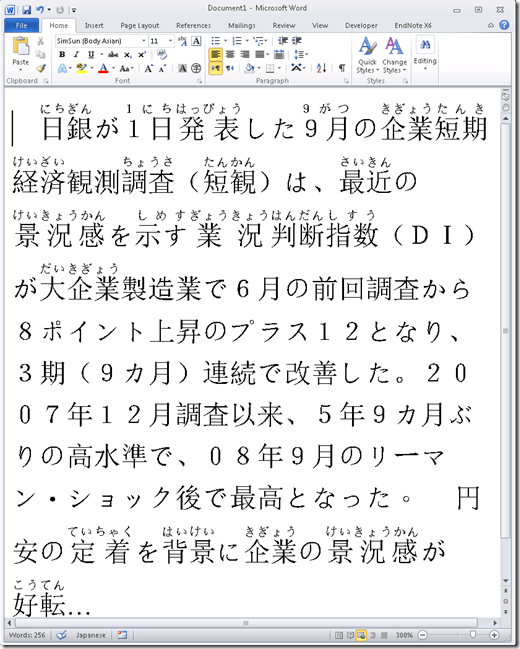
Furigana:
-
To enable:

-
Result (in view / Web layout):
-
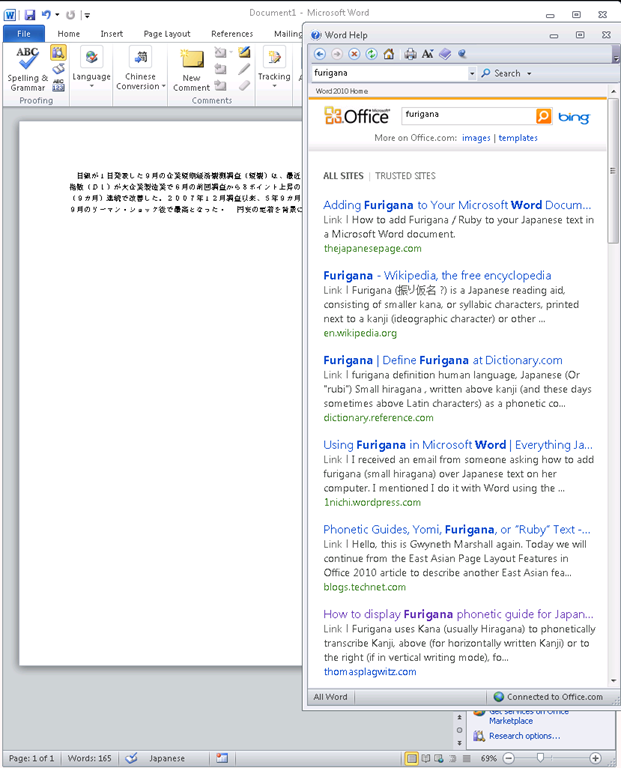
Incidentally, my blog has not quite made it into the TOP 5 of MSW-Office help content:

-
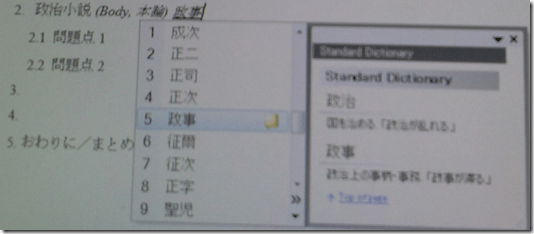
In addition, for Office, but also beyond, there are the tools of the MS-Office Input method editor (which include dictionary help when you write):



Categories: audience-is-students, audience-is-teachers, Dictionaries, e-languages, Japanese, Listening-Stations, LRCRoomCoed434, office-software, Presenter-Computer, Reading, service-is-configuring-learning-tools, small-group-work-spaces, Student-Computers, Writing
dictionaries, furigana, proofing-tools
Changes in how to make a meeting request to resource mailboxes after students’ mid-term upgrade to Office365
2013/09/27
Leave a comment
- Update: We made a brief summary which you can read instead here.
- The interface has changed quite a bit, but don’t worry: the basic processes are still the same. Here is a very quick rundown:
- You now have to start from the Calendar / + new Event, like so:
 and
and 
- To add resources
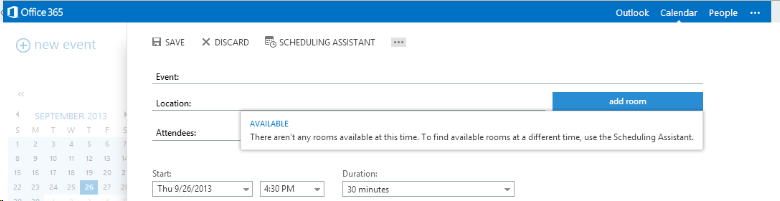
- Don’t try the “button:add room”, you will get this error:

- instead, either type the resource email address

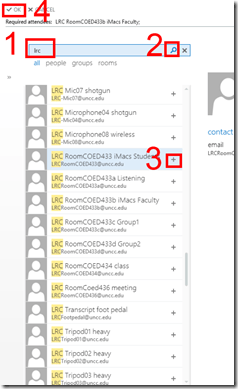
- or click the + next to “Attendees’

- and search the database for the “LRC[whatever]” resource,
- note: no need for a new window anymore
- and by double-clicking or clicking the + , from the search results, add the desired resources to the “Attendees”, finally click top menu: “OK”
- or to remove spurious ”Attendees”, right-click them:

- and search the database for the “LRC[whatever]” resource,
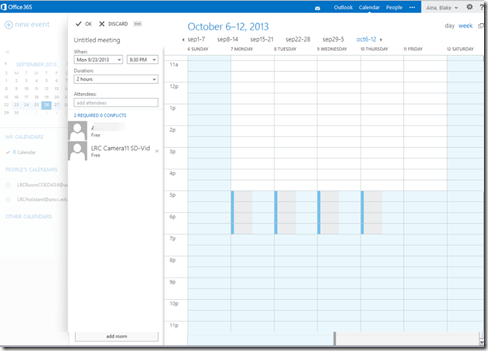
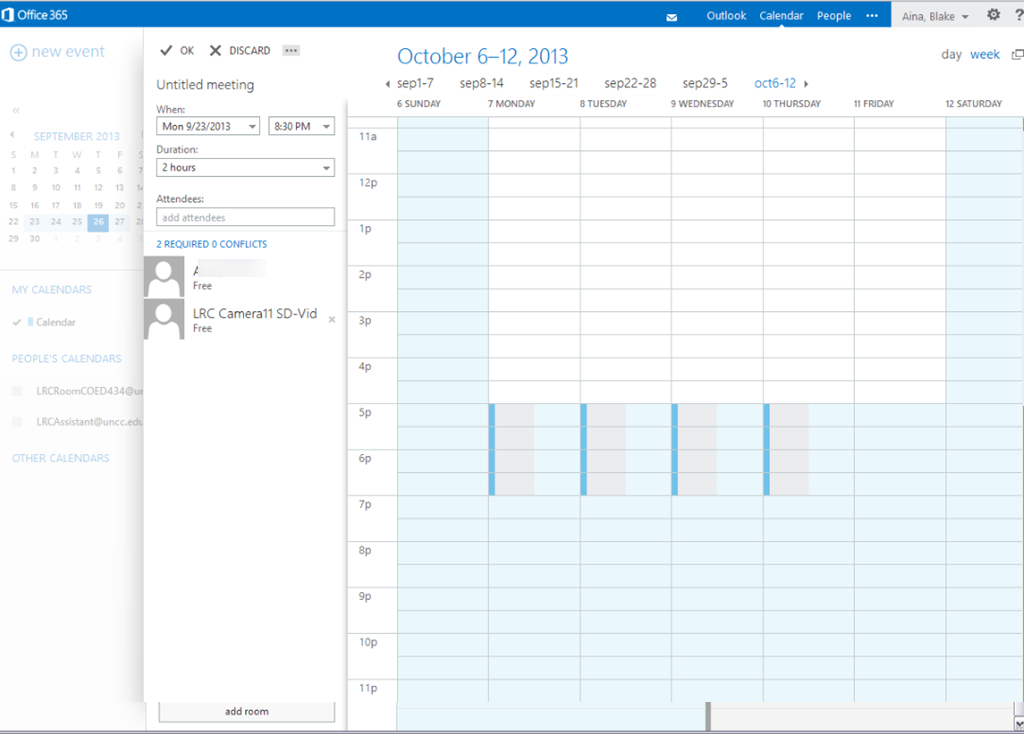
- to preview the availability, you can still click top menu: “Scheduling assistant”.
- Note that the “Scheduling Assistant”looks very different, not like a parallel timeline, more like a parallel calendars, you can choose form thee upper right
- either day view:

- or week view:
- either day view:
- Note that the “Scheduling Assistant”looks very different, not like a parallel timeline, more like a parallel calendars, you can choose form thee upper right
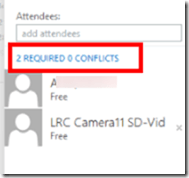
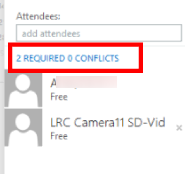
- and it tries to help you by giving more explicit information about conflicts:
- when happy with how you scheduled your “event”, click top menu: “send”
- read the response
- unfortunately, there seems to be no “toast” (tested in Chrome on Windows 7 and Firefox on Window XP)
- there is, however, still a response
- “accept”
- or,”with explanation, “declined”:
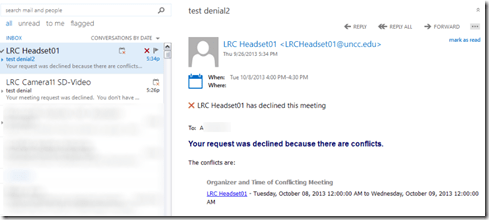

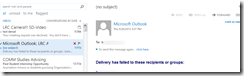
- there seems to be also a bug that you cannot send messages to yourself (huh? investigating), ignore for the time being:
- from the “Event” in your calendar, you can still
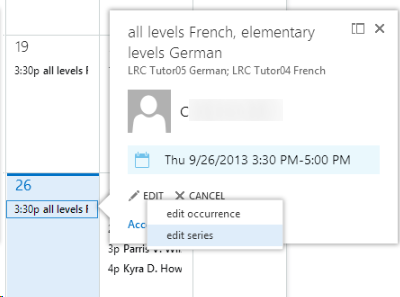
- edit (including, for repeating events, single occurrence or series :

- right-click the “Event” from the calendar and choose “cancel”, which still brings up a popup window where you have to “send”:

- edit (including, for repeating events, single occurrence or series :
- Don’t try the “button:add room”, you will get this error:







What to do if university websites seem to be not working, nothing happens when you click?
2013/09/14
Leave a comment
- Try and get the popup blocker on your office or lab PC fixed here (if you are on Windows 7 here, you need to use the 64-bit version): choose "Run" – preferable to “Download” and "Open".
- Then use Internet Explorer to try again what you were trying to do on one of our websites.
- Background:
- My users have been reporting for a while problems getting simple things done on campus websites. Last week I observed a few in their office and in the LRC being stalled by mis- or non-configured popup blocker, and not noticing the cause, being flummoxed.
- The above little program configures the built-in internet explorer popup blocker to allow popups from websites that are part of our infrastructure.
- It does not attempt to configure other popup blockers, whether inside or outside of this web browser.
- The end user could also try
- (holding the key:) CTRL-click on the link where your web browsing fails.
- Or configure the popup blocker manually.
- However, it would likely be best if this were done via GPO…
The Scheduling Assistant is simply multiple calendars displayed as parallel timelines for easier comparison
2013/09/09
Leave a comment
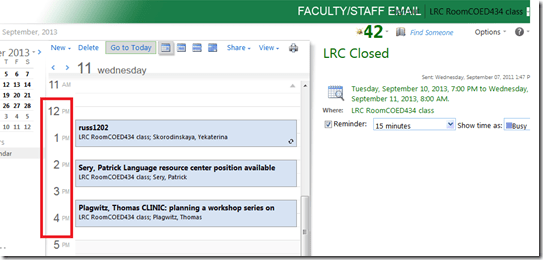
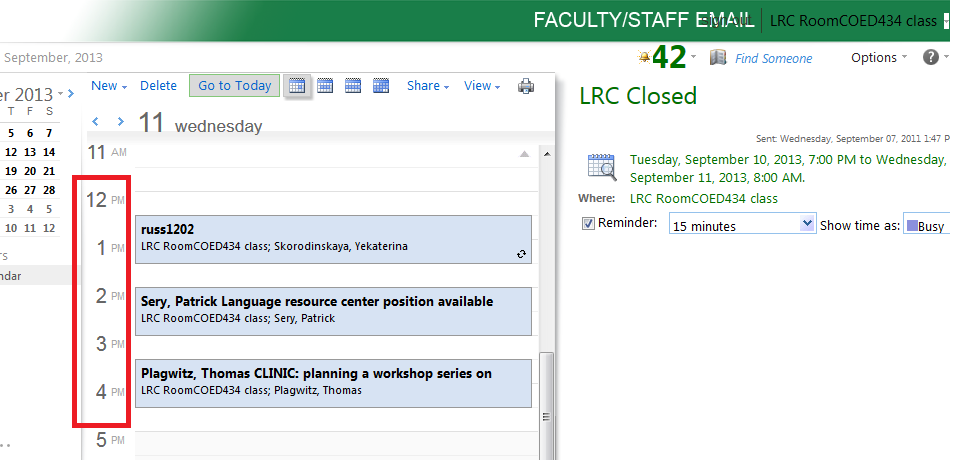
- We are all conversant in reading a daily – like here for the classroom-, weekly or monthly calendar sheet:
- If you send a Meeting request to the classroom to book it, the Scheduling Assistant displays exactly the same free/busy information for the classroom.
- Same pattern of events as above:
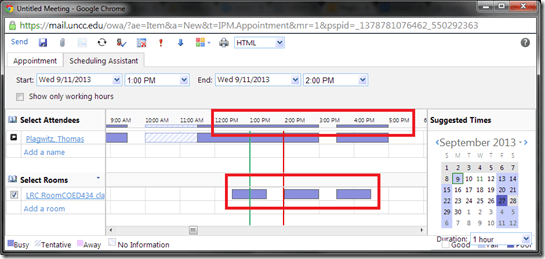
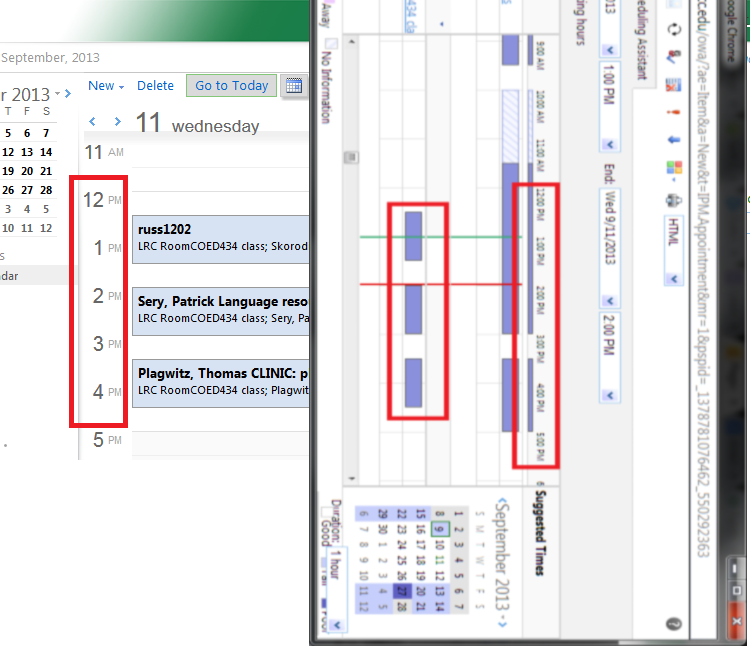
- Except that it is folded from a calendar into a timeline format (and in OWA does not display text explanatory beyond with what/whom the room is busy).
- This timeline format may be less familiar, but is much more practical to compare the availability for the multiple participants of a meeting.
- Same pattern of events as above:
- Compare here: Same pattern for the room booking on both views.

How to set up your computer to access ASCM URLS with Adobe Digital Edition for DRM-protected eBooks
2013/09/09
Leave a comment
-
I downloaded the Adobe digital Edition from here: http://www.adobe.com/products/digital-editions/download.html
-
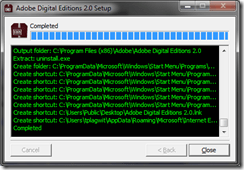
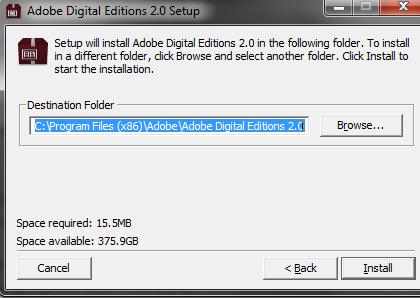
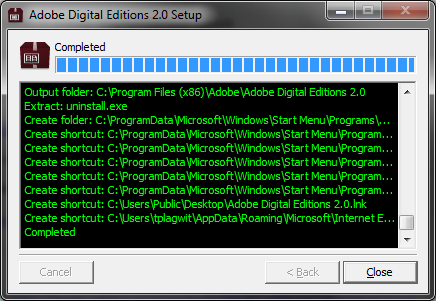
I installed the downloaded Adobe Digital edition like so:
-

-

-
-
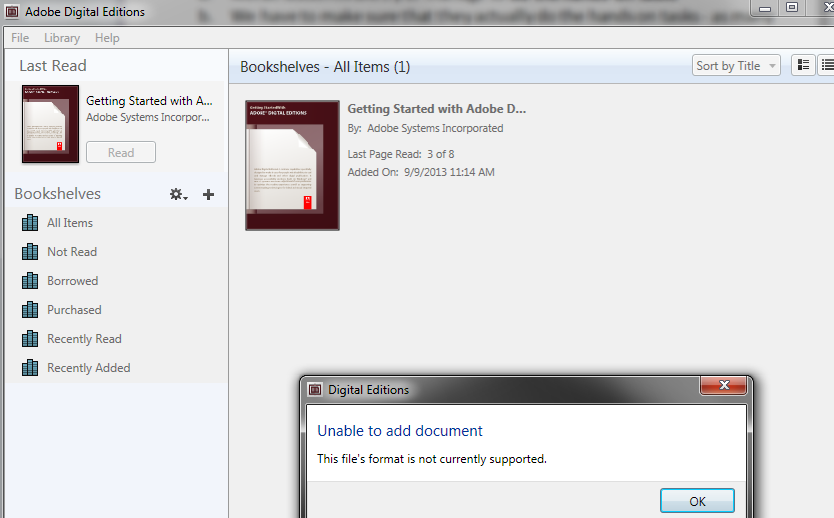
I can now run the Adobe Digital Edition program:
-
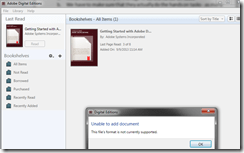
However, File / open / paste url won’t work.
-
-
Also, if I download the ASCM file, Windows still does not know which application to open ASCM file with
-

-
I CAN HOWEVER DOWNLOAD AN ASCM FILE AND DRAG drop this into an open digital edition window, to get this at least
-

-
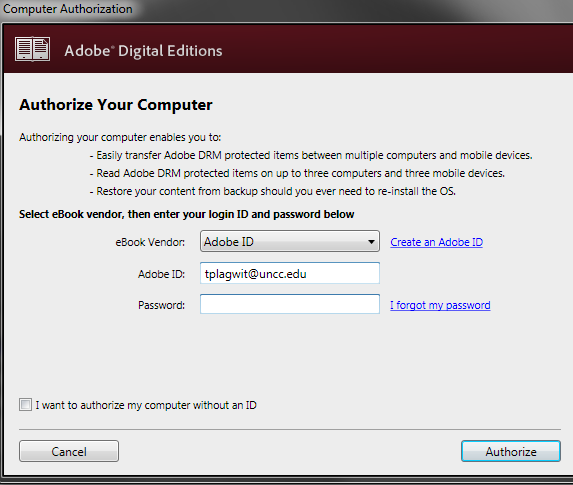
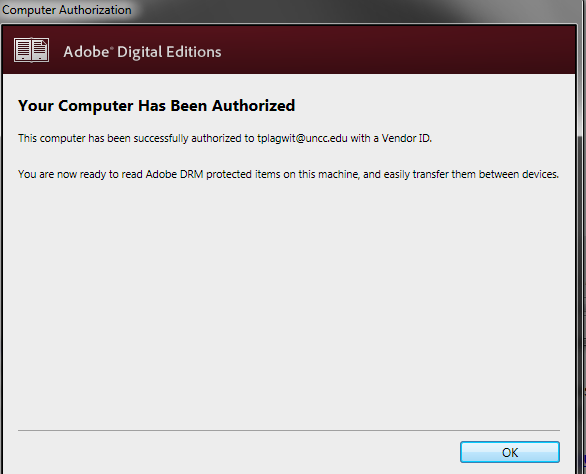
I went down the "authorize your computer" route:
-

-
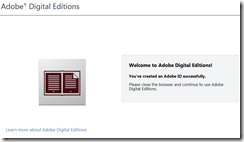
-
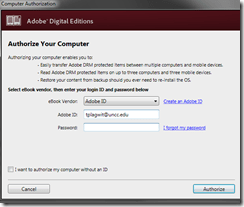
-
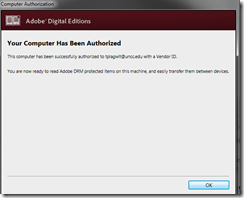
-
Here is my first example (from the Adobe samples website):
-

-
From now on, I can simply click on adobe digital edition links with ASCM files.
-
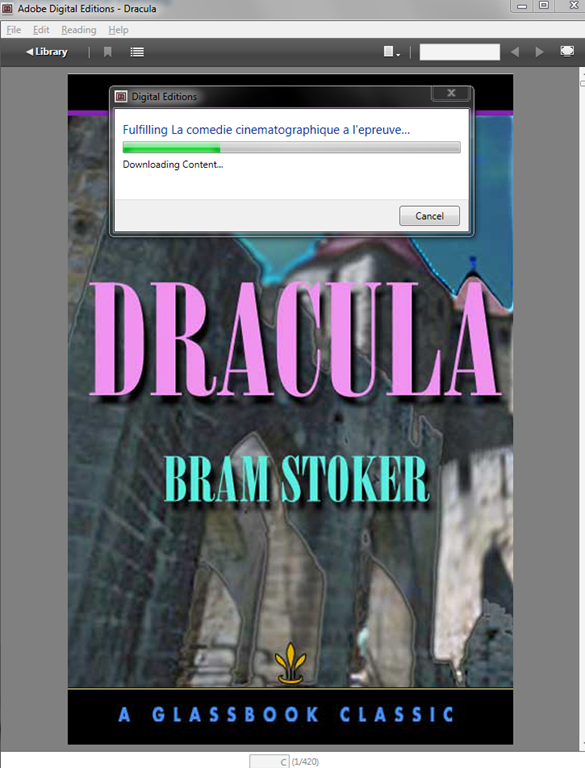
When getting the download dialogue, I can skip saving and click "open":
-

-
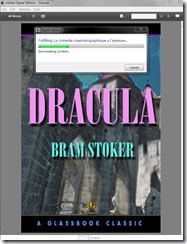
-
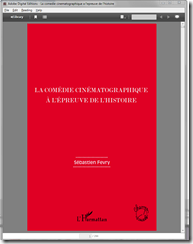
-
Note: you are consuming a license if you open te ebook with your account.








Questions? Read the About. Or just ask me a quick Our Databases: Resources with calendars -- Language learning material Moodle Sites, multimedia files -- films


FAQs for LRC student staff or for students or for teachers. To search our FAQs, in the browser addressbar, add after "https://plagwitz.wordpress.com/feed/?tag=faqs+/" "+TAG1" (from tag cloud below) OR "https://plagwitz.wordpress.com/feed/tag=faqs
&category_name=" "CAT1" (from category hierarchy below). OR search both categories and tags, and multiple TAGs/CATs (connect with "," for OR-search, with "+" for AND-search), like so: https://plagwitz.wordpress.com/feed/?tag=TAG1+TAG2+...TAGn&category_name=CAT1
+CAT2+...CATn"
Other ways to find help
If you cannot find it here, look there: 5,500 Language-Learning Links and Programs for learning or teaching 150 languages
Shortcuts:Our Lists, Our Maps, LRC Staff Moodle Site,LRC Project Moodle Site, 49erexpress, UNCC Moodle, Student Recordings: s:claslcslrcsanakostudent
Learning usage samples: Sanako oral exam, Kaltura webcam presentation, Dictation with speech recognition, Sanako written exam, Chinese and Japanese interactive stroke-order practice
Test the Sanako Installer, Webbrowser Popup Konfigurator for XP, or Windows7, faster LRC TeacherPC Log-in Let MS facilitate diacritics writing by installing for you US-International keyboard layout
This is my personal blog (Google+). The views expressed on these pages are mine alone and not those of my employer. The information in this weblog is provided “AS IS” with no warranties, and confers no rights.
 Thomas' Work Space