Archive
Moodle 1 into Moodle 2 course restore fails with error “unsupported subplugin” or “unknown resource successor” or “parameter (contextid) was missing
-
I could not get the course to convert, until I deleted everything but the fora , and not even my rss blocks converted with urls – if this helps somebody, I describe the steps I took here:


-
upconclicking on more info: error/moodle/unsupported subplugin From MoodleDocs
-
The cause of this is likely due to an unsupported subplugin not being available in the version of Moodle you are using. If this error appeared during the restore of a Moodle course check the plugins within the backed up course against what is available in the Moodle you are restoring the course to. The Moodle you are restoring the course to is likely to be missing a plugin that is present in the backed up course. There is a tracker for this error to be a bit more graceful during course restore for Moodle version 2.x.x http://tracker.moodle.org/browse/MDL-29288 <http://docs.moodle.org/23/en/error/moodle/unsupported_subplugin>
- Do not include "Video Assignments" means not only video files, but also Kaltura streamed video.
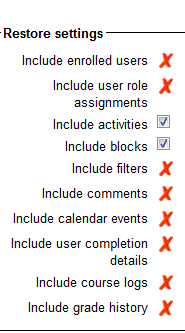
- If I remove pretty much anything which was useful and retry backup/restore with these settings

- I removed the video, however, there is a new error

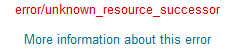
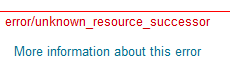
error/moodle/unknown resource successor
From MoodleDocs
Jump to: navigation, search
There is currently no text in this page. You can search for this page title in other pages.
Pasted from <http://docs.moodle.org/23/en/error/moodle/unknown_resource_successor>
- There seems no way for me to deselect Centra events, soi I sem to have to delete them from the original course (whee I would still have had a use for them).
- Did I see these linked file warnings before?
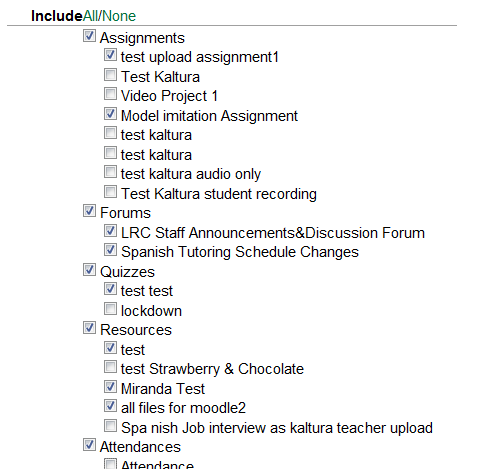
Backup Details:
Include Assignments without user data
test upload assignment1
Model imitation Assignment
Include Forums without user data
LRC Staff Announcements&Discussion Forum
Spanish Tutoring Schedule Changes
Include Quizzes without user data
The Cloze(multianswer) question "" does not contain any question
Linked file 18197_4c96c46e/books01.gif doesn’t exist
Linked file 18197_4c96c46e/partcimage2jpg.jpg doesn’t exist
Linked file 18237_4c97eaaf/key.gif doesn’t exist
Linked file 18237_4c97eaaf/testpic1.jpg doesn’t exist
Linked file Ch5picture.jpg doesn’t exist
Linked file ST_two_image_halfsize.jpg doesn’t exist
Linked file Untitled-4.jpg doesn’t exist
Linked file f0test6ph.PNG doesn’t exist
Linked file lafamilleducharme.gif doesn’t exist
Linked file map1.gif doesn’t exist
Linked file moodle-upload-zip-files-unzipped.PNG doesn’t exist
Linked file testpic2contrast.jpg doesn’t exist
Pasted from <https://moodle.uncc.edu/backup/backup.php>
Error remains:

-
Now remove really all Saba Centra and Kaltura references.
-
Error remains:

-
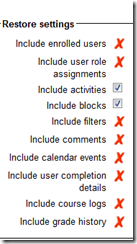
Now we are removing everything except fora:
-
Not much point anymore, but now we reach the next step:
-
RSSs blocks were transferred, but without feeds.
-
In addition, you may see this error, when you get logged out and have to log in again after uploading the backup file:




How to provide students with blended human/computer-automated feedback on their speaking using a dictation with speech recognition assignment screencast
- Teachers often feel there is never enough time for grading students’ speaking proficiency. Fortunately, we can now automate feedback on pronunciation using Windows 7 dictation with speech recognition.
- This feature will be available for 7 languages on Windows 7 in the LRC, here is a demo for a reading exercise dictating German.
- An assignment step-by-step could look like this: Students
- record a screencast of their dictation,
- read a text to the computer in MS-Word,
- turn track changes on in MS-Word and correct the text (immediately or after dictation) where the computer could not recognize their speech,
- upload their screencast to Kaltura in Moodle.
- To grade the performance, the teacher has to review only at the very end of the screencast to see how many corrections the student needed to make (when it doubtabout the speech recognition validiiy, the teacher can easily jump to the screencast segment in question and, if necessary, override the speech recognition).
- This could be a regular assignment type since it provides the following benefits:
- immediate automated intelligent feedback for the student
- little grading overhead for the teacher, so that the teacher can concentrate her work on providing aural feedback on student recorded speech as a highlight maybe twice per term, maybe after mock exams before a midterm and final exam
- some multimedia pieces demonstrating language proficiency for the student’s ePortfolio.
- Requirements:
- a quality headset (we use Sanako SLH-07
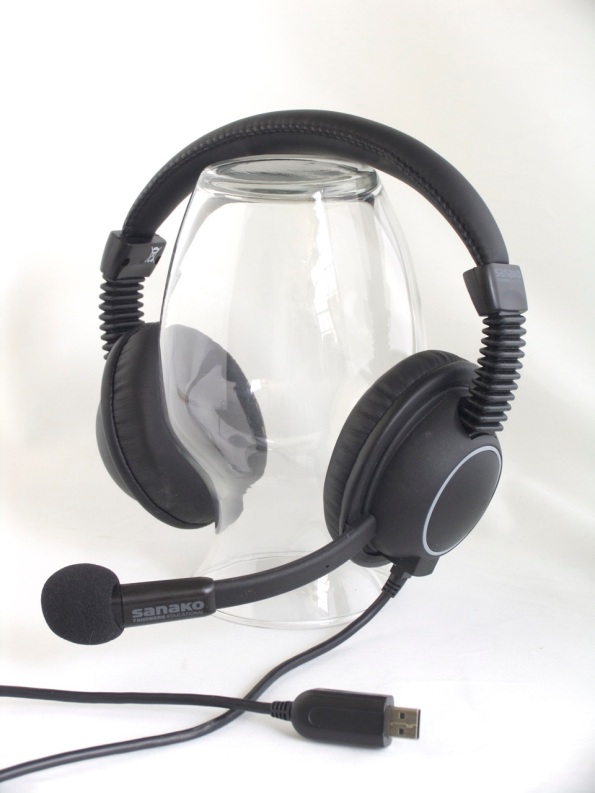 )
) - Windows 7 Enterprise/Ultimate with Language Packs,
- knowing how to switch the display language, (optional/recommended:) TBA:a simplified language switching facility,
- individual voice training data: speech recognition users have to train the computer – once, even in a deepfrozen computer enviroinment, since we enabled you to save this data to and restore it from a flash drive or personal network share space,
- a reading text (often authentic texts can be taken straight from the textbook, to fit in with the syllabus, like in this example from Treffpunkt-Deutsch 1st-year German),
- MS-Word with track changes
- screencast software (we use MS community clips)
- a way to submit the results to the teacher (we use Moodle with Kaltura video uploading (example for teachers, students do it similarly), but email could be sufficient depending on screencast length and attachment size allowance).
- a quality headset (we use Sanako SLH-07

Protected: LRC Language Teaching with Technology Faculty Showcase Spring 2013
How a teacher can organize a student-controlled high-stakes assessment recording session using the Sanako in the LRC
- How:
- An initial central microphone and speaker test (animated step-by-step) is recommended. Clear the session afterwards.
- Recording: Have the student operate the Sanako recorder to individually record (like during a self-access assignment)
- For starters, teacher can display this narrated individual recordings with the Sanako Student Recorder training screencast, it auto-starts and auto-cycles):
- And/or explain:
- Red Record Button to record;
- Blue Stop button to stop recording
- Green Play Button to play their assignment for review (also use the recap button to jump back)
- Menu: “File / New”, if they want to redo the assignment.
- Button: call/envelope to call the teacher on the teacher station for help (an audio connection between student and teacher should pause the recorder automatically)
- Submitting:
- Individually by students:
- Menu “File” / “Save” (opt to save as student track mp3), to save locally, once student is happy to submit.
- (recommended:) upload the save file to a Moodle single-file upload assignment. Requires the teacher to create a Moodle Single file upload assignment, with optional attached file first.
- From the Sanako tutor at the teacher station:
- For entire class (If you do not need the flexibility to have students end at different times). TBA
- Group-wise (varying (staggered) recording times): TBA
- Individually by students:
- Pro’s:
- Less distraction from language learning by having to operate technology (editing audio rather then practicing L2) and more language-learning-specific features (sidetone, recap) than if using Audacity.
- Works with the Sanako Study 1200 teacher stations (e.g. automatic pause of recorder when remote connecting to student during monitoring of recording task).
- Con’s:
- noise interference with dozens of student speaking in a confined space simultaneously. Nobody wants to return to the language lab station of yore, i.e. in a cubicle. However, a teacher-controlled oral exam (sample video, step-by-step video),
- can play a soothing background sound to students over the headphones which insulates them from their neighbors (prevents both distraction and cheating);
- there is no room for distracting unrelated chit-chat;
- there is no need for distracting conversation when students do technical troubleshooting, during highly structured question/response exams.
- More user flexibility/control is achieved by more individual distracting operation of computer technology, which always implies more opportunity for user error. To reduce (not eliminate!) the error ratio:
- Students
- have to have received the general digital audio lab introduction for students.
- have to double-check their recordings for quality before submitting.
- Teachers
- have to monitor students’ recording progress closely
- which the Sanako Study 1200 teacher station (link cannot replace hands-on training) greatly facilitates (provided Students use the Sanako Student Recorder, as described above).
- however, even with a classroom management system like Sanako Study 1200, it is impossible to completely monitor a class size of students operating computers. Therefore teachers
- have to check the validity of submissions before students leave.
- If you use submission through Moodle, here are 2 tips how to do this quicker:
- Whether you use submission through Moodle or collection through Sanako tutor:
- view end of this video for how to quickly check validity of all file submissions in a folder using Audacity
- are advised to have a make-up assessment plan not only for those students missing the exam, but also for those that miss to complete the computerized multimedia assessment correctly.
- have to monitor students’ recording progress closely
- Students
- noise interference with dozens of student speaking in a confined space simultaneously. Nobody wants to return to the language lab station of yore, i.e. in a cubicle. However, a teacher-controlled oral exam (sample video, step-by-step video),
How to batch download all submissions as a zip file from a Moodle: Gradebook File-upload assignment column.
- I have no file upload assignment with submissions handy in my own Moodle course, so I am patching this together from other universities (thanks, umass.edu, cotc.edu).
- “ Another time saver you can use is the Download all assignments as a zip link. This will package all uploaded documents from any submissions in the assignment into
a zipped folder that you can download. Once downloaded, you can unzip the file and access each paper. This can be a real time saver!”. Image: 
- Extra: This procedure will add the student’s name to the file. No more wading through submitted audio files named by students trying to identify submitters.
Which browser and operating system we could get which Moodle Kaltura webcam assignments to work in
Below please find our current (work in progress) test matrix. Use one of the combinations that worked (“YES”) to avoid problems when taking or grading webcam assignments (or come to the LRC where we set up a working combination). You can view your version of the Kaltura video player and of Adobe Flash by right-clicking on the Kaltura video window.


Questions? Read the About. Or just ask me a quick Our Databases: Resources with calendars -- Language learning material Moodle Sites, multimedia files -- films


FAQs for LRC student staff or for students or for teachers. To search our FAQs, in the browser addressbar, add after "https://plagwitz.wordpress.com/feed/?tag=faqs+/" "+TAG1" (from tag cloud below) OR "https://plagwitz.wordpress.com/feed/tag=faqs
&category_name=" "CAT1" (from category hierarchy below). OR search both categories and tags, and multiple TAGs/CATs (connect with "," for OR-search, with "+" for AND-search), like so: https://plagwitz.wordpress.com/feed/?tag=TAG1+TAG2+...TAGn&category_name=CAT1
+CAT2+...CATn"
Other ways to find help
If you cannot find it here, look there: 5,500 Language-Learning Links and Programs for learning or teaching 150 languages
Shortcuts:Our Lists, Our Maps, LRC Staff Moodle Site,LRC Project Moodle Site, 49erexpress, UNCC Moodle, Student Recordings: s:claslcslrcsanakostudent
Learning usage samples: Sanako oral exam, Kaltura webcam presentation, Dictation with speech recognition, Sanako written exam, Chinese and Japanese interactive stroke-order practice
Test the Sanako Installer, Webbrowser Popup Konfigurator for XP, or Windows7, faster LRC TeacherPC Log-in Let MS facilitate diacritics writing by installing for you US-International keyboard layout
This is my personal blog (Google+). The views expressed on these pages are mine alone and not those of my employer. The information in this weblog is provided “AS IS” with no warranties, and confers no rights.
 Thomas' Work Space