Archive
If you cannot log into Windows because of accessibility dialogues offering you help
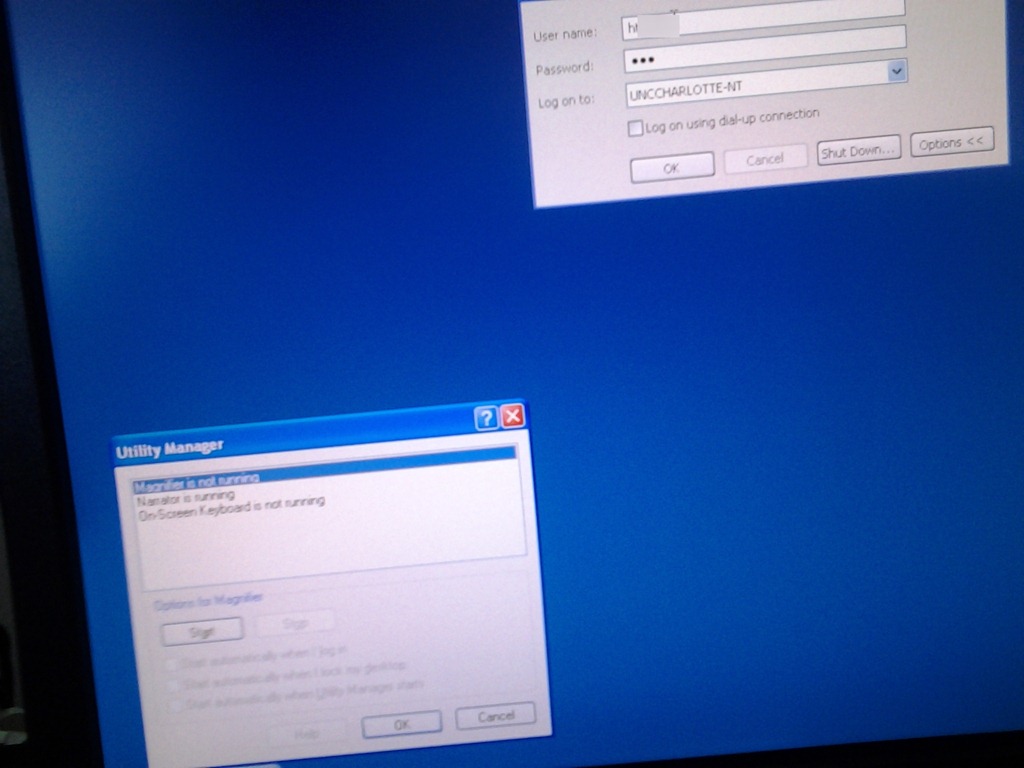
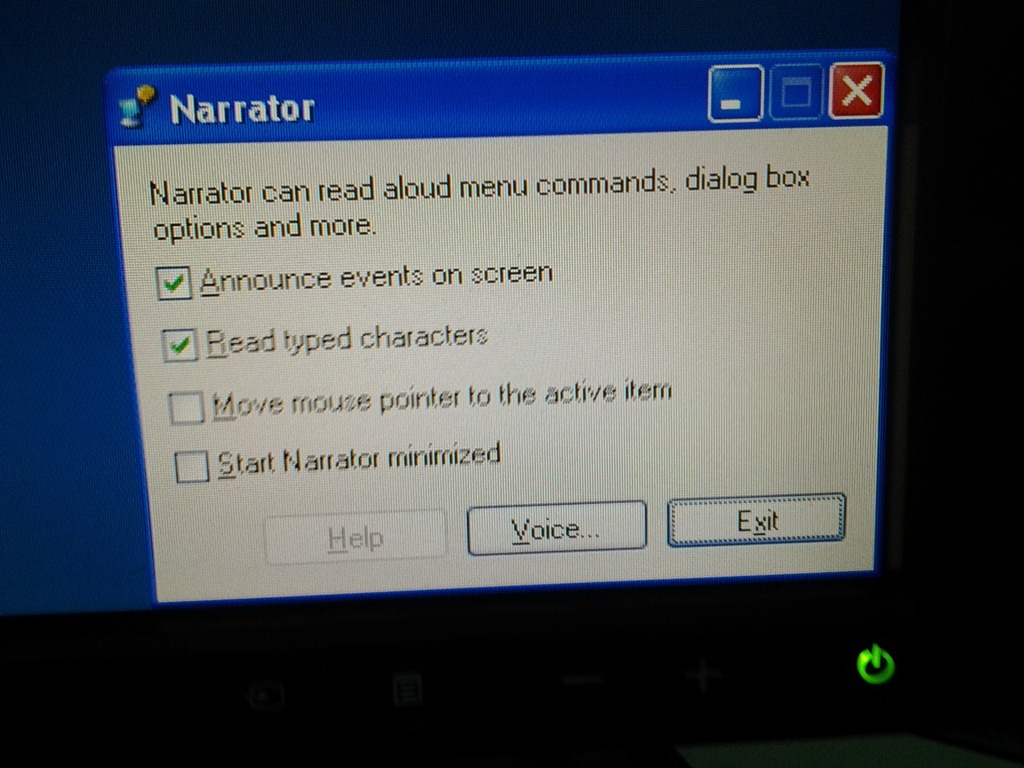
- Symptom: You cannot log in since accessibility tool dialogues (like above) come up when typing your password
- Workaround: Restart the computer (and make sure you have no item sitting on the keyboard while doing so, usual suspects: textbooks, bags). If you do not want to restart, but fix it immediately, you can read more about Windows XP accessibility features and keyboard shortcuts here.
- Root cause: You may have activated Windows accessibility features by erroneously depressing for a long time or repeatedly pressing a modifier key while the LRC computer was on the welcome screen. You may not run into this behavior from your personal computer (or read here how to disable Windows 7 Sticky and Filter Keys), but the LRC needs to be ADA compliant. Think of it as another LRC language tool that sometimes may get into your way temporarily if you do not study the language, but that you would not want to miss for the language you do study.
New keyboard shortcuts for diacritics on LRC Teacher PC
- The US international keyboard layout that has come with MS-Windows for many years (though – except in the LRC – not set as default, you need to enable it in the control panel) greatly facilitates typing of characters for most languages that use Roman script with common diacritical marks, but does not cover Pinyin and similar diacritical marks.
- Carly from Carleton, as avid a language teacher as a technologist, had the great idea to extend Microsoft’s US-international keyboard so as to include all the Pinyin tone marks (and other accents useful for linguists). Here is the upshot, extracted from her instructions, but excluding what (either shortcut or (use of common accents within Pinyin is now covered also below) purpose) has not changed from the shortcuts of the non-extended US-international keyboard that used to be the default in the LRC:
-
What you want Which keys you press (before comma is “dead” key = no result until after next key) Example acute accent, pinyin 2nd tone
‘(=apostrophe), vowel
á é í ó ú
grave accent, pinyin 4th tone
`(=grave), vowel
à è ì ò ù
macron accent, pinyin 1st tone
hyphen, vowel
ā ē ī ō ū
pinyin 3rd tone
%(=shift+5), vowel
e.g. ǎ ě ǐ ǒ ǔ
ü with pinyin tones
Accent, double-quote
e.g. ǖ ǘ ǚ ǜ
letter with dot below
; (=shift+period), letter
e.g.

letter with double acute
: (=shift+;) , o or u
ő, ű, Ő, Ű
- We are offering the extended US-international keyboard this as an optional keyboard on the teacher and student PCs with Windows 7.
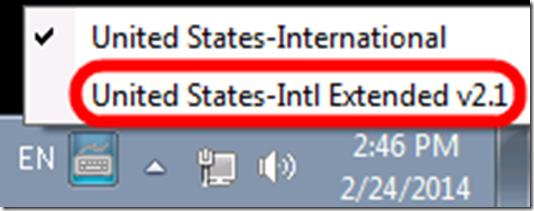
- To select the new keyboard layout, use the language toolbar, click on 2nd option:
- To explore the new keyboard layout use the Windows On-screen keyboard which will let you peek ahead after your pressed a dead key.
- To bypass a special dead key (= get the normal behavior of the key), press SPACE after it.

The big LRC SANAKO “How do I…?”
(Work in progress).
View larger Word version than this embed:
A classroom-management-system-based emporium to improve tutoring support for Hybrid Spanish students
- “[T]o bridge the gap between students’ demand for introductory Spanish courses and adequately staffing”, UNC-Charlotte – using, among others, a UNC-Chapel Hill pilot as a model, which, however, served a different student population and was soon faded out again – introduced a hybrid model for 1st year Spanish:
- Weekly contact hours were cut in half (effectively doubling student numbers per teacher ) ,
- and attempted to be replaced by more extensive assignment of homework exercises/quizzes from the online textbook component
- for lack of own technical resources (p.54), not that the components were designed for a hybrid purpose – but always nice to see language teachers adopt technology for ROI in creative ways when they have to.
- for the same reason of incapability of “adequately staffing”, so that teachers do not have to operate the computers, only those activities from the online components were chosen that could be automatically graded (while the continued reliance of online quizzes on right/wrong black/white schemes instead of at least considering editing distance (maybe reasonably also for foreign language diacritics), not to mention attempts on a truly semantic understanding of student input, makes one wonder if this subset of assignments could effectively and should be left to auto grading).
- and other, auxiliary syllabus guidelines, like:
- taking more advantage of the online textbook component for
- heavier formative testing
- outcome testing
- requiring “oral testing administered two or three times a semester” (p.46, 64)
- increased focus on taking advantage of contact hours by communicating, what is now often deemed flipped classroom pedagogy and used to be called homework preparation
- taking more advantage of the online textbook component for
- tutoring, for students that could not handle the cut in face-to-face time with teacher (note, tutors were from the grad student teacher pool – not all teachers were grad students)
- face-to-face:
- online, during off-hours (weekends):
- seems a welcome extension, and a convenient time-saver
- however, little adoption
- additionally, hindered by a technology change from Wimba to Centra.
- also hybrid? The LRC
- could be host to an emporium like Virginia Tech’s: computerized for access to online assignments, but under tutor guidance;
- could provide the Sanako classroom management and digital audio lab system for making this learning experience even ore efficient. The tutor on teacher station can monitor many students (simultaneously or automatically cycling through student stations at an interval of choice, while stopping interactively where desired) via screen sharing. Interact with any student computer via remote control, with the student over headphones, without disrupting,
- easily escalate presentation of tutor or model student screen and audio discussion of endemic problems to either student group as a whole or subset (meaningful as long as 2 or more students overlap in their assignment activity and have similar issues) via the Sanako – and of course also use the classroom projector.
- Hybrid Spanish clearly constitutes a radical program change, dictated by shortness of funds and requiring measures to efficiency and effectiveness of instruction, upholding of standards, and management of attrition.
Announcing new MS-Word templates for writing assignments during face-to-face-classes in the LRC
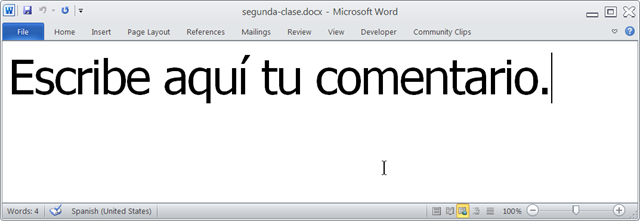
- Benefits
- MS-Word is technology that has become “transparent”for most users:
- Have teachers focus on assignment pedagogy, not authoring technology.
- Have students focus on the target language, not authoring technology.
- Document is protected (for restricting formatting to predefined Word-styles):
- Have students focus on form or content, but not on distracting formatting issues.
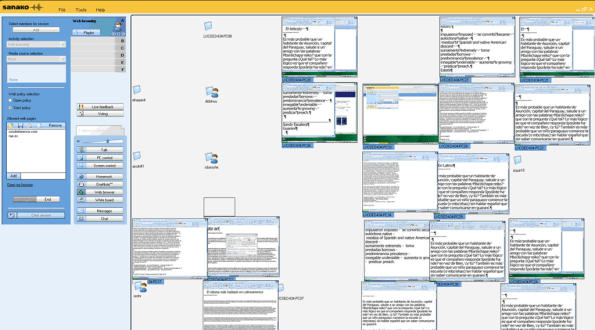
- Styles are designed to facilitate teacher monitoring students’ work using Sanako screensharing, like so:
- Take advantage of MS-Office Proofing tools (templates are preset for your target language).
- Take advantage of easy assignment file management with Sanako homework activity.
- Take advantage of internet lookup process, especially pedagogical if you combine with Sanako controlled-web-browsing activity
- MS-Word is technology that has become “transparent”for most users:
- Requirements:
- Teacher
- The easiest is to save the writing template for your language in C:\Program Files\Microsoft Office\Templates\1033 (or if your run 32-bit MS-Word on a 64-bit Windows, C:\Program Files (x86)\Microsoft Office\Templates\1033)
- Then base your writing assignment document on the template (e.g. by double-clicking the template in the folder you saved it to).
- Then save your writing assignment to your class material folder on the Sanako network share (from the office or in the LRC).
- In class, launch the Sanako homework activity.
- Student: none other than downloading and submitting the Sanako homework.

- Teacher
Protected: How teachers find their Sanako materials
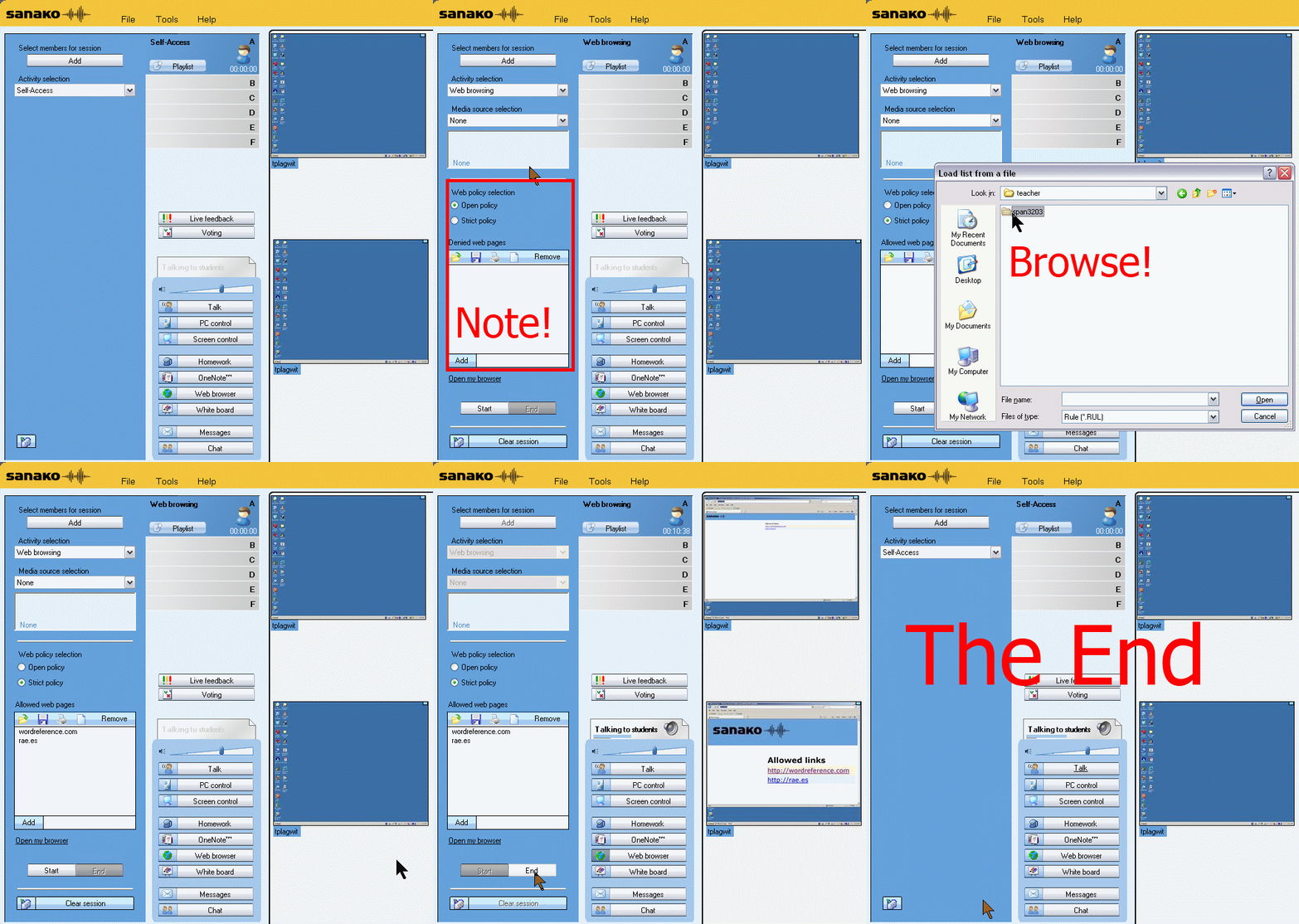
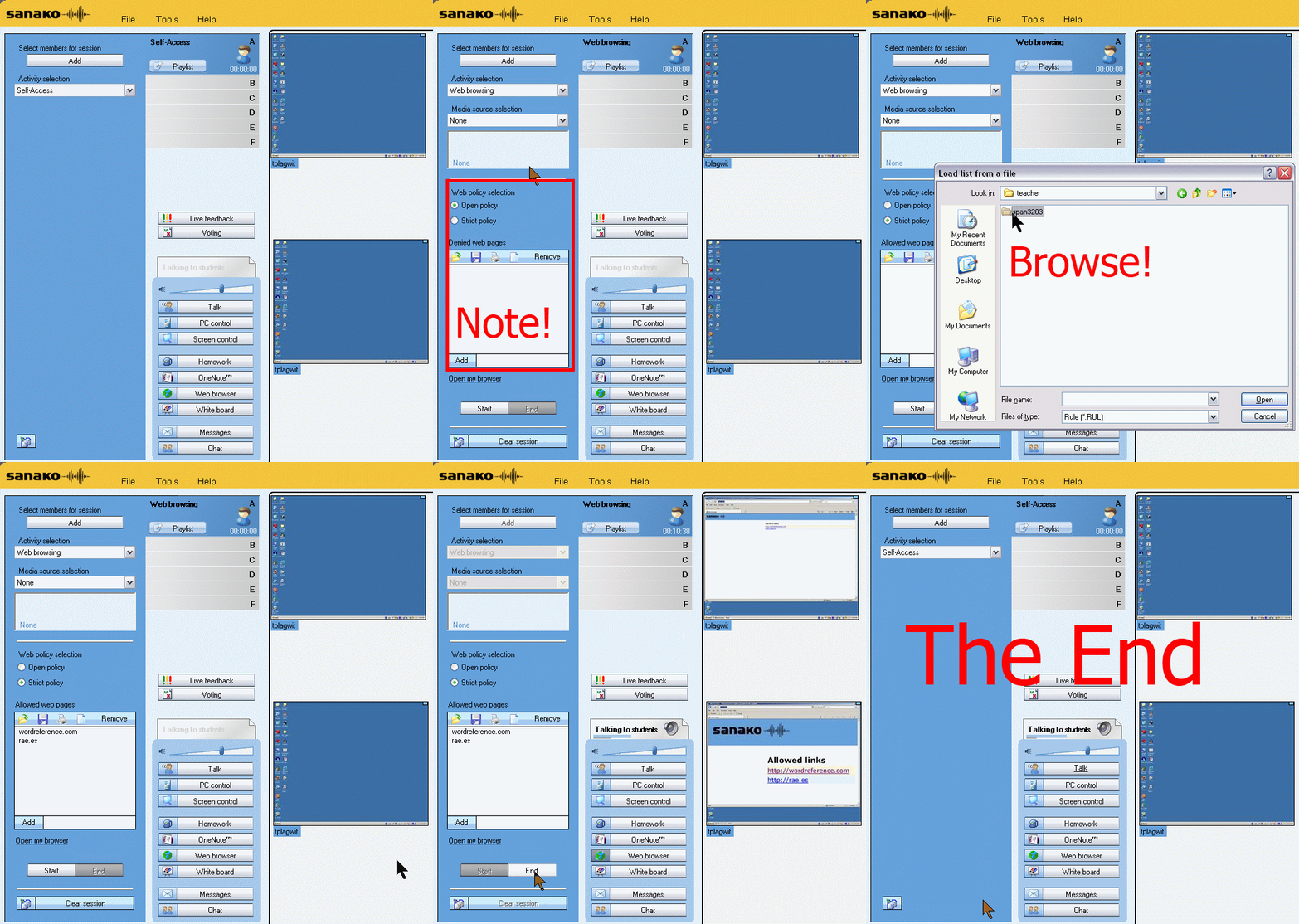
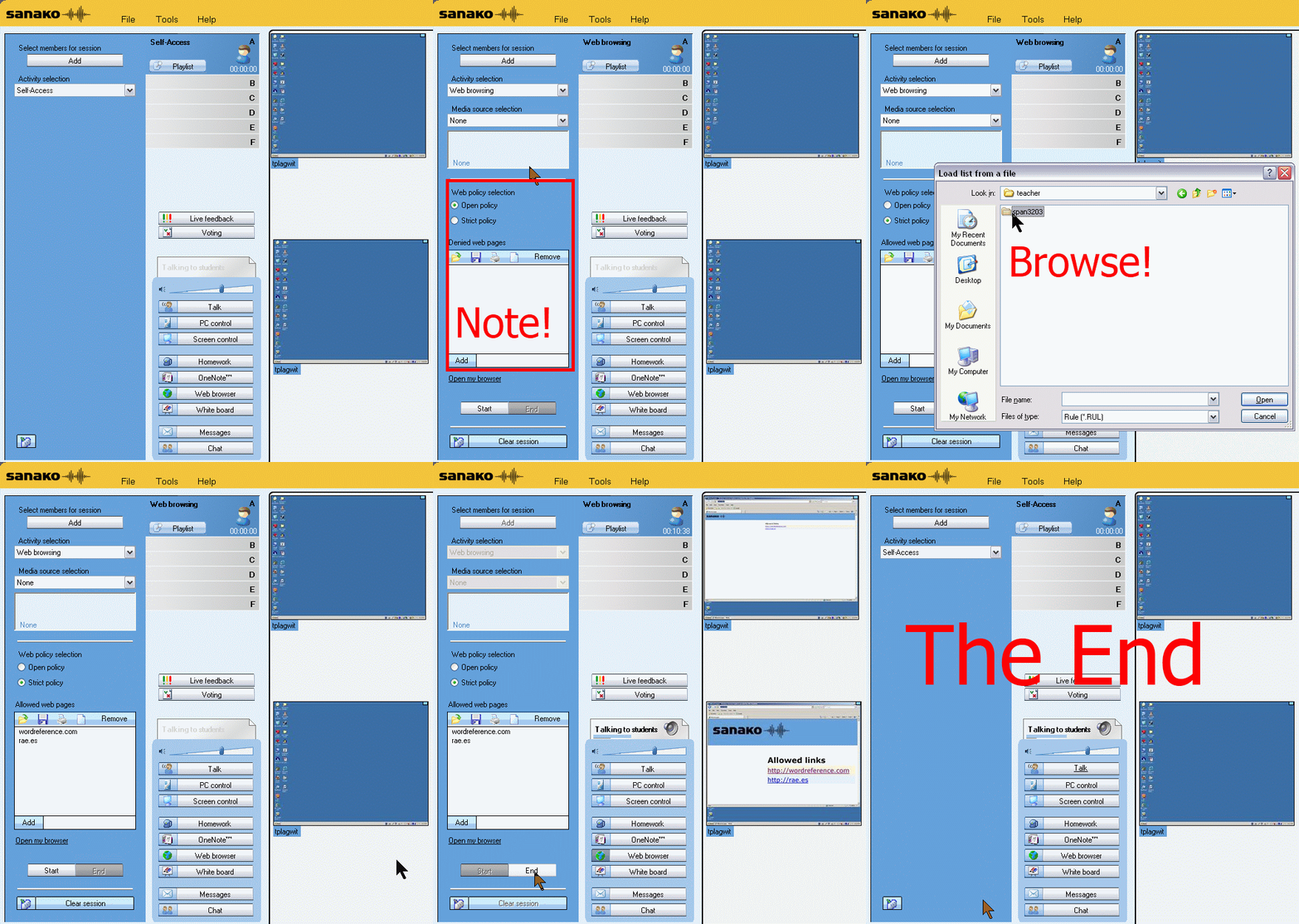
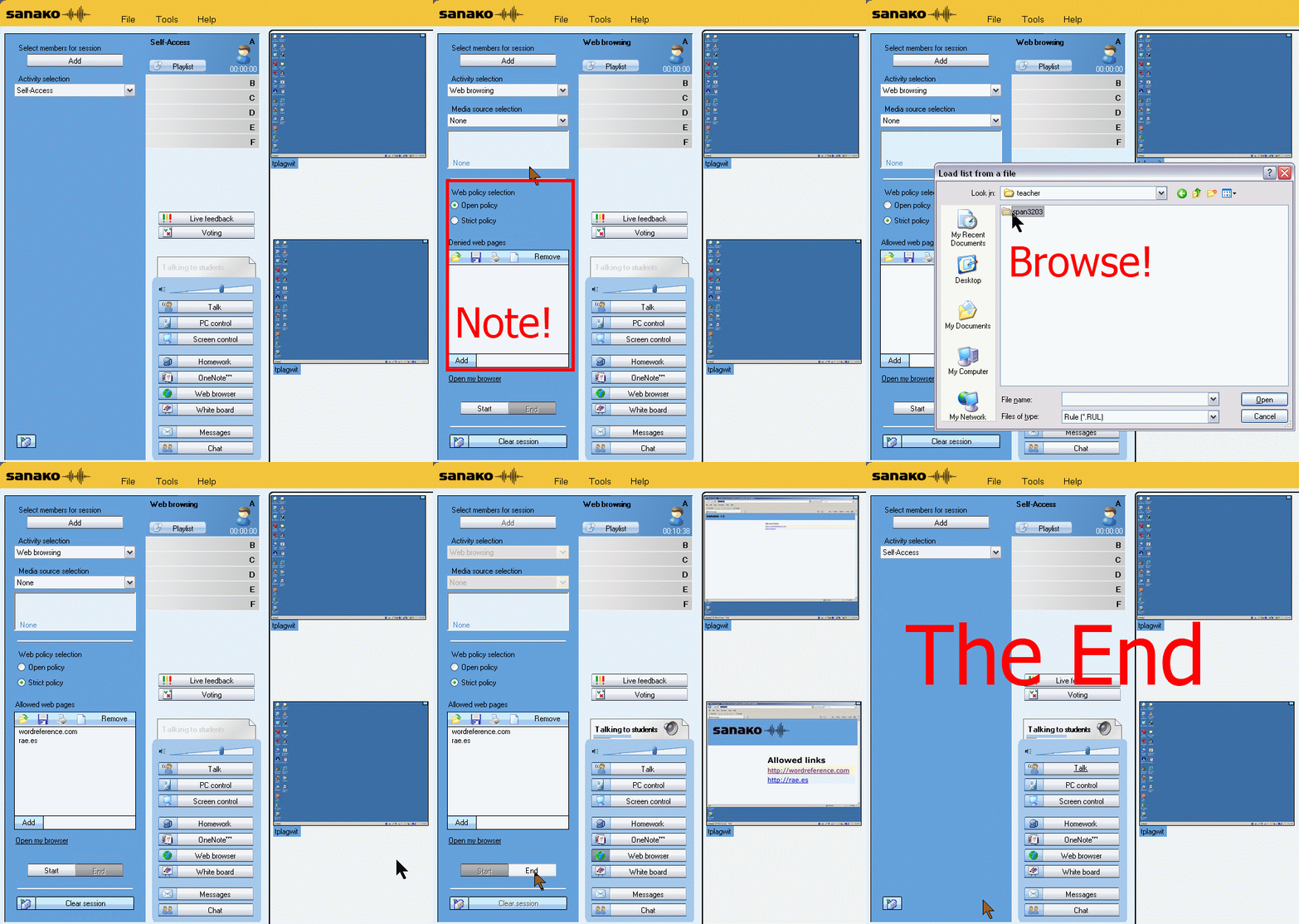
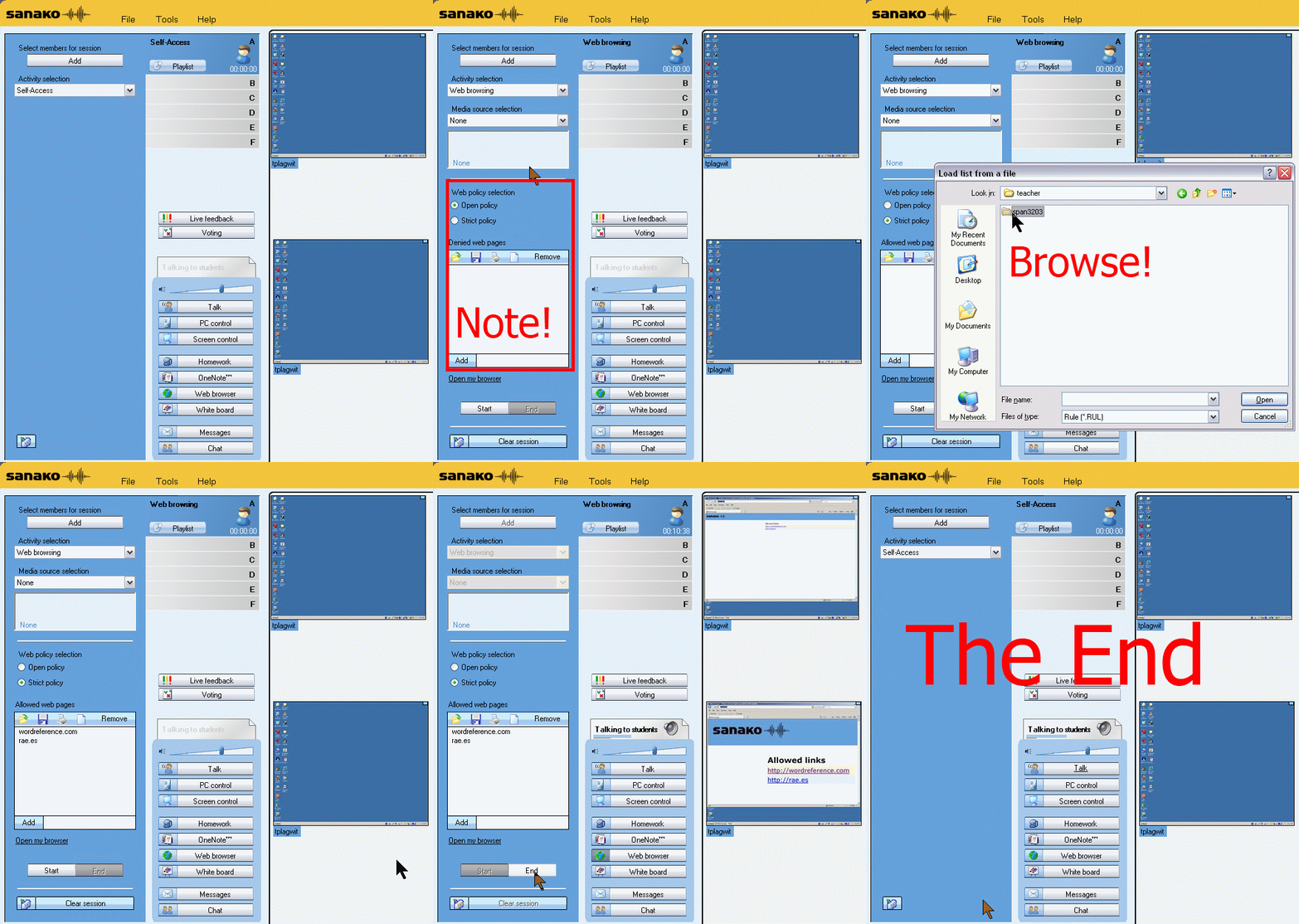
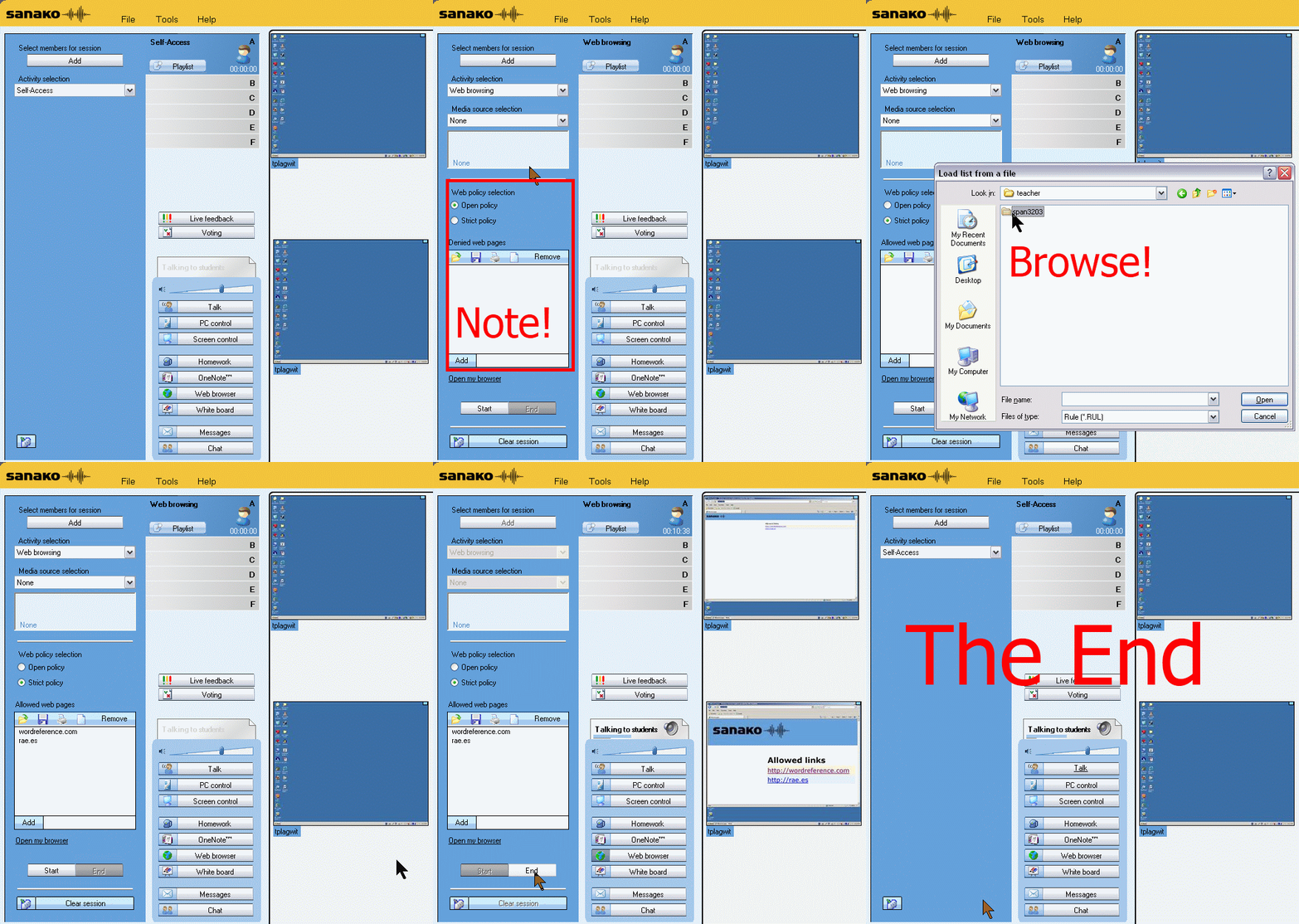
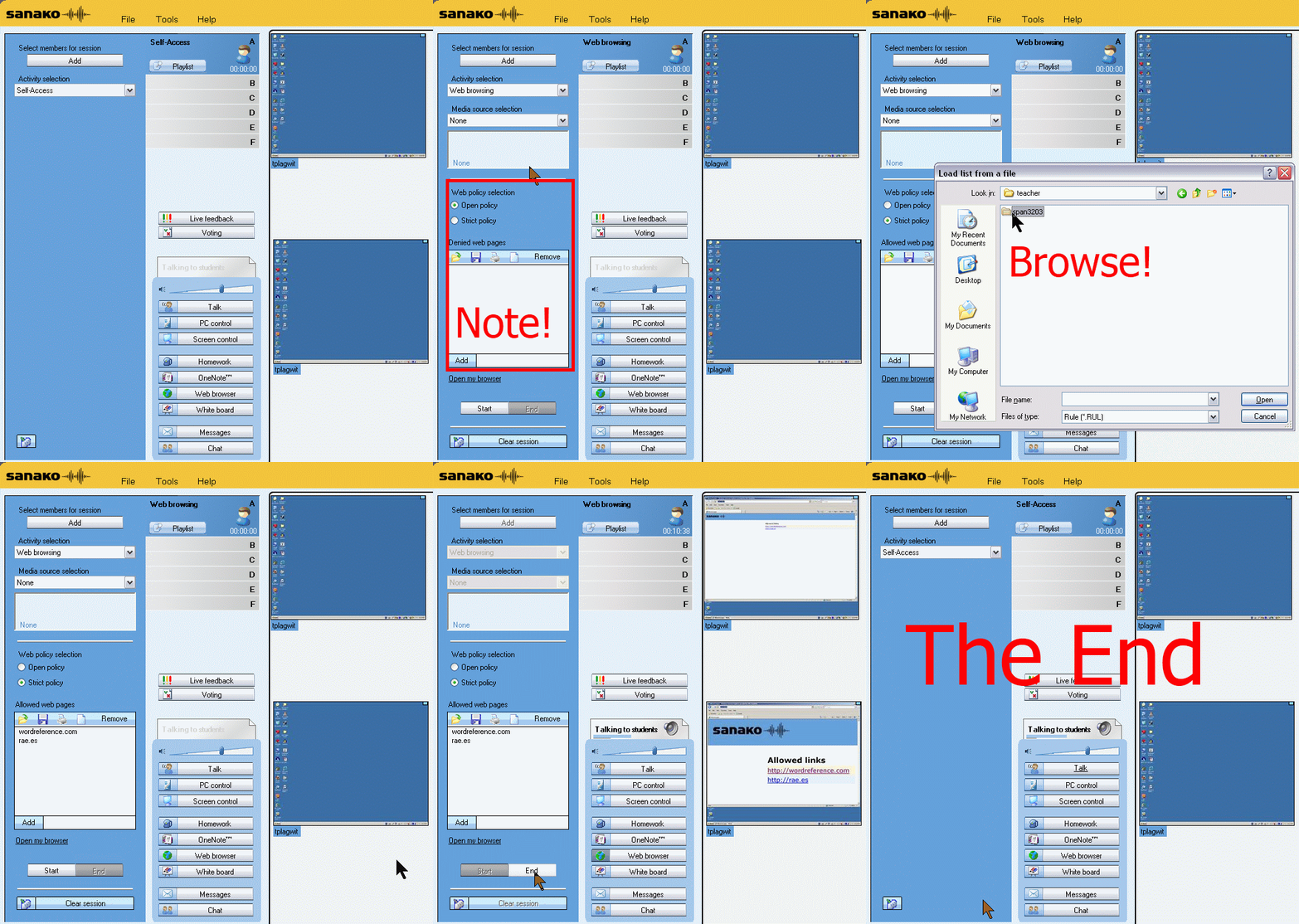
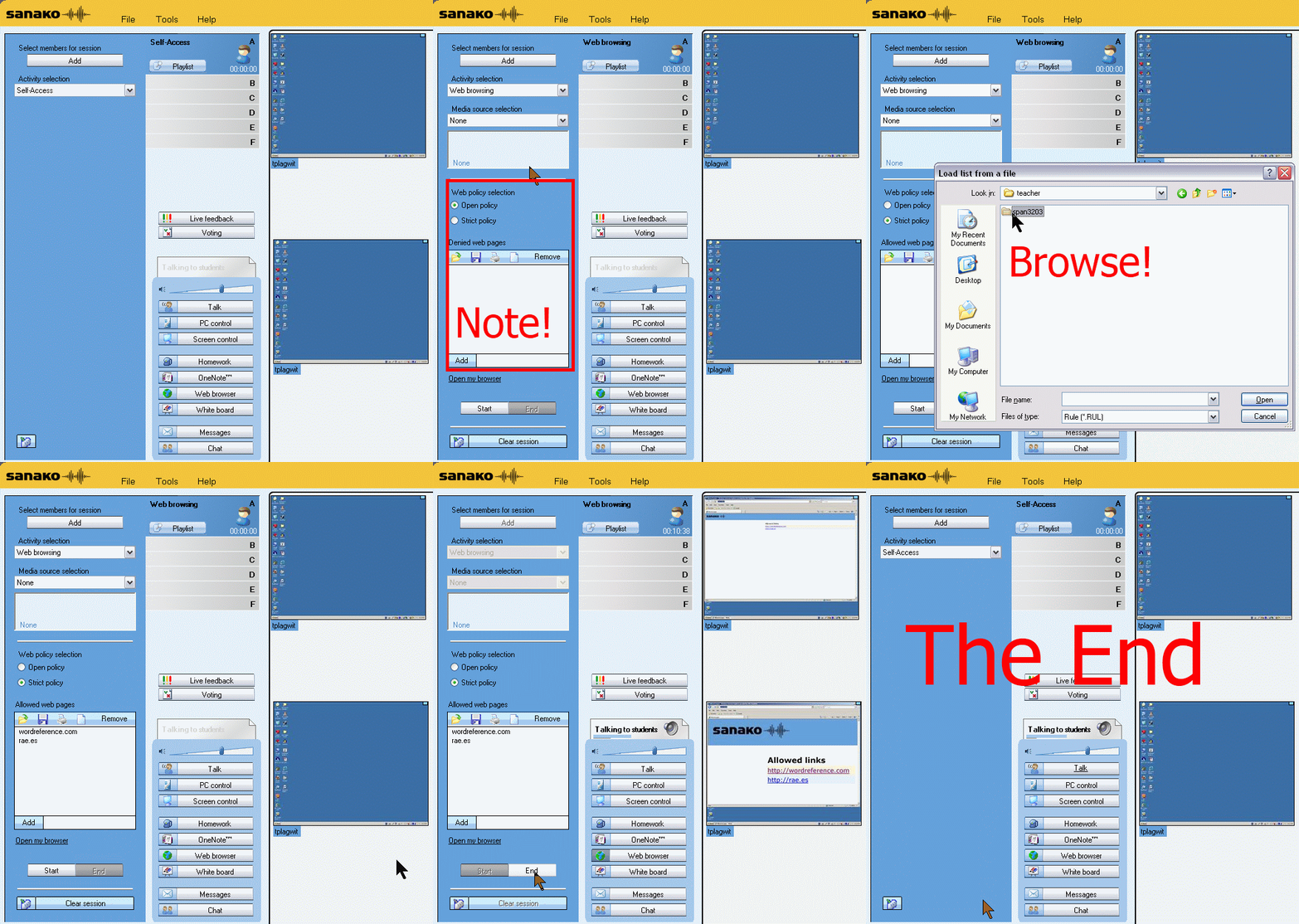
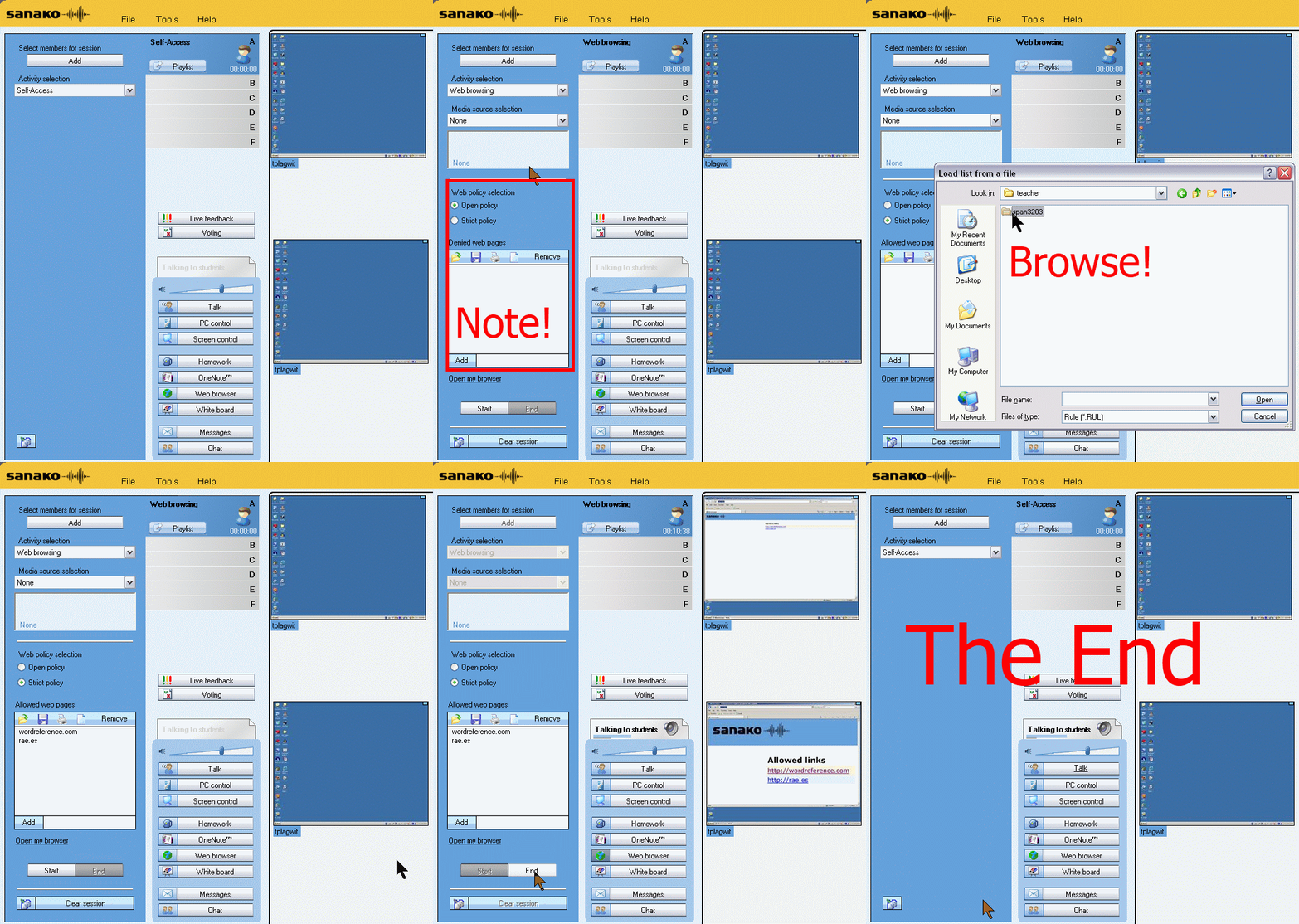
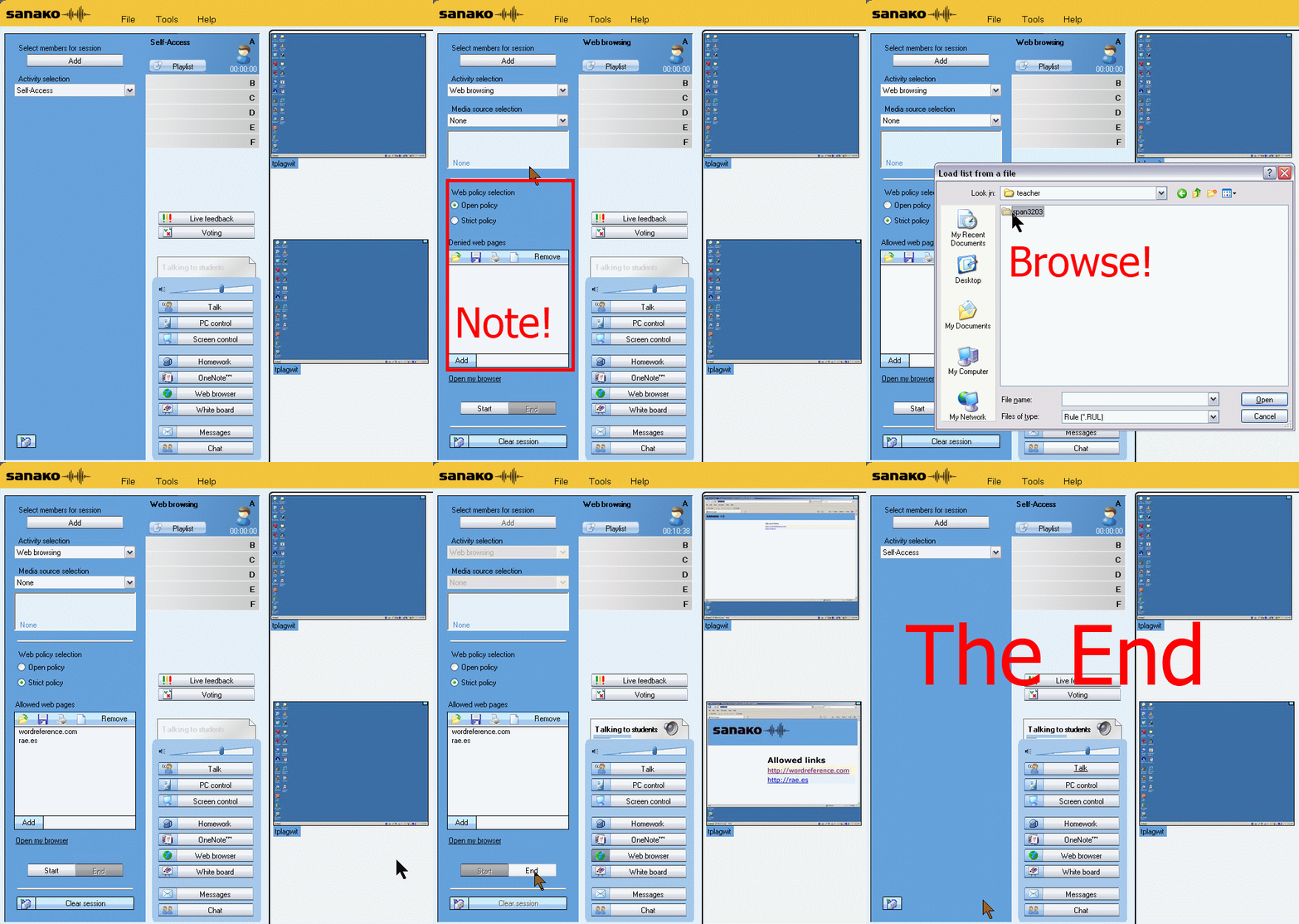
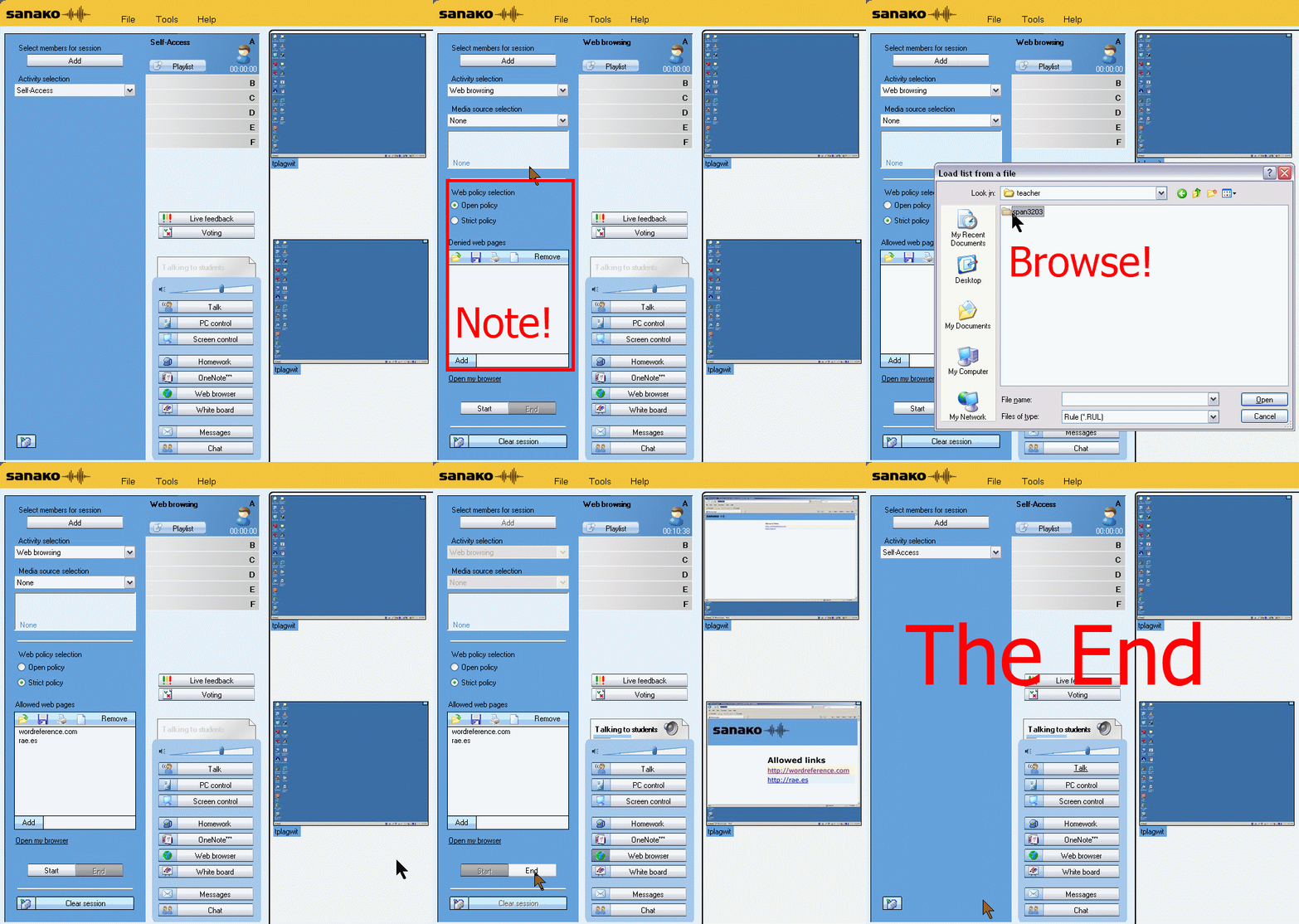
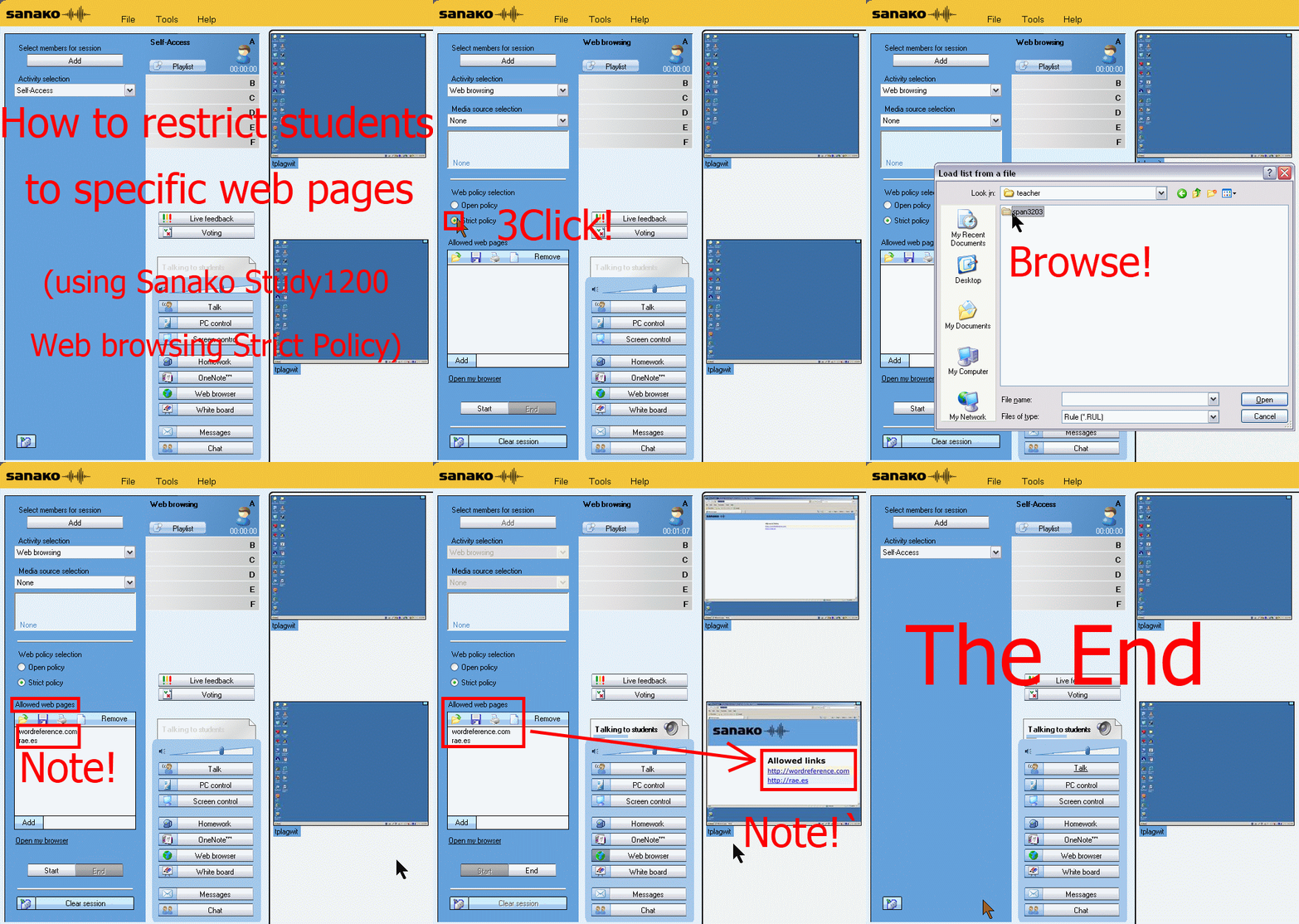
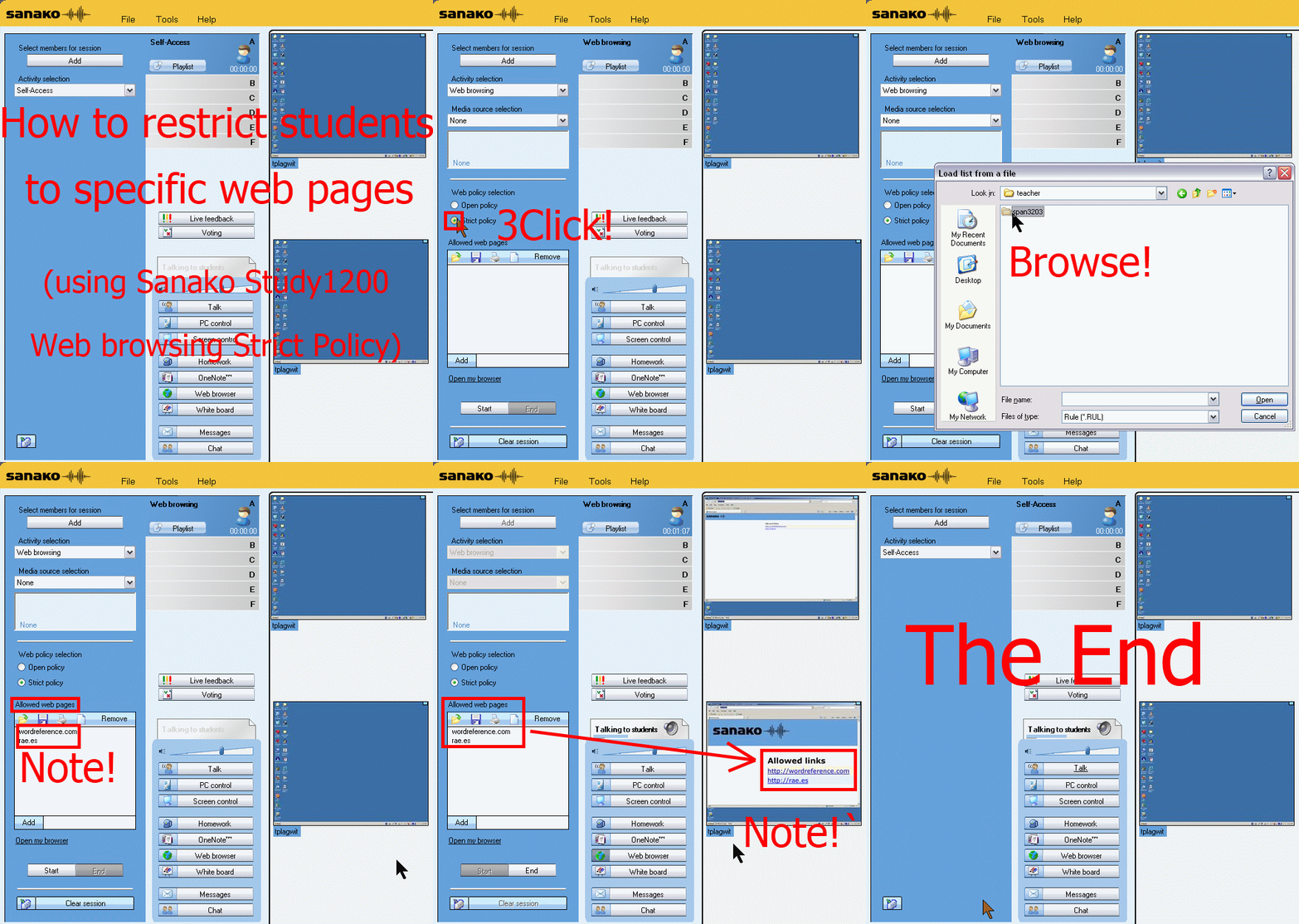
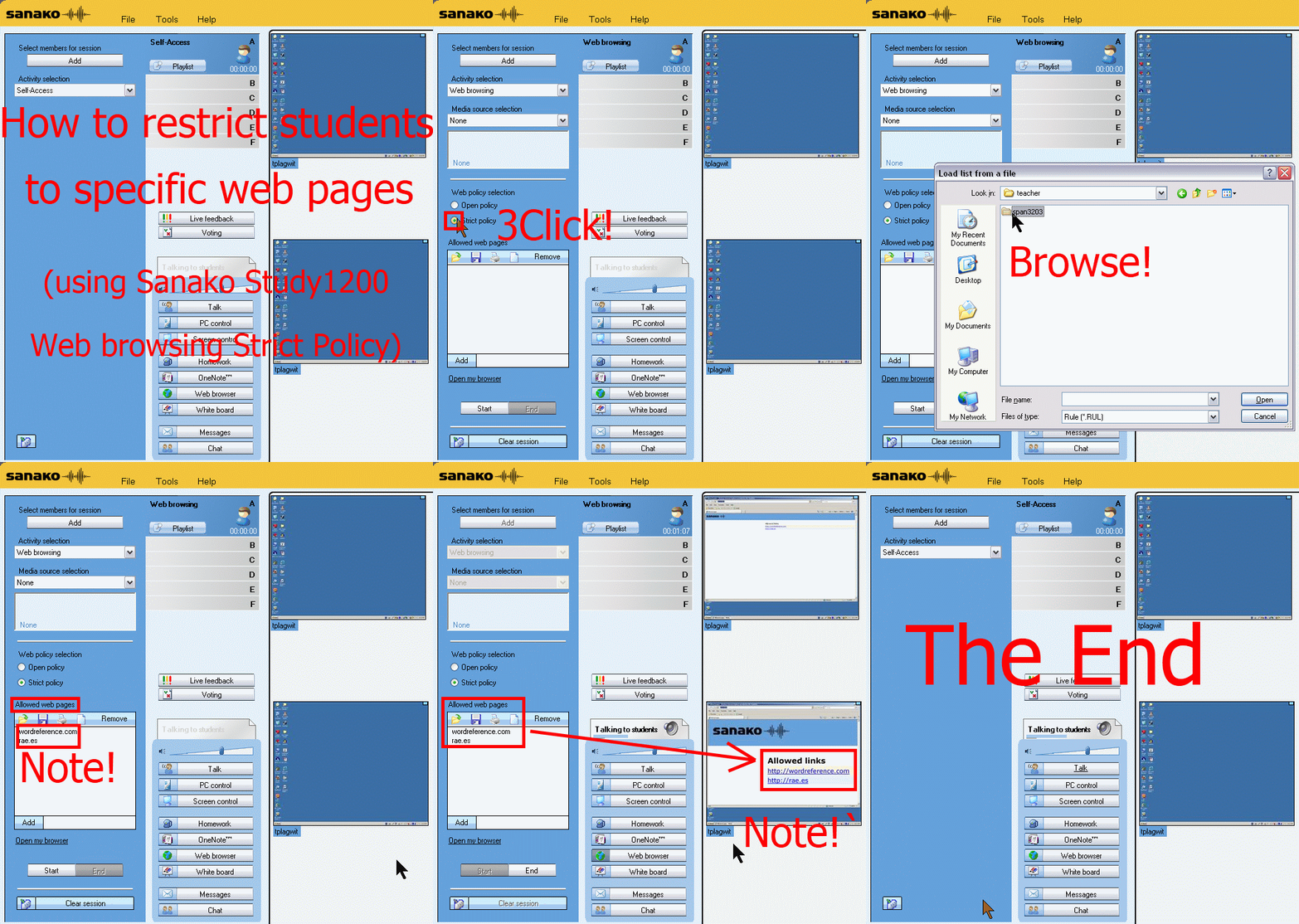
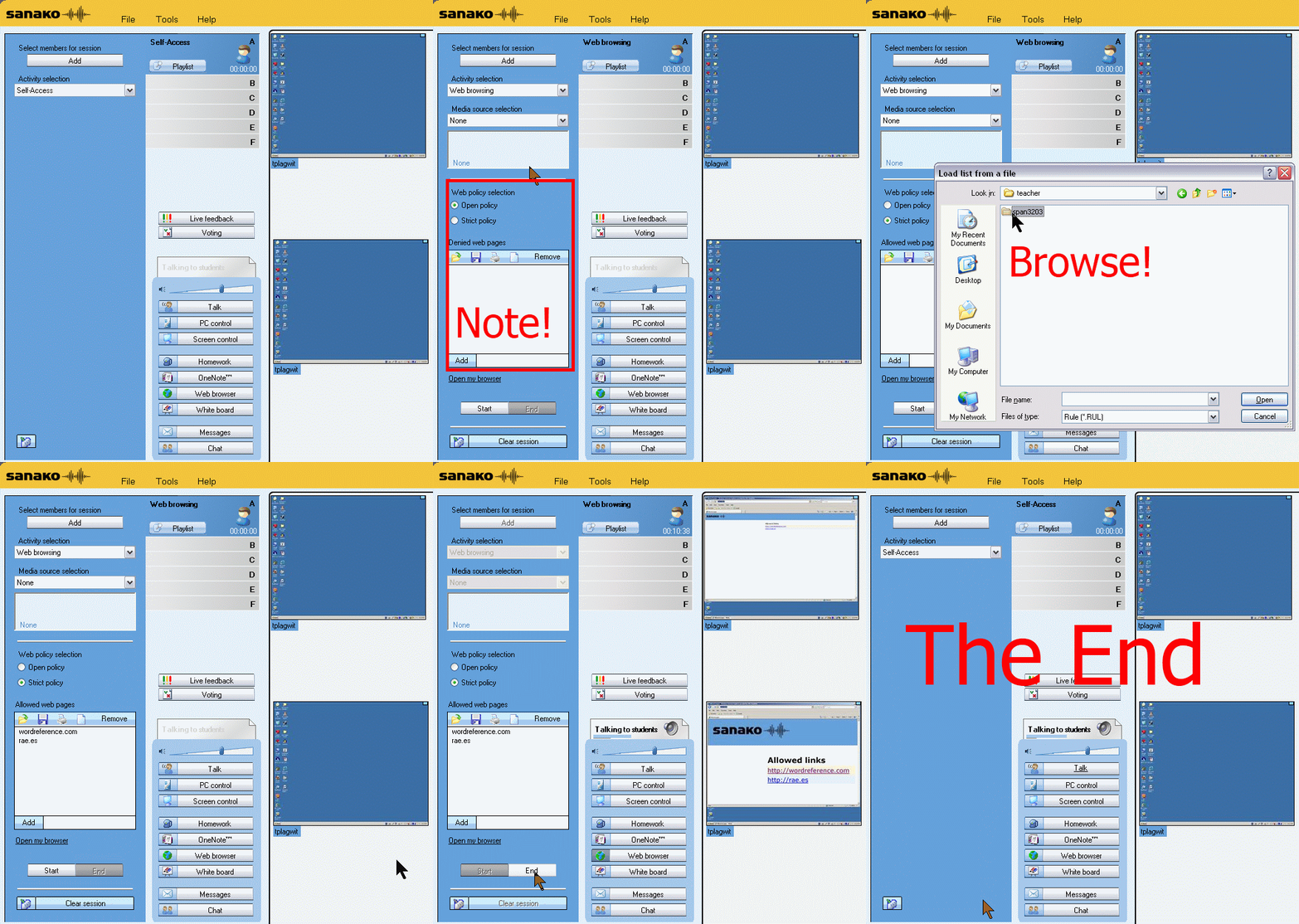
How teachers restrict students to allowed web pages with Sanako Study 1200 web browsing (strict) activity–the ultimate training summary
…using animated GIFs. Load the speed of your choosing (or several, use CTRL-Click to open links in a new tab) into the left screen of the teacher station before administering an oral exam, with the window active, press F5 in your web browser to restart the animation from the beginning:0.50sec,0.75sec,1sec,2sec,3sec,4sec,5sec,6sec,7sec,8sec,9sec,10sec
 .
.
Condensed (instructions only) for recap: 100cs, 200cs, 300cs, 400cs, 500cs, 600cs, 700cs, 800cs, 900cs, 1000cs. And if you need to pause:


LRC teacher screen new and improved

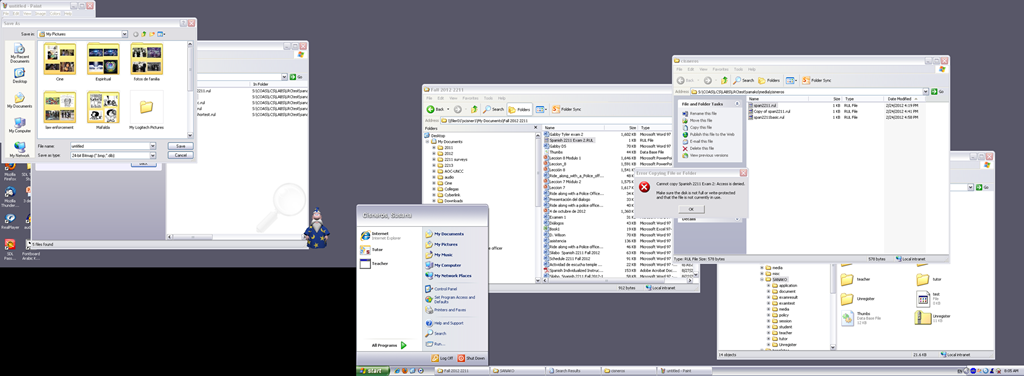
The above screenshot (taken from a screencast) does not do the new screen justice: Teachers can actually read all the ongoing student work, and, with two clicks, intervene surgically, where necessary.
On the right screen of the teacher PC in the main LRC classroom, we went from WXGA to HD1080, gaining almost 60% more screen real estate (=(1920*1080)/(1280*1024)), a crucial improvement for displaying all the information the Sanako Study 1200 provides the teacher with.
Or in more graphical terms (thanks to Wikipedia), we went from 2nd lower left to 3rd upper right:
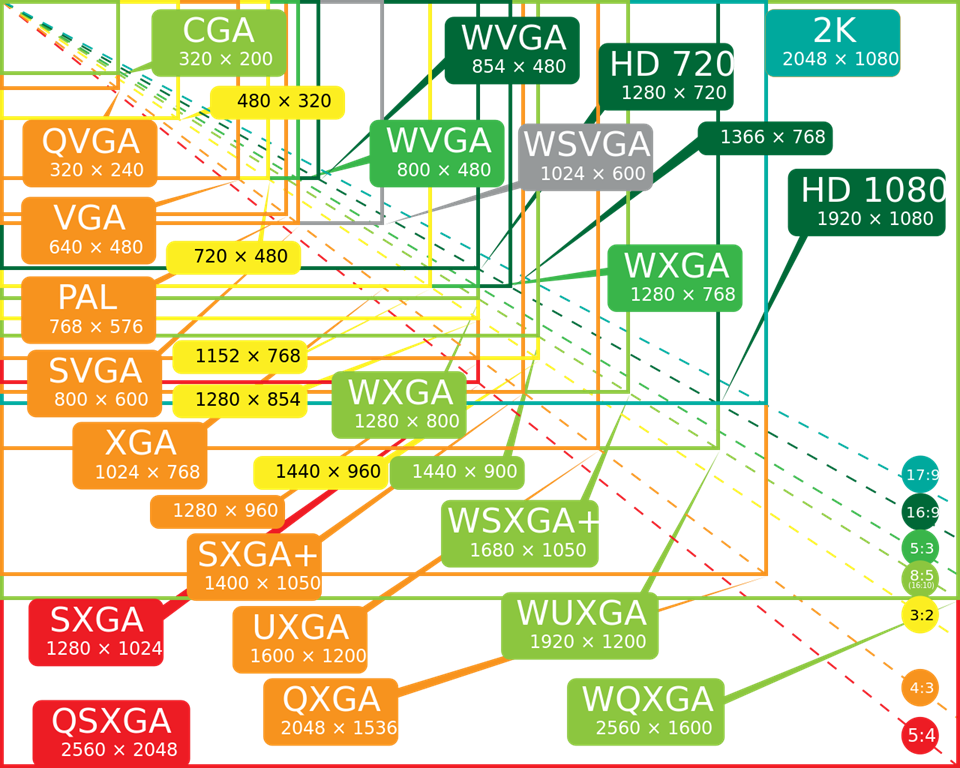
To fit the actual classroom layout into the display, we would however need the bottom lower right resolution (WQXGA). We still have to split the classroom you see into 2 halves and tilt those by 90 degrees clockwise to fit them onto the right teacher screen.
Since our left screen is still the original 1024*768 (and will be until not only the screen, but the switch and projector get upgraded), you have to work (= move your mouse pointer) around the “wall” formed by the black block in the lower right of this screenshot.

Questions? Read the About. Or just ask me a quick Our Databases: Resources with calendars -- Language learning material Moodle Sites, multimedia files -- films


FAQs for LRC student staff or for students or for teachers. To search our FAQs, in the browser addressbar, add after "https://plagwitz.wordpress.com/feed/?tag=faqs+/" "+TAG1" (from tag cloud below) OR "https://plagwitz.wordpress.com/feed/tag=faqs
&category_name=" "CAT1" (from category hierarchy below). OR search both categories and tags, and multiple TAGs/CATs (connect with "," for OR-search, with "+" for AND-search), like so: https://plagwitz.wordpress.com/feed/?tag=TAG1+TAG2+...TAGn&category_name=CAT1
+CAT2+...CATn"
Other ways to find help
If you cannot find it here, look there: 5,500 Language-Learning Links and Programs for learning or teaching 150 languages
Shortcuts:Our Lists, Our Maps, LRC Staff Moodle Site,LRC Project Moodle Site, 49erexpress, UNCC Moodle, Student Recordings: s:claslcslrcsanakostudent
Learning usage samples: Sanako oral exam, Kaltura webcam presentation, Dictation with speech recognition, Sanako written exam, Chinese and Japanese interactive stroke-order practice
Test the Sanako Installer, Webbrowser Popup Konfigurator for XP, or Windows7, faster LRC TeacherPC Log-in Let MS facilitate diacritics writing by installing for you US-International keyboard layout
This is my personal blog (Google+). The views expressed on these pages are mine alone and not those of my employer. The information in this weblog is provided “AS IS” with no warranties, and confers no rights.
 Thomas' Work Space