Archive
LRC Outlook/Exchange 2010 Resource Calendaring: How to alter meeting times in OWA
- Changed your mind/requirements about a meeting time you made?
- Go to your NINERMAIL Calendar, open the meeting, alter the times from the dropdowns (use the “scheduling assistant” to check for conflicts of the new time), click “Send update”
What additional help can I get from the LRC to study my language?
The LRC’s mission is to support language study within the LCS course offerings and is focused on a learning approach that blends instructor-led learning with AI in both face-to-face and self-access settings. Because of the complexity of SLA, separate resources are not easy to align and combine with a well-structured syllabus and textbook publisher resources – neither for teachers and other course builders, nor for learners. Also, independent study is even more challenging than self-access as part of a course.
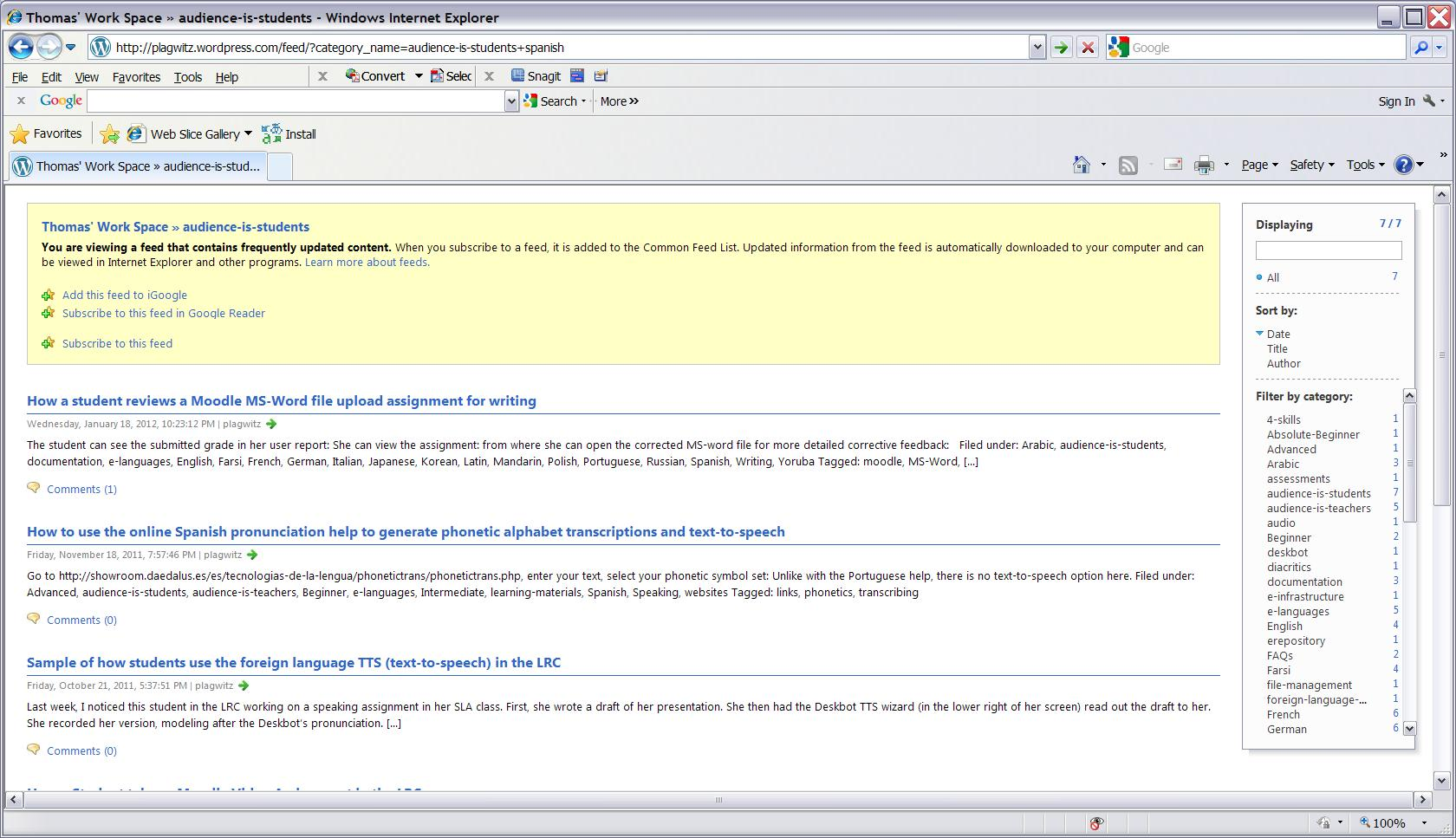
That being said, we have a host of resources listed that you may find of additional help. Look at our blog categories, and build a search in the browser address-bar, like combining (“+”) from our categories list the language (”Spanish”) with “the intended audience (“audience-is-students”) . If you use Internet Explorer for your search, you can easily search within your search results:
How to access most important LRC calendars from quick links on LRC home page
- Go to http://lrc.uncc.edu
- access like so:


- The default calendar view in OWA is monthly:
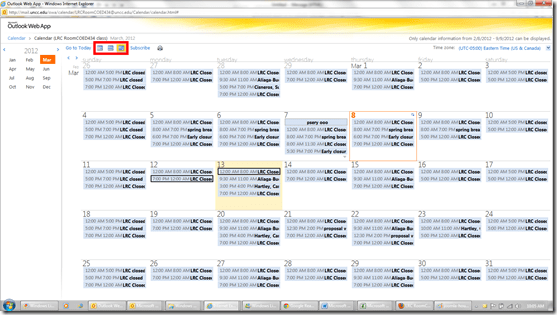
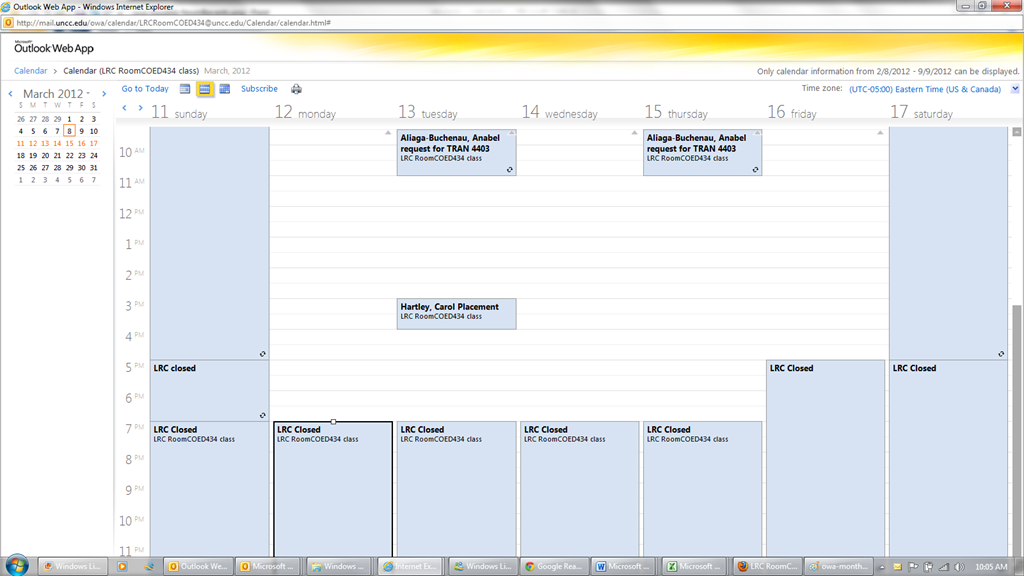
- From the top menu icons, you can easily change to weekly and daily views:

- The calendars are edited directly by the service-providing party, to stay up to date with the frequent changes in tutor availability (see #1 on Seven ways to think like the web; #4, getting them to stick to our “disciplined naming conventions” remains a work in progress).
- Thanks to Joomla’s Publish/Unpublish feature, we also stand a chance keeping up with the frequent changes in tutors being sent to the LRC or not, by entirely hiding non-applicable calendars (so that students do not have to think about what we mean by “no time slots = sorry, currently no tutor”):



How to get sound on listening station computers by increasing the volume-levels
- On the listening stations, if you have the headsets plugged into the connectors on the rear of the computer, and hear no sound, you may have the volume set to too low.
- Go to (1) control panel, (2) icon:sound, (3) tab:audio, (4)button:volume
- in the mixer dialogue, (6) menu:options, make sure that all the (6) volume slider controls are checked, i.e. shown, click “OK”.

- Move the volume sliders up for WAVE and SW SYNTH

I2speak.com: Web-based IPA Keyboard
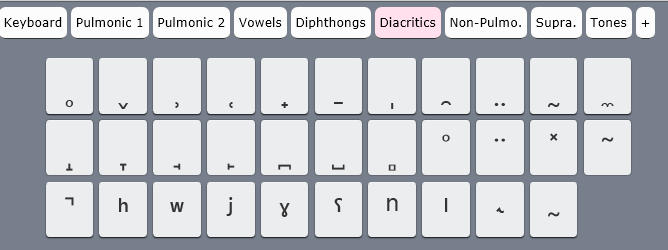
The Sciweavers Team announces http://www.i2speak.com: “an online Smart IPA Keyboard that lets you quickly type IPA phonetics without the need to memorize any symbol code. For every Roman character you type, a popup menu displays a group of phonetic symbols that share the same sound or shape beneath typed character. Use arrow keys to select the proper symbol then hit the Enter button. I2Speak also supports the following features:
1. The Sampa English Keyboard lets you type English phonetics using Roman characters according to SAMPA (Speech Assessment Methods Phonetic Alphabet) rules.
2. The IPA English Keyboard provides you with a full English phonetics keyboard. Press the symbol of interest using a suitable input device.
3. You can type directly on your physical keyboard or on the virtual on-screen keyboard using a suitable input device such as mouse or touch screen device.
4. You can change the keyboard symbols by selecting another layout from the list box located above the virtual keyboard.
5. For every keyboard layout, more symbols can be displayed by pressing the CAPS Lock.
6. When you hover the mouse over an English phonetic button, a slick tooltip will show some example English words.
7. You can save typed phonetics as an MS-Word file by clicking the Save button, copy them to clipboard using the Copy button, or post them to Twitter, Facebook, etc. by clicking the desired button.”



How to display Furigana phonetic guide for Japanese Kanji in MS-Word 2010
- Furigana uses Kana (usually Hiragana) to phonetically transcribe Kanji, above (for horizontally written Kanji) or to the right (if in vertical writing mode), for special characters or audiences (children and second language learners).
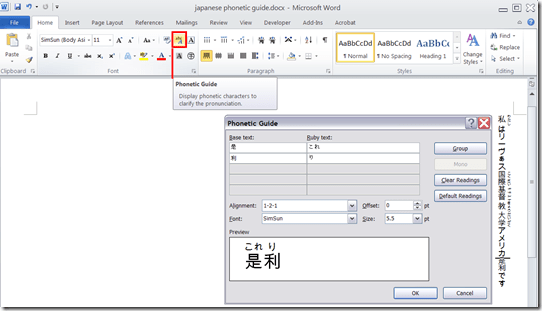
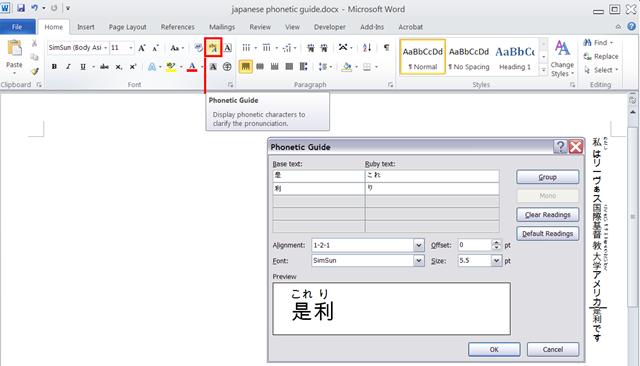
- In MS-Office, if you have a Japanese Input Method Editor selected in MS-Windows, select some Kanji and in the ribbon, under tab: home, section: font; click on the Phonetic guide, to bring up a dialogue that attempts to auto detect the furigana.
- You can make adjustments there, click “OK “to insert. Like so:
How to use Google translate for writing Cyrillic letters with a western keyboard, pronunciation help, and text-to-speech
Go to Google translate and do like so. Useful for learning, as well as typing when teaching.
How to fix Canon Vixia “Cannot write on card” error when starting recording by initializing
- To fix this error,
- go to: Menu / Function / Tools / Tab: / menu item: Initialize – choose the card slot A or B with the mal-formatted card.
- or view how to access the initializing procedure here TBA
- To avoid this problem: You may get this error after you the SD card has been formatted in another device but the camera (e.g. on your computer, using a memory card reader). If you are trying to delete footage, initialize the card within the camera instead. This page is taken from the Vixia manual, the full manual you can find linked in our list of bookable resources under Vixia.




Questions? Read the About. Or just ask me a quick Our Databases: Resources with calendars -- Language learning material Moodle Sites, multimedia files -- films


FAQs for LRC student staff or for students or for teachers. To search our FAQs, in the browser addressbar, add after "https://plagwitz.wordpress.com/feed/?tag=faqs+/" "+TAG1" (from tag cloud below) OR "https://plagwitz.wordpress.com/feed/tag=faqs
&category_name=" "CAT1" (from category hierarchy below). OR search both categories and tags, and multiple TAGs/CATs (connect with "," for OR-search, with "+" for AND-search), like so: https://plagwitz.wordpress.com/feed/?tag=TAG1+TAG2+...TAGn&category_name=CAT1
+CAT2+...CATn"
Other ways to find help
If you cannot find it here, look there: 5,500 Language-Learning Links and Programs for learning or teaching 150 languages
Shortcuts:Our Lists, Our Maps, LRC Staff Moodle Site,LRC Project Moodle Site, 49erexpress, UNCC Moodle, Student Recordings: s:claslcslrcsanakostudent
Learning usage samples: Sanako oral exam, Kaltura webcam presentation, Dictation with speech recognition, Sanako written exam, Chinese and Japanese interactive stroke-order practice
Test the Sanako Installer, Webbrowser Popup Konfigurator for XP, or Windows7, faster LRC TeacherPC Log-in Let MS facilitate diacritics writing by installing for you US-International keyboard layout
This is my personal blog (Google+). The views expressed on these pages are mine alone and not those of my employer. The information in this weblog is provided “AS IS” with no warranties, and confers no rights.
 Thomas' Work Space