Archive
Archive for the ‘technology-domains-is-any’ Category
SkyDrive updated
2011/11/29
Leave a comment
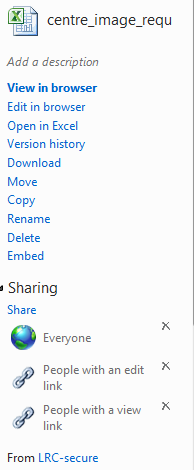
- A timely upgrade for use of Office online in a mixed business environment:


- Results in:

- Better sharing is just one of the improvements: Read more here. A bit more “more” what the different options entail is available here.


Categories: e-infrastructure
MS-OneDrive
LRC computer and other hardware inventory
2011/11/24
Leave a comment
- These lists document hardware owned by the LRC:
- Symantec-Ghost generated.
- A handmade overview (partially based on the previous) can be (permissions provided) viewed or edited here.
How to set up SDL-Trados 2009 Licensing Server
2011/11/24
Leave a comment
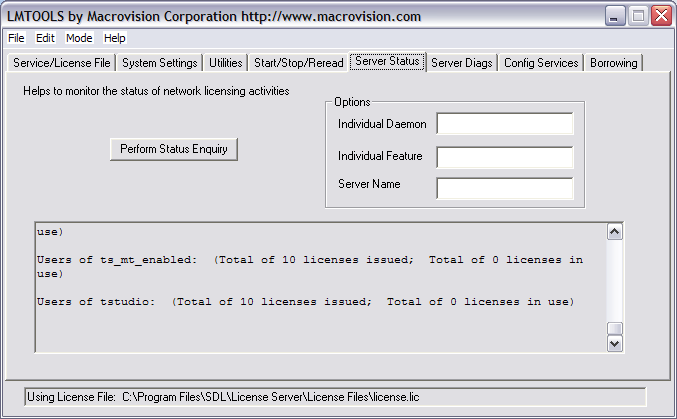
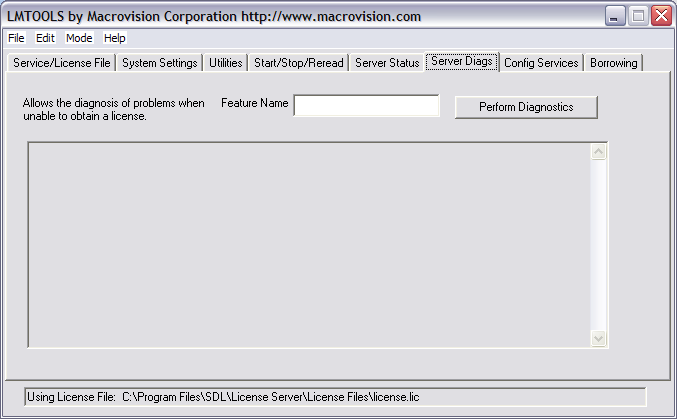
No time getting this post in shape since SDL is keeping me on my toes by changing the licensing infrastructure for 2011 (abandoned FlexLM), but for what it is worth: the difficultty with FLexLM was managing the licensing service from the proviced GUI, I had to resort to restarting it manually through services.msc. 




How to do model imitation recording exercises to improve language learner pronunciation in the LRC and beyond
2011/11/22
Leave a comment
- Sometimes teachers ask about support for voice recognition in the LRC. The term voice recognition or speech recognition (the former appears to be analogous to face recognition in authentication and other security contexts?) is usually reserved for software that can transcribe your voice into text – still no free option for this, AFAIK. Dragon naturally speaking is the oft recommended market leader outside of education (and within, Auralog Tell me more, see below). Update summer 2012: We are working on enabling the Speech recognition built into Windows 7 Enterprise for English, Chinese (Simplified and Traditional), French, Spanish, German, and Japanese.
- Often times, what is actually desired is a digital audio recorder with voice graph, ideally a dual track recorder.
- In the LRC student computers, we have for exactly this purpose a digital audio recorder as part of the SANAKO Study 1200language learning system
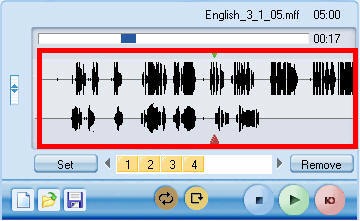
- It features a dual track recorder (allows to listen to teacher track which can be a prerecorded model to imitate on the left channel while recording the student track on the right channel of a stereo track) with a voice graph:
 . See this dual-track-voice-graph screencast demo from the vendor and also our student cheat sheet from the vendor documentation.
 - The Sanako is available in the LRC, as well as in many other educational institutions around the world, but neither free nor web-based (although a web-based version seems to be in the works). It currently requires MS-Windows to run.
- It features a dual track recorder (allows to listen to teacher track which can be a prerecorded model to imitate on the left channel while recording the student track on the right channel of a stereo track) with a voice graph:
- A popular and free audio editor (but not an SLA – specific application, let alone geared towards model imitation; also, for all practical ends and purposes, requires an extra download and installations of an MP3 encoder to be able to save recordings as compressed MP3) is Audacity. To use for model imitation exercises,
- the student can open a model track (mp3 recommended)
- and manage within the program the imitation portion, using the voice graph:

- then export back out as mp3,
- either her responses individually (see my demo screencast, requires Windows Media Player on Windows, which actually shows a question/response rather than a model imitation, but same principle),
- or, by deleting the model track, the response parts mixed down to one track,
- or also, if, like in my demo screencast, the timeline sequence of model (with pauses) and responses is carefully managed (so that model and imitation do not overlap), mixed down to one track.
- In one language program, I have worked extensively with Auralog Tell me more
- which was (not exclusively, but arguably too much) based on this pedagogic concept of having students compare the voice graph of their imitation with the model voice graph (while it do did not allow for teachers to upload their own content, and was certainly not free).

- To my knowledge, Auralog Tell me more does not allow for adding teacher-produced content as models.
- I did like the self-reflective and repetitive practice element. However, I found that students – apart from intonation and (not useful for not pitch based languages) pitch -, did not benefit as much as one might have expected from viewing the voice graph, indeed tended to get overwhelmed, even confused by the raw voice information in such a voice graph.
- And automated scoring of pronunciation (or speech recognition” – not free form, but on a level that has been commoditized in operating systems like Windows 7, the level of voice-directed selection between a limited set of different options, like menu options, and in the case of Auralog, choosing between different response options) seemed iffy and less than transparent in Auralog Tell me more, even though this is their primary selling point. E.g. when I made deliberate gross mistakes, the program seemed to change its standards and wave me through ( English pronunciation example; also observed by me when testing Auralog with East Asian speakers of English).
- which was (not exclusively, but arguably too much) based on this pedagogic concept of having students compare the voice graph of their imitation with the model voice graph (while it do did not allow for teachers to upload their own content, and was certainly not free).
- In the LRC student computers, we have for exactly this purpose a digital audio recorder as part of the SANAKO Study 1200language learning system
- A voice graph is not the same as a more abstract phonetic transcription (although I do not know whether language learners can be trained in phonetic symbol sets like the IPA). There are now experimental programs that can automate the transcription of text into phonetic symbol sets for e.g. Portuguese or Spanish. Maybe you will find that practice with recording and a phonetic transcription of the recorded text is more useful for your students’ pronunciation practice than a fancy voice graph.


How to subscribe to an LRC calendar – in one screenshot
2011/11/21
2 comments
Subscribing to LRC calendars, e.g. for tutoring, will give you access from your Ninermail/OWA and always keep you updated of late-breaking changes. Here is how, starting from our list of bookable resources:

How to stay up to date by receiving RSS like email newsletters in MS-Outlook
2011/11/21
Leave a comment
- Why subscribe?
- RSS is a great way to get your information both fast and filtered.
- For advanced filtering of RSS feeds, try Yahoo Pipes.
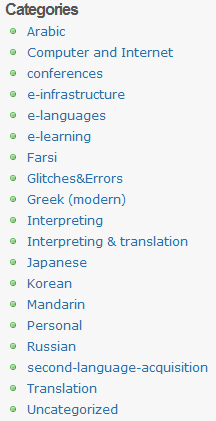
- However, WordPress makes this even easier by allowing for a wealth of atomic searching and filtering options. Choosing the right template (and content strategy), if you click on any of the linked items in either the category list or tag cloud on WordPress,


- the resulting page will include an RSS link
 , or simply add “/feed” to the URL of your category, tag or even search result page, to get a feed that you can subscribe to.
- How to subscribe?
- MS-Outlookmakes subscribing to RSS more convenient since you do not need to go to a separate application like an RSS-Reader. Read your RSS with your email, think of the RSS feed as an email list, but personalized to your interests.
-
You can subscribe to the “RSS feed” link like so:
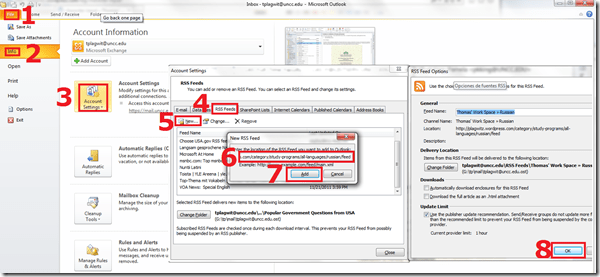
- For historical reasons, I still use Google Reader, but I rely on Outlook’s advanced automated content download (including full text posts and multimedia attachments) and well-understood archiving, search and export features to not miss podcasts which I want to collect for potential use as teaching content:
 When Outlook fails, as with some RSS formats, you can still try and resort to the Internet Explorer Feed store:
-
- If you use OWA: you can read feeds, but not add them through the OWA interface. If you are staff, you can still add them in Outlook first. If you are a student and restricted to NINERMAIL, you need to use a different feed reader. I recommend the free web-based Google Reader.
- MS-Outlookmakes subscribing to RSS more convenient since you do not need to go to a separate application like an RSS-Reader. Read your RSS with your email, think of the RSS feed as an email list, but personalized to your interests.






Questions? Read the About. Or just ask me a quick Our Databases: Resources with calendars -- Language learning material Moodle Sites, multimedia files -- films


FAQs for LRC student staff or for students or for teachers. To search our FAQs, in the browser addressbar, add after "https://plagwitz.wordpress.com/feed/?tag=faqs+/" "+TAG1" (from tag cloud below) OR "https://plagwitz.wordpress.com/feed/tag=faqs
&category_name=" "CAT1" (from category hierarchy below). OR search both categories and tags, and multiple TAGs/CATs (connect with "," for OR-search, with "+" for AND-search), like so: https://plagwitz.wordpress.com/feed/?tag=TAG1+TAG2+...TAGn&category_name=CAT1
+CAT2+...CATn"
Other ways to find help
If you cannot find it here, look there: 5,500 Language-Learning Links and Programs for learning or teaching 150 languages
Shortcuts:Our Lists, Our Maps, LRC Staff Moodle Site,LRC Project Moodle Site, 49erexpress, UNCC Moodle, Student Recordings: s:claslcslrcsanakostudent
Learning usage samples: Sanako oral exam, Kaltura webcam presentation, Dictation with speech recognition, Sanako written exam, Chinese and Japanese interactive stroke-order practice
Test the Sanako Installer, Webbrowser Popup Konfigurator for XP, or Windows7, faster LRC TeacherPC Log-in Let MS facilitate diacritics writing by installing for you US-International keyboard layout
This is my personal blog (Google+). The views expressed on these pages are mine alone and not those of my employer. The information in this weblog is provided “AS IS” with no warranties, and confers no rights.
 Thomas' Work Space