Archive
Archive for the ‘lms’ Category
How a teacher grades a Moodle simple file upload assignment
2012/01/13
1 comment
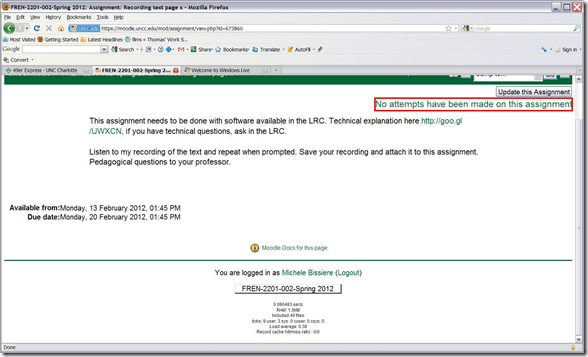
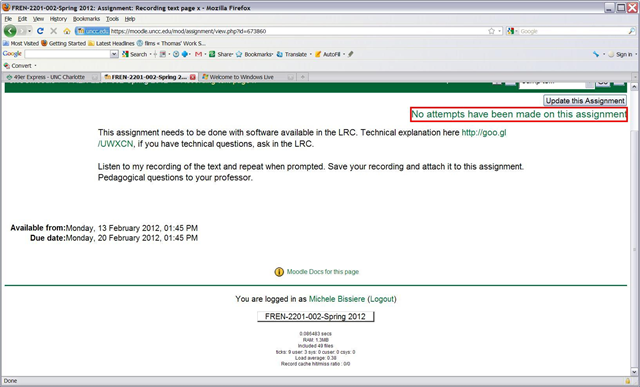
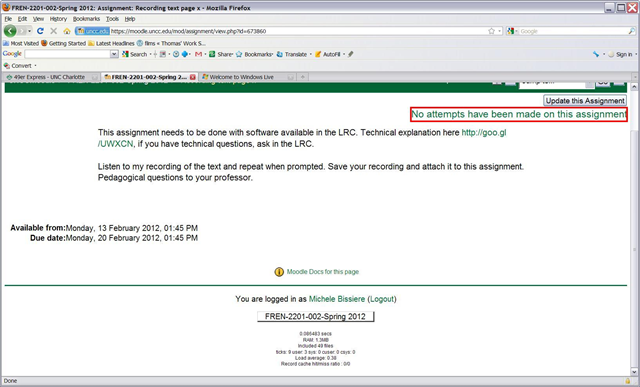
- When you initially createdyour single file upload assignment, there were no student submissions:
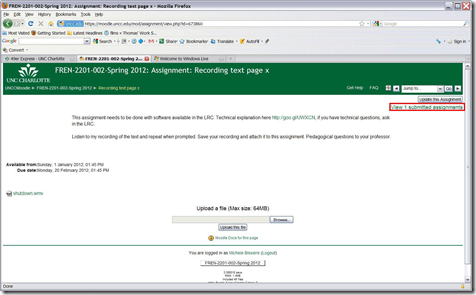
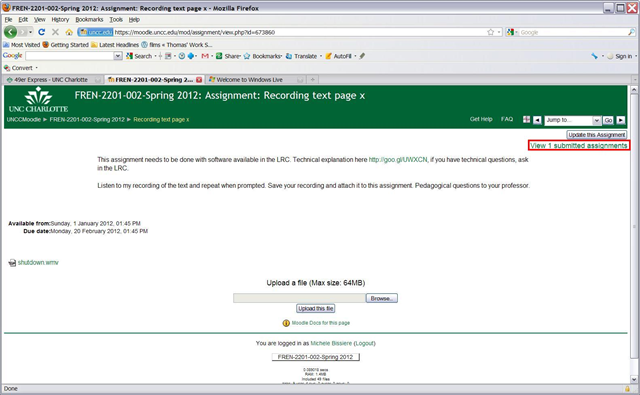
- Once there are, the link in the upper right of the assignment will tell you and take you right to the gradebook:
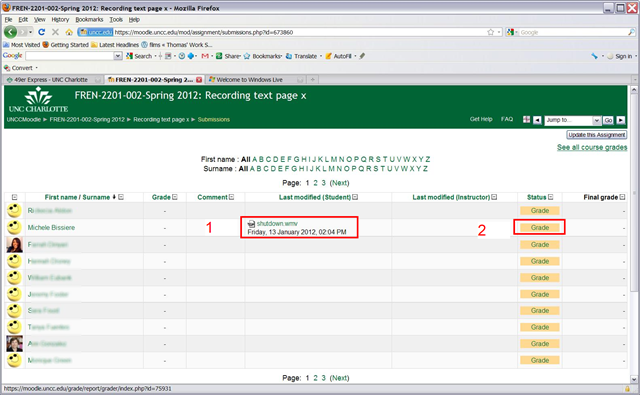
- Here you have an (1) overview who has submitted, and can click (2) to grade;

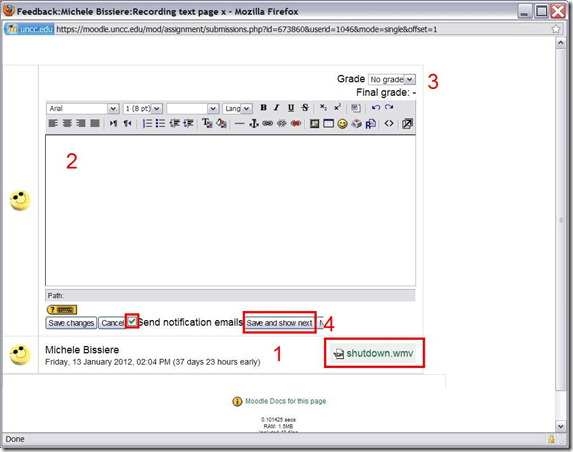
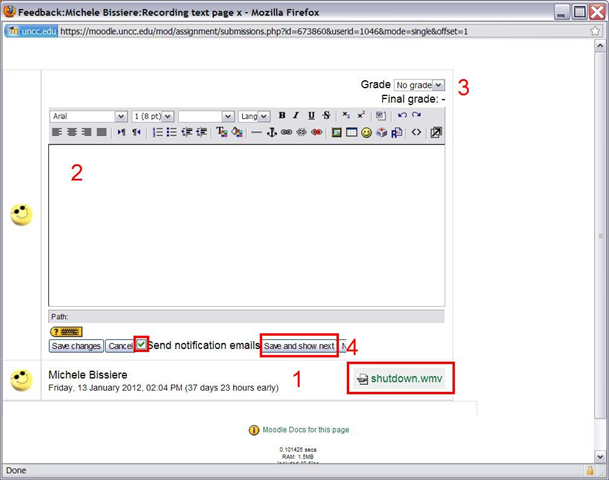
- In the grading dialogue, you can (1) download and open the file submission (see techniques of grading student audio submissions with Audacity), (2) write comments as you assess the file, (3) assign a final grade and (4) save and move on to the next submission (fastest, when you do batch grading, the notify student of your grading feedback is still useful under these circumstances, but even more so when you your self asked to be notified by email of student submissions as they come in: faster feedback)
Categories: assignments, audience-is-teachers, e-learning, lms, Speaking
audacity, moodle, simple-file-upload
How a teacher creates a Moodle Single file upload assignment, with optional attached file
2012/01/13
1 comment
- turn editing on
- add activity / simple file upload

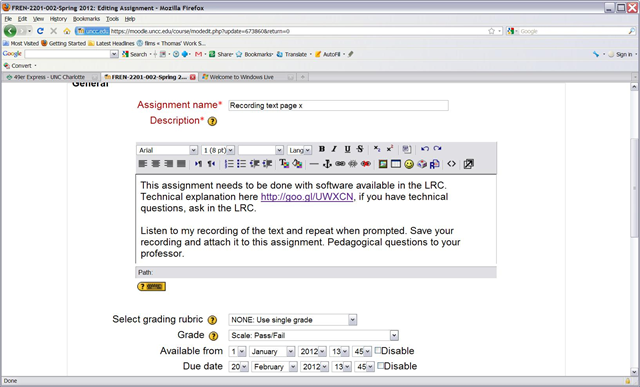
- Write the assignment instructions

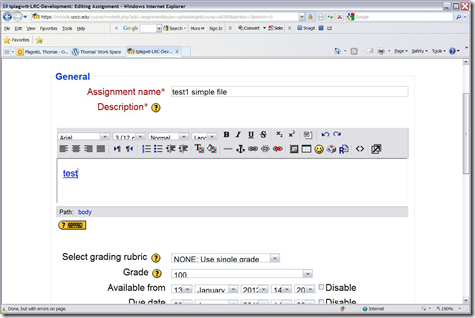
- For your students to be able to download a fle with additional information (e.g. the model recording), select some text pointing to it and click the link icon on the editor menu
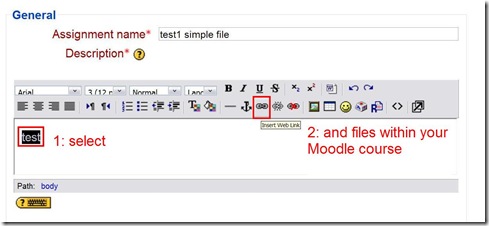
- (1) button: “browse”, (2) click your file uploaded into your moodle course earlier, have the window close and (3) your URL appear (or type one manually, if the file is from the WWW), (4) click button: “ok”:

- Voilà, your link:
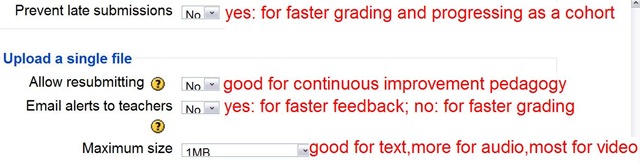
- set the other assignment options according to your needs :

- click button: “save and display”, you are done:



How a student takes a Moodle MS-Word file upload assignment for writing
2012/01/12
1 comment
- Find your file upload writing assignment and click on it:

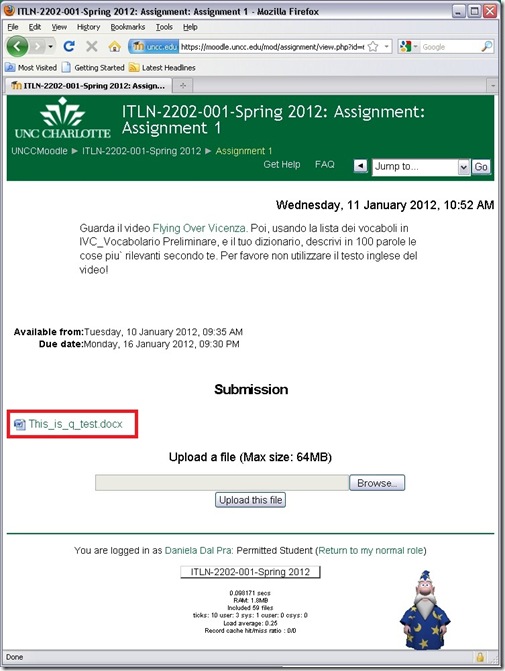
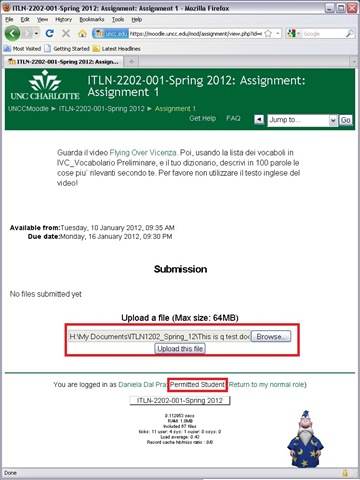
- Read the assignment text, write an MS-Word file (format not required, but your teacher will likely send you MS-Word back if she uses track changes) and attach it, like so:

- If this shows, you have finished the assignment:
- Wait for notification, then go TBA:review your teacher’s comments.


Categories: all-languages, audience-is-students, documentation, e-learning, lms, Uncategorized, Writing
moodle, MS-Word, track-changes
How to record your speech with Audacity
2012/01/11
Leave a comment
- For a cut-and-dry recording session, the LRC has a simple instruction on
- For more advanced editing with Audacity, I have a detailed screencast here.
Calendaring: How to view all your Moodle course assignments in Ninermail, OWA or MS-Outlook – Shortest
2012/01/05
3 comments

Categories: audience-is-students, audience-is-teachers, documentation, lms, Screenshots, step-by-step-guides
calendaring, FAQs, moodle, ms-outlook, OWA
Sharing and reusing Moodle learning content using backup and restore, part III: Shared intermediate courses
2012/01/03
1 comment
- You can facilitate the sharing process if you link source and destination Moodle courses via a Moodle course that is itself shared between the teachers (= all teachers can backup from or restore/import into this shared course), but not to students.
- By backing up to and restoring from such a shared Moodle course, you can more easily inspect the shared course content than
- if you’d import into the destination course to inspect,
- or either inspect the unzipped XML of the Moodle course backed-up content format, like here:
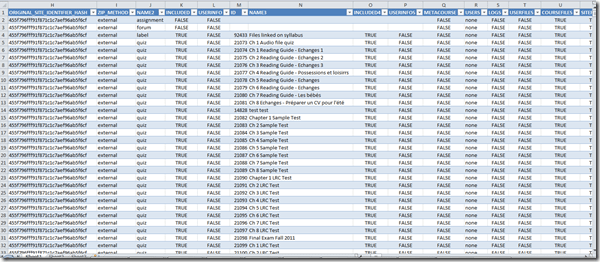
- which can be a daunting perspective on your content:

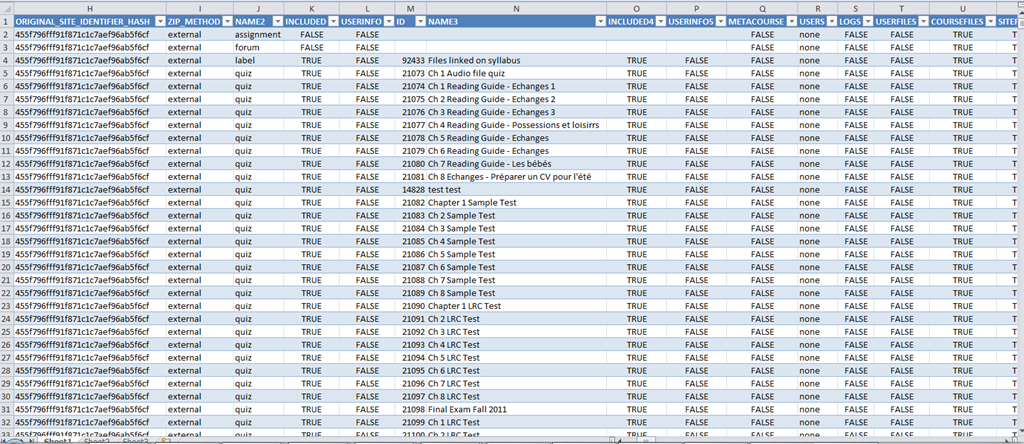
- A little more instructive are the Moodle course export file columns in a handy list, with sample content (where available in our case – sample content does not represent an actual “row”, but merges multiple “rows”, using Excel’s “Paste Special’/ “Skip blanks”):
- As you can see, there are fewer than 254 column (meaning you can even load this into Excel <2007), and apparently you get to actual teaching content already on nesting level 3.

Sharing and reusing Moodle learning content using backup and restore, part I: Backup
2011/12/15
4 comments
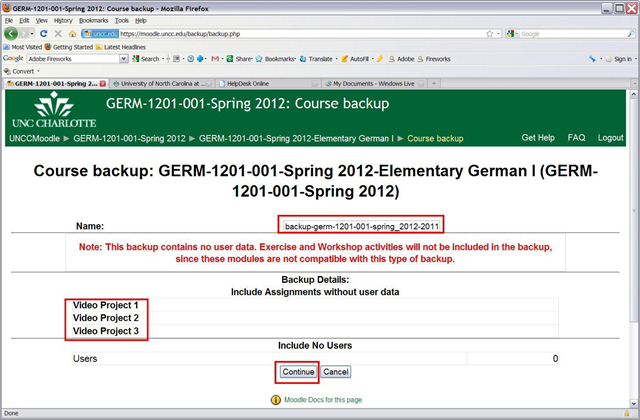
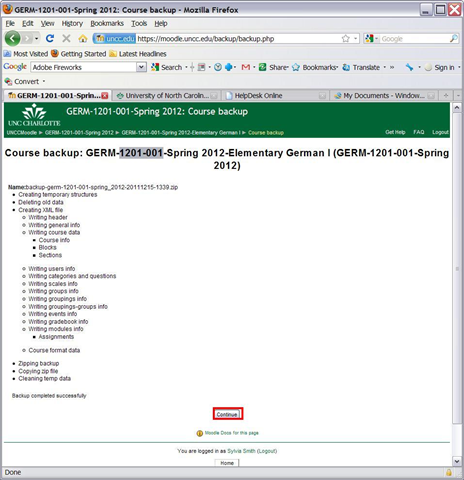
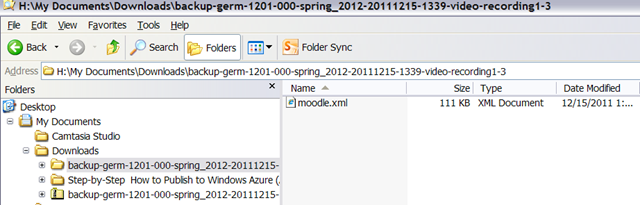
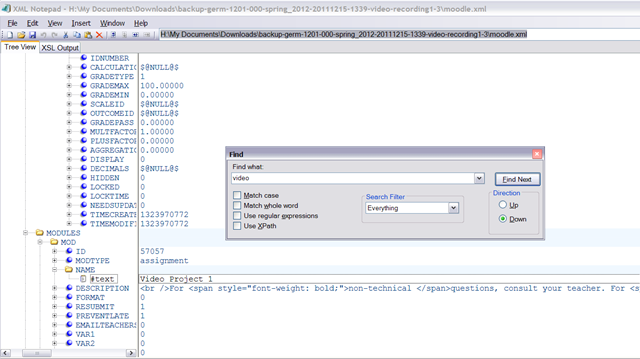
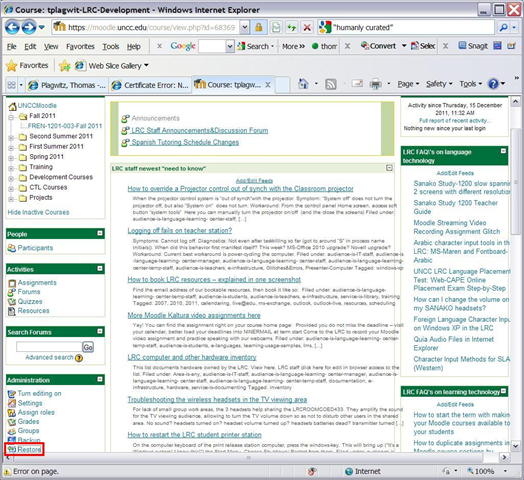
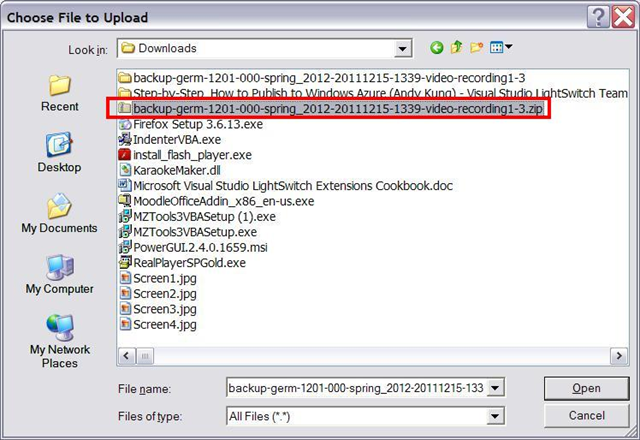
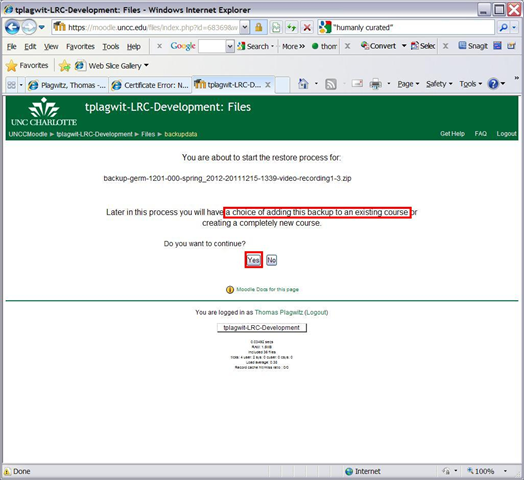
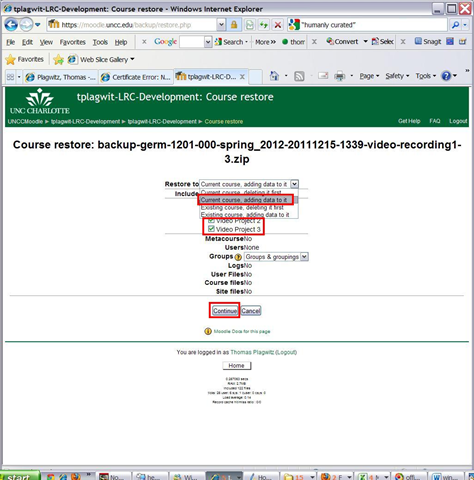
To reuse your own content, you can import. To use somebody else’s content, the other user can backup his content (even though not shown below, a subset of the content of a course can be chosen) and share (by downloading the file created within the course file area) the backup file with you (a zip-archive that contains an xml file), for the other user to restore. Like so: 


Sharing and reusing Moodle learning content using backup and restore, part II: restoring
2011/12/15
4 comments
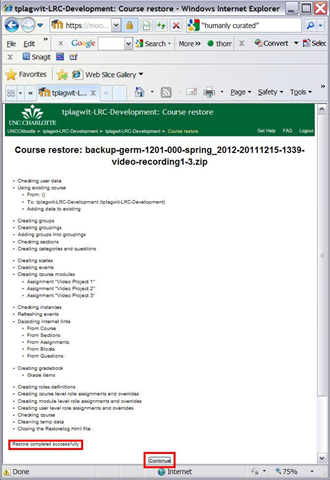
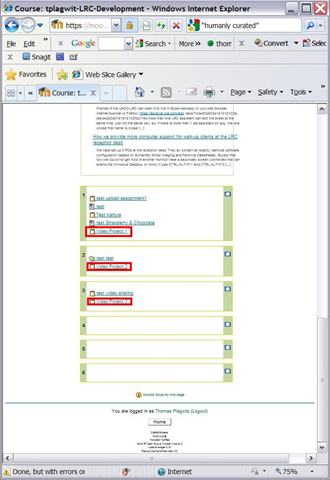
Here I am restoring the backup I made from a different user’s Moodle course in part 1:backup, to add the learning content to my own target course:






Now how can we scale this collaboration on Moodle learning content without an erepository?


Questions? Read the About. Or just ask me a quick Our Databases: Resources with calendars -- Language learning material Moodle Sites, multimedia files -- films


FAQs for LRC student staff or for students or for teachers. To search our FAQs, in the browser addressbar, add after "https://plagwitz.wordpress.com/feed/?tag=faqs+/" "+TAG1" (from tag cloud below) OR "https://plagwitz.wordpress.com/feed/tag=faqs
&category_name=" "CAT1" (from category hierarchy below). OR search both categories and tags, and multiple TAGs/CATs (connect with "," for OR-search, with "+" for AND-search), like so: https://plagwitz.wordpress.com/feed/?tag=TAG1+TAG2+...TAGn&category_name=CAT1
+CAT2+...CATn"
Other ways to find help
If you cannot find it here, look there: 5,500 Language-Learning Links and Programs for learning or teaching 150 languages
Shortcuts:Our Lists, Our Maps, LRC Staff Moodle Site,LRC Project Moodle Site, 49erexpress, UNCC Moodle, Student Recordings: s:claslcslrcsanakostudent
Learning usage samples: Sanako oral exam, Kaltura webcam presentation, Dictation with speech recognition, Sanako written exam, Chinese and Japanese interactive stroke-order practice
Test the Sanako Installer, Webbrowser Popup Konfigurator for XP, or Windows7, faster LRC TeacherPC Log-in Let MS facilitate diacritics writing by installing for you US-International keyboard layout
This is my personal blog (Google+). The views expressed on these pages are mine alone and not those of my employer. The information in this weblog is provided “AS IS” with no warranties, and confers no rights.
 Thomas' Work Space